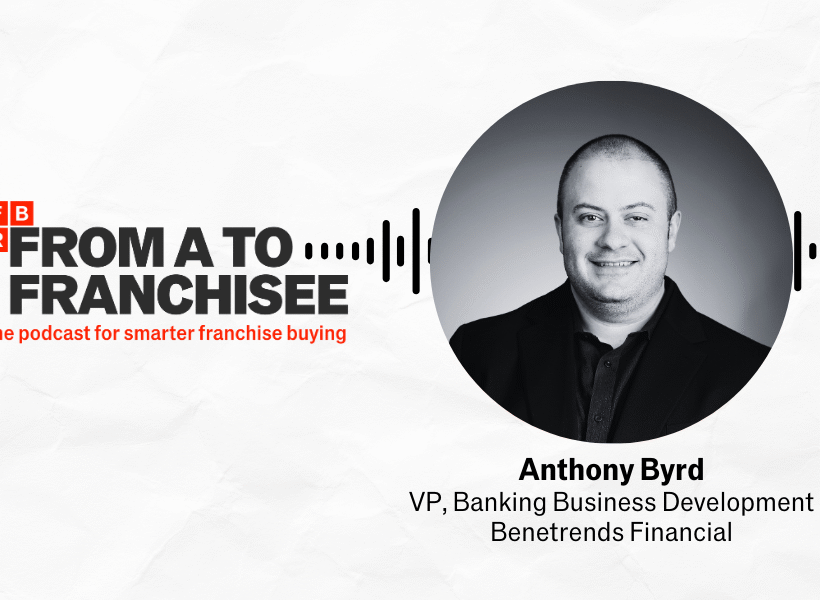
This episode delves into the new SBA guidelines with an expert from Benetrends Financial. We also explore the basics of SBA loans.
Listen on Apple Podcasts | Listen on Spotify | Watch on YouTube
Episode Summary
Join Michelle Rowan and Anthony Byrd in this episode of “From A to Franchisee” as they unravel the complexities of SBA loans for franchise buyers. Discover how SBA loans serve as a government-backed security for banks, making it easier for new businesses to secure funding. Anthony Byrd, a seasoned expert in franchising and SBA lending, dispels common myths about these loans and highlights recent changes in guidelines, including citizenship requirements and the SBA directory. Learn practical tips for preparing loan applications and explore financial strategies, such as combining retirement funds with SBA loans. Empower your franchise journey with this insightful discussion!
Resources
- Read: Should I Get An SBA Loan for Franchise Financing?
- Listen: Franchise Funding Options
- Read: Crowdfunding for Business: Should I Use it to Fund My Franchise?
- Our Franchise Financing Resource Center
- Discover Your “Fundability” with our Finance Calculator
- Read: A Guide to Rollovers for Business Startups (ROBS)
**We are grateful to work with Benetrends. They offer sound financial advice and have been in the world of franchising for decades, just like us!
Transcript
Michelle Rowan (00:17)
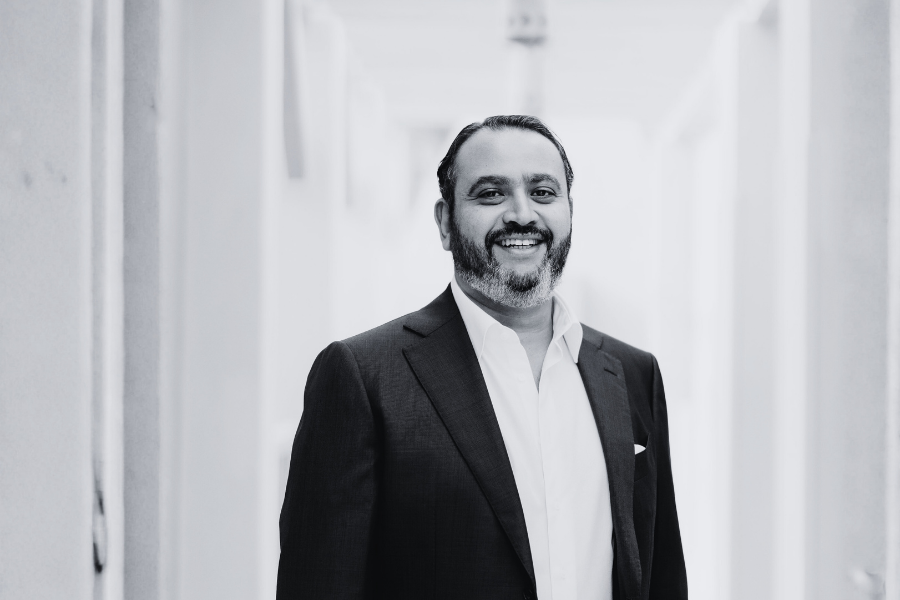
Welcome back to our podcast from A to franchisee. And today we are going to be talking about SBA loans. I think a lot of people, they have looked at businesses or business opportunities, becoming an entrepreneur, ⁓ many buyers have heard the term SBA loan early on in their search, but don’t always understand what that is. And more importantly, what changes have been made recently to the program. So we are here to talk about it today. We have Anthony Bird, vice president of banking business development with Ben
of trends. He’s going to help us demystify SBA financing in plain English and help you all make better and more confident decisions. So why we have Anthony here? ⁓ More than a decade of experience in franchising and SBA lending and specializes in helping franchisees and franchisors access smart growth-focused funding solutions. He has a CFE, his certified franchise executive designation, and is frequently an industry speaker.
So he is here. He’s going to give us some practical insights into lending strategy and help us all out. So Anthony, thank you for joining us today.
Anthony Byrd (01:26)
Thank you, Michelle. So excited to be here and be part of this. And like you said, help to demystify SBA. Cause there is a lot of mystifying out there about it for sure.
Michelle Rowan (01:31)
Yeah.
Yeah. So let’s just start really basic then. What is an SBA loan really? How would you describe it to a person that is looking at their options to fund a franchise or a business?
Anthony Byrd (01:45)
Absolutely. So SBA, Small Business Administration, this is government-backed lending. So this is not money that comes from the federal government. It is a government-funded program that gives banks really an insurance policy to want to come in and lend to a startup business, somebody who’s never been in business before. It’s really kind of like a security blanket for those banks to feel more comfortable, to open up the vaults, to get the money in the borrower’s hand, to get that business up and running.
Michelle Rowan (02:14)
think that’s great. When do you think that they’re usually brought into conversations with people that are talking about starting or buying into a business?
Anthony Byrd (02:23)
Yeah,
really as early as possible. The best thing that I can equate it to is like buying a home, right? Before I start going and looking, can I afford a three bedroom house or a four bedroom house? This is really the same principle here to be able to come in and understand, can I buy maybe one territory or can I buy three territories? So you should be looking at SBA as early as you can in the process so that you can understand your strength, your borrowing power and how you can move forward in buying that right franchise.
making sure that you arrive financially safe.
Michelle Rowan (02:55)
Yeah, great advice, because I hate it when people have their eye or their heart set on something specific and then finding out that they couldn’t finance that can be a waste of time, but also really disappointing. So that’s great. So what do you think are some of the biggest misconceptions or misunderstandings that you see from first-time business or franchise buyers about these types of loans?
Anthony Byrd (03:17)
Yeah, and there’s so much, you know, unfortunately misinformation out there, right? There’s, there’s, you know, stories that people hear secondhand or third hand that SBA is impossible to get. It is more paperwork than anything on the planet. It’s, you know, it does get a bad rap sometimes, but it really comes down to working with the right individuals, the right lenders, and making sure that your brand is something that can qualify for SBA because not every franchise out there.
can qualify for SBA financing. The SBA actually has a list of approved franchises in which banks can fund. And so it’s important to work with people within the industry that understand the SBA process as a whole, because it is actually not that bad to go through. It’s going to have the longest terms and capacity to be able to help folks, you know, start financially safe. That’s the biggest thing. You never want to start a business under capitalized and the SBA can cover your financing from A to Z.
whether you have build out, whether you have construction, if you don’t, maybe you just need equipment or working capital that can all be covered by SBA. There’s really not anything that an SBA loan itself cannot cover as far as getting the business up and running.
Michelle Rowan (04:29)
So Anthony, you mentioned there’s approved brands, specifically by brand name they’re approved or by the segment of franchising that they’re in.
Anthony Byrd (04:38)
by the brand name they’re approved. this is, you know, there’s been a lot of changes in the last year with SBA. And one thing they brought back, which had gone away for a period of time, is called the SBA directory. And on the SBA.gov website, they have a page listed SBA directory. And that list shows you every single franchise brand that is approved to be able to get an SBA loan. So it’s very brand specific. It’s updated, I would say about two times a month, because as we know, there’s a lot of emerging franchisors that are out there.
Michelle Rowan (04:40)
Okay.
Anthony Byrd (05:07)
And so new brands are always being added on there. So don’t be discouraged if maybe you don’t see your brand. They’re probably in process. There’s thousands of brands that are applying right now to be added to the directory. And the SBA surprisingly is not that big of a department in the federal government. So it does take a little bit of time for brands to be added, but we see that updated pretty regularly.
Michelle Rowan (05:27)
So that’s awesome. That’s what I was looking for. So there’s a website, SBA.gov, that they can go and find this directory to see if their brand is on that list, which is great. ⁓ So from your perspective, why do you think SBA loans remain one of the most widely used types of funding that people use within franchising?
Anthony Byrd (05:36)
Exactly, exactly.
Absolutely, it’s the ease of capital. And what I mean by that, it’s not easy to just go and get an SBA loan, right? There’s a little bit of a process in it. But it’s going back to having that full funding, know, down payments on an SBA loan range between about 10 to 20 % down of your total project cost. And so when you can come in and get 80 to 90 % of your total project funded through that loan, it allows folks who otherwise, you know, maybe don’t have a full amount of cash to become a business owner.
to be able to access those funds and get it in a period, let’s say that at minimum is probably going to be about 10 years. And so it allows you to have a timeframe there where your payments are manageable. The banks include working capital so that you can go through an initial ramp up period of getting your business up and running and have capital and cushion to fall back on. And so it’s so important that we look at all of these different factors to make sure people can really start a business and start it successfully.
Michelle Rowan (06:42)
Awesome. So we are recording this in February of 2026 and there’s some changes that have come to the SBA loans and guidelines. Can you give us a high level overview of what these recent changes are?
Anthony Byrd (06:56)
Absolutely, and this has been a really interesting time for SBA financing. As you mentioned, I’ve been doing this over 10 years now and I’ve never seen as many changes that we’ve seen in the last year. And so things like bringing the SBA directory back, which had been eliminated, that’s been a major change. There has been several world changes as it evolves into citizenship status.
It used to be that if you were a visa holder, you could actually be on a partnership with an US citizen or green card holder to be able to be on an SBA loan. Now, if you are a visa holder, you cannot own any percentage or ownership in an entity applying for an SBA loan. It was just US citizen and green card holders, whereas recently as last week, they’ve now removed green card holders as well. So for the first time ever, you have to be a full-fledged US citizen.
to be able to own any part of an entity that’s applying for an SBA loan. And so this has been really interesting as green card holders have been someone that we’ve been able to fund for a very, very long time. So that has been kind of a really major shift here in the last week. And then of the other big changes, the credit elsewhere test. So this was also something that had been eliminated, that had been brought back, that simply states that if you have too much money, you don’t need a loan.
And so maybe somebody who is, you know, looking at $150,000 franchise, but their liquid capital between their bank and their stock account is 600,000. You kind of don’t have that bridge to be able to come in and get SBA financing because according to the SBA, you have enough capital, you don’t need a loan. And so it’s really trying to find a balance between all of these things to help folks go where they need to, to get capital. You know, are there programs outside of SBA that we can look at?
all the time right we’re not limited to just SBA here at Benetrans but it does limit the narrowness and the scope of who and how they can apply for an SBA loan.
Michelle Rowan (08:53)
Okay, so first we’re gonna stay kind of neutral. just providing the facts as far as the changes on who can get this loan. But this means that they’re taking away the access to capital from a lot of people that might be interested in starting a business. So what I wanna say is there are other options to fund businesses. So I do not want this to be a conversation about ⁓ discouraging anybody that is interested in starting a business or a franchise, that there’s other programs to help you do that. So we’re having this
Anthony Byrd (09:00)
Absolutely.
Absolutely.
Michelle Rowan (09:23)
based on these are the limitations that the government has put on this money and we just want to educate people on the people that can still apply for this money what these changes mean to them. So with that those changes
Anthony Byrd (09:34)
Exactly.
Michelle Rowan (09:37)
Have the expectations around down payments or personal capital change? You talked about kind of that gap of money needed and money they have access to, but has there been any changes as far as that 10? You said 10 to 20 % at the beginning. Is that the same as it was previously?
Anthony Byrd (09:54)
Yeah, so the SBA at its principle, at its core, has not changed. And so that’s the biggest thing is that we’re still looking at the 10-year term. We’re still looking at the 10 % 20 % down. The rates are still going to be prime plus the spread of maybe 2.75 to 3%. So those core principles and that access to capital is still there. It’s just that we are
you know, facing, like you said, limitations and challenges set forth by the federal government that neither we nor the banks have any control or part of. But as an organization, Benetrends has not limited ourselves to just SBA. We have a number of other programs that folks and individuals can look at that will work with them to help and try and find, you know, where is that access to capital and where can they come in to get some type of financing.
Michelle Rowan (10:40)
Yeah, okay. So why does the SBA care so much that the borrower has skin in the game when they’re offering up these ⁓ loans?
Anthony Byrd (10:48)
Right. And so that’s a great question. I was actually asked that question yesterday, right? How come I cannot get a hundred percent financing for an SBA loan? Well, the SBA will only guarantee a lender’s loan up to 75%. So that means that there is a spread of risk that a bank would have if they came in and did financing for that full amount. so banks, as we all know, are very, risk adverse. And so while they will take a little bit of risk with your project, of course they’re willing to take more risks, the stronger the borrower.
there’s going to be that kind of bridge and gap there between here’s my SBA insurance policy and here is my down payment. So it really helps the bank to get comfortable to know that you’re coming into this, not only really feeling committed that you’re going to put your own money towards this business and how much you believe in it, it helps mitigate their risk and what they’re going into as a lender to be able to provide that capital as well. So it’s really kind of a twofold approach that they look at there.
Michelle Rowan (11:44)
Okay.
So now I’m gonna call back or throw back to an episode that we’ve done previously where we had someone from Benetrends join us and talk about all the different options that are out there for you to get funding for your business. One of your programs is ⁓ using retirement funds. You can borrow against your retirement funds. And I think that there’s sometimes confusion around can you use a combination of SBA loans and your access to those retirement accounts? Is that something that people can do or can you explain if there’s any change?
in these guidelines of them being able to combine these types of funding strategies.
Anthony Byrd (12:20)
Yeah, absolutely. Great question on that. And yeah, it is really a hybrid to be able to utilize that, that Rob’s program, that retirement rollover funds in combination with an SBA loan. there’s two factors that Rob’s can help and assist with in the SBA process. The first being access to capital for that down payment. Maybe if you’re looking at a half a million dollar total project costs and we’ll just call it 20 % down, that’s a hundred thousand that you would need to put into the project for the bank to feel comfortable.
Maybe you don’t have $100,000 sitting in the bank to be able to use for down payment, but you have $100,000 in an old employer’s 401k? Well, we can now take that money tax and penalty free using the retirement rollover strategy and cover the necessary down payment for an SBA loan. So it can allow you to maybe achieve financing for a higher project than you could in on your own. The second way that we can utilize the retirement rollover is to cover income.
So being a C corporation, you can actually pay yourself a salary using those retirement funds. And if you’re not currently working or we can’t meet a lender’s debt to income ratio and how they want to be able to qualify, we can utilize the ROBS to be able to cover that as well. So it’s twofold in how we can use that retirement rollover in being able to access that SBA capital as well. there’s nothing that has changed or mitigated being able to use the two together.
It’s just allowing a firm like Benetrends to be able to put that strategy together for you, make sure everybody is comfortable, and then of course see it through to the finish line.
Michelle Rowan (13:51)
Awesome. Okay, so do you feel like lenders are looking more closely at franchise buyers today than they were a few years ago in deciding these loans?
Anthony Byrd (14:00)
Absolutely. Yeah, I think coming out of the pandemic, you know, going through all of the PPP, the paycheck program protection loans, the EIDL loans that were given out by the government, there’s a lot more scrutiny now on SBA than ever before. And I think a lot of that has to do with why we’ve seen so many real changes. But all that coming back and being said,
you know, it’s really important that we’re working with borrowers, with franchise or as we’re seeing lenders ask a lot of questions, they’re taking a deep dive into the franchise. They want to know who’s at the helm, who’s running the show, what is their back office process look like? What is the support there for the franchisees? And so one thing that we do at Benetrans is we put together a business plan as one of our service options. And this can help tell the story of that franchise or to the bank. We can help, you know, really
put light on the franchise to get the bank comfortable and wanting to move forward with not just the borrower but with the franchise concept as well. And this plays even more so a factor when we’re looking at an emerging brand, right? Something that just hit the market. You know, it’s really going to take even more of a spotlight on that franchise or to get a bank comfortable with a brand that might not have any franchise units open yet or maybe just has a few. So all of these play really different factors into what that looks like.
Michelle Rowan (15:19)
Awesome. So you mentioned emerging. That’s one of the things. Are there any other factors that tend to raise a red flag or build confidence during the underwriting process for these loans? Anything that buyers can think about that might make them look more attractive or less attractive when trying to get these loans?
Anthony Byrd (15:38)
Yeah, it really comes down to the openness of the franchise, right? What is the franchise willing to show? You know, we look at the franchise disclosure document, how detailed is the item seven, right? What is, what are we looking at in seeing what are those true startup costs in getting the franchise or up and running? Are we looking at making sure we have enough working capital? So there’s so many different factors that when we go through this process of understanding a concept and how we explain and tell the story to the bank.
that, you know, again, the openness and willingness of the brand to work with not just the franchisee, but with us as well to pitch that to the bank to make sure that a bank can reach that comfortability factor. You know, things like item 19 can help as well, right? Can we do alone even if the brand doesn’t have an item 19? Absolutely. But having an item 19 is just another feather in our cap to be able to show the bank and say, look, here’s the reported financials of the franchise. This can help, you know, things like that as well.
Michelle Rowan (16:33)
Okay, so are there types of buyers that do better getting SBA loans than others or are there situations where the SBA loan is not the right path that you recommend to buyers?
Anthony Byrd (16:48)
Absolutely, you know, it’s really our philosophy is that we might not be that right solution for them. SBA might not be a fit. A retirement rollover might not be a fit. If somebody can take a loan from their stock account at 3 % interest, which we’ve seen happen, we’re going to let them know, hey, this is a much better rate than you could get with an SBA loan. It’s about really helping them to understand their financial picture so that they can make the most educated decision on how they want to proceed forward.
And so whether the solution is with Benetrans or not with Benetrans, we’ll let them know so that they can understand, this is my choice on how I want to move forward. I know all of my options and here’s what I’m going to feel more comfortable with. we make sure that if it’s not even us or something else, we let them know what that is so they can move it forward.
Michelle Rowan (17:34)
Yeah, well, and having someone that has experience guiding you through the process, think, just helps you understand you’re looking at. It’s not just the rate. It’s also the length of time. So having someone that’s done this lots of times, I think, can be really helpful. All right. So let’s talk about people that are thinking that this is right for them and they want to apply for loans. How can they best prepare and be ready to apply for those loans? What would you tell them to be doing to kind of get their house in order?
Anthony Byrd (18:03)
Absolutely. mean, to go through an initial pre-approval process is really simple. It’s understanding where all your accounts, right? How much do I have in checking? How much do I have in savings? What’s in my stock account? What’s in my retirement account? Sitting down, putting together where all of your funds are and located because when you work with a firm like Benetrans, we have you list all this out, right? We want to see your full financial picture. We want to see your strength. We want to see your tax returns. We want to see your W-2, right? So we’ll put together a full checklist in a secure portal.
so that we can see all of this is part of our process. We even do a soft credit pool so that it doesn’t harm or damage credit in any way, but allows us to move it through so that we can say, okay, this is what your picture looks like. These are your options that are on the table. Let’s talk about this. Let’s go through these opportunities and give you that clear picture on how it moves forward. But everything that we do upfront, including the no hard credit pool is free, no cost, no obligation, and can give you the tools and roadmap on how you can move forward.
Michelle Rowan (19:02)
Awesome. Okay, so you mentioned a soft credit pull is good and you also at the beginning of our conversation just reinforcing know this early, find out this number that you can get early. ⁓ What about, do you have two or three questions that you would recommend buyers ask their financing specialist they’re working with early on in their journey that will help them kind of navigate this?
Anthony Byrd (19:24)
Number one, what is the most I can qualify for? Right? You know, it’s always easier to come back and tell a bank, we don’t need as much money compared to having to go back and tell them we need more. As you can imagine telling them we need more is like starting over, but coming in and pulling it down and saying, Hey, we actually only need this much is a much, much easier process. So always go in at the most you think you could possibly be knowing that we can bring it down if we need to. Of course, there could be cost savings. Locations could change things there.
understanding and what that looks like and then knowing the time frame right you know our pre-approval for example is good for 90 days before we have to do a new soft credit pool have an understanding and time frame of what that looks like right know where that’s going to go in maybe it will take you six months to get open and operating but starting that financing process you want to start that no later than signing your franchise agreement will help to make sure the timing lines up with the lender so that we’re not having to go back and do things two or three times so
knowing the most you qualify for, knowing your timing and positioning and what that looks like. And then again, just knowing, what are all my options on the table, right? Maybe it’s not SPA, maybe it’s not a retirement. We’ll figure that out.
Michelle Rowan (20:31)
Yeah.
Yeah, so Anthony, is there an average length of time people can think about this? Because it usually get done in that 90 day window or is it really all over the place? Can you give us a best case, worst case scenario of how fast or slow that this process moves for people?
Anthony Byrd (20:48)
Yeah, I mean, we’ve seen things move incredibly fast depending on, we got a franchise. We got something that lined up, you know, we had somebody go through this process and, you know, a few months, but sometimes it takes six months. It really comes down to the individual, franchise, but just know that we’re not under any time constraint. We’ll work through the process. Even if it gets past 90 days from our pre-approval, it’s just a new soft credit pool, right? We’re not going to start the process all over again. And that’s the biggest thing.
We don’t like to do things twice. We want to make sure that we’re moving through the process and making this as easy as possible as to not put extra burden on somebody who’s starting a business. That’s nerve wracking enough. The last thing you want to worry about is, am I going to get financing on top of that? Having the right people on your bench in your corner is really going to bring a lot of levity to this process as far as not feeling that weight.
Michelle Rowan (21:39)
Yeah, well, and I think also too, you’re not wanting to re-pull this off credit again ⁓ is a great kind of just reminder too for business or franchise buyers to think about.
what it really will take to fund this business until it’s break even or you’re pulling more money out of it, because it’s harder to go back and ask for more money. So don’t go through this all again. Try and really think about that and set realistic expectations to cover your butt until you’re up and running. Yeah.
Anthony Byrd (22:02)
Right? Exactly. Yeah.
Absolutely, absolutely.
Michelle Rowan (22:14)
Anthony, can you share a story of someone that you’ve helped through this? Just to, you know, we’re always trying to talk people out of buying a franchise more than we’re trying to talk people into it because we want them to understand what this really takes. But I think we’ve given them a lot of good practical information and it can be a little daunting. So I think it would be nice if we wrap up with just a way that you’ve actually helped someone work through this so that they understand, you know, it’s work to get there, but kind of what does it really get you at the end of?
of going through this.
Anthony Byrd (22:46)
Yeah, I
think one of the biggest things that we look for and there’s a certain story that I’m thinking about. got out in Georgia who ended up doing a restoration franchise. ⁓ She came to us actually probably a little over a year ago now. And there’s certain instances where folks will go through this initial pre-approval process and they don’t qualify for any type of program that’s out there. It could be one thing is credit, it could be cash, it could be a number of different factors.
And when that happens, we put together a roadmap. We tell folks exactly what they need to do to get to the point of being able to be qualified. And so for this gal, it had been a couple of things that she needed to be able to do. And so we laid that all out for her and she said, hey, can we stay in touch? I wanna work through this with you. Absolutely, we’re always going to be here for that person, even if we can’t help them in the moment. And so she went through credit restoration.
She did a round of being able to pull cash from friends or family because she didn’t have a retirement fund or things that we could access at the time. We stayed in touch. She kept saying, here’s this progress. Okay, we’ll work on this. We’ll work on that. And it took her about a year and she said, okay, I think we’re ready. We went through and I’ll never forget. I called her before we even sent the pre-approval letter because I was so excited for her and she literally just started bawling. mean, just happy, happy, happy tears.
⁓ She’s now opened her franchise. She’s in the top 10 % of sales in the country for this brand. Absolutely incredible. Just to see how that process came to be to where it is today. And this is what we absolutely live for. What I live for and what we do is helping folks achieve that business ownership. Get them into something like this. It’s really a dream. So many people have worked so long for. And if we’re that piece or that catalyst that can make it happen, there’s nothing better.
Michelle Rowan (24:37)
Yeah, this is a great feel-good story, but it’s also a great testament to you gave her a plan to get where she wanted to go and she followed it. All indications that she’s gonna be an amazing franchisee, because that is exactly what it’s like to run your business in a franchise where it’s important to follow the playbook they give you. ⁓ thank you for wrapping up with that story. I think it can be a little overwhelming to people to think about this process.
Hopefully we’ve demystified it for folks. I would also encourage people to go back and listen to our other episode with Benetrends. We can link to that and to the SBA.gov website. ⁓ And Anthony, any other parting words or advice that you wanna give to people that are in the beginning of their buyer’s journey looking at franchising?
Anthony Byrd (25:03)
Absolutely.
Yeah, I think we’ve hit on it so many times it really just comes down to learning and understanding your options. You know, take the time to look into it. Don’t, you know, don’t let something hold you back like, I don’t think I’ll qualify for that. You won’t know unless we go through it. Let us help you get to where you need to be so that you can understand your options. Don’t leave something on the table you think that maybe you couldn’t do when we can’t come back and do something.
Michelle Rowan (25:44)
Yeah, and I will also say it, we’ve had the pleasure of working with Benetrend’s team for a long time now. Not high pressure sales. The team is there to help you and answer questions, so don’t feel like you have to be at some certain point before you engage their team. Just start talking to them and figuring out what those options are. So, ⁓ Anthony, thank you for joining us today, and we hope we’ve helped some buyers think about this process a little better. Thanks.
Anthony Byrd (26:07)
Thanks
for having me.