
Listen on Apple Podcasts | Listen on Spotify | Watch on YouTube
Episode Summary
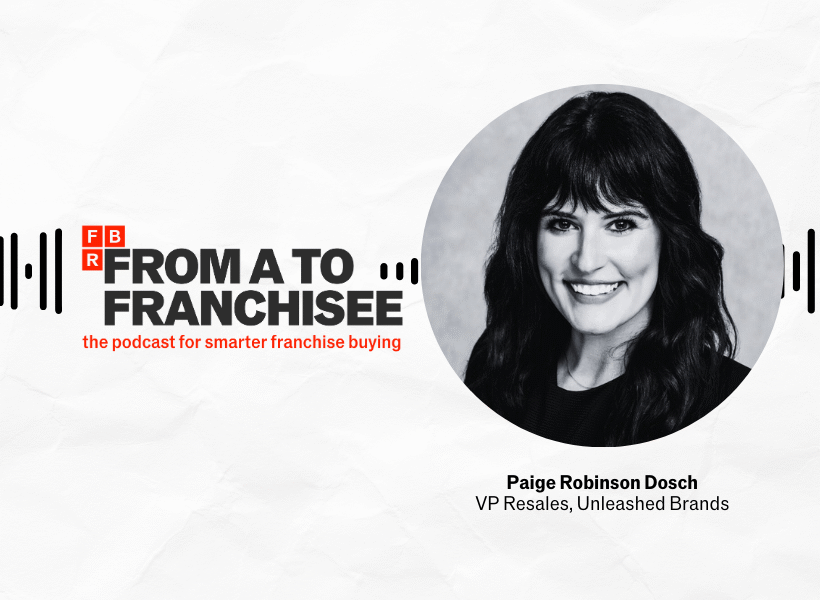
The podcast episode features Michelle Rowan and Paige Robinson Dosch discussing the intricacies of buying and selling franchise businesses. Paige, the VP of Franchise Resales at Unleashed Brands, shares her expertise on the benefits and challenges of acquiring existing franchises versus starting new ones. The conversation highlights the importance of having a clear exit strategy from the beginning, understanding the operational and financial aspects of a franchise, and the value of being part of a supportive franchise network. They also discuss the role of franchisors in maintaining brand integrity and the various factors that influence the decision to buy or sell a franchise, such as lifestyle changes and market opportunities.
Transcript
Michelle Rowan (00:04)
Welcome back to the podcast. Previously in other episodes, we’ve spoken to a couple of franchisees who have bought existing franchise businesses. Obviously, this can be a totally different experience than starting a franchise on your own from scratch. And so today we’re going to delve into the pros and cons of buying an existing franchise with who we think is an expert.
Paige Robinson-Dosh is a franchise leader with more than 15 years of experience helping franchise brands and owners navigate growth, transitions, and resale. As vice president of franchise resales at Unleashed Brands, she guides both sellers and buyers through the franchise resale process across multiple concepts with a strong focus on education and readiness.
Paige is also a multi-territory franchise owner herself with her husband, bringing firsthand operator experience to every conversation. Paige, thank you so much for joining us today. We’re so excited to have you break this down with us.
Paige Robinson Dosch (01:04)
Thank you so much for having me, Michelle. I am thrilled to be here.
Michelle Rowan (01:08)
Yes, yes. So what I want to start with is this is a fairly new role for you. So explain to us what your role as VP of franchise resales means. What does your day to day look like? What are you doing?
Paige Robinson Dosch (01:21)
would love to. So I lead the strategy and the execution around franchise transitions for our platform of seven brands at Unleashed Brands. So that just means helping existing owners prepare for their exit ⁓ and pairing them with qualified buyers and candidates that make sense financially, operationally, and culturally. So I spend a lot of time talking to franchise owners.
and helping them prepare their businesses for an eventual or imminent transition. And I also help shepherd the candidates through our eight step process, ⁓ alongside working with our vendors. So lenders, valuation experts, building the process and the strategy to help.
bring all of this together, not just for a single transaction, but across the portfolio of brands to help drive some consistency there as well.
Michelle Rowan (02:22)
Okay,
so this is perfect because we really have stressed to our audience of people that are looking to get into franchise, we call them franchise curious, how important your exit strategy is from the very beginning. So this is perfect that you’re kind of, mean, Unleashed is a larger platform brand in franchising, one of the largest. So they are fortunate enough to have you in this role where you’re kind of probably having these conversations a lot earlier than other franchisees or brands are having them.
I’ve been in franchising for 20 years and I will say over the last 20 years, it’s gotten so much better that franchisees are asking this question of what are your plans when that franchise agreement comes up? Because I don’t know, it used to feel like they were scared to ask the question or they didn’t, I don’t know why they didn’t talk about it before, but now I feel like they’re really talking to franchisees much earlier. And what you said, there’s so much work that goes into selling your business. And to do that by yourself would be overwhelming, but also too,
Paige Robinson Dosch (03:04)
Yes.
Yeah.
Michelle Rowan (03:21)
It’s not always as fast as you think it’s gonna be. You gotta pull a lot of information together.
Paige Robinson Dosch (03:22)
⁓ Absolutely.
And I love what you said about starting. It’s really about starting with the end in mind. Right. And we go through that. So step six of the eight step process for us is launch day, which for many brands is called Discovery Day, Decision Day. So it’s really kind of the culmination of everything that you’ve learned along the way. And it’s a two day process for us. And we spend an entire hour with the candidates talking about
Michelle Rowan (03:31)
Yeah.
Paige Robinson Dosch (03:52)
scaling their business and starting with the end, which can look very different depending on what your goals are. And so maybe it’s a legacy play for your kids or your grandkids, or maybe it’s to grow a multi-unit, multi-brand enterprise and then transition out of that and just create that enterprise value. so understanding what that looks like from the very, very beginning helps us.
Michelle Rowan (03:58)
Yeah. Yeah.
Paige Robinson Dosch (04:20)
as a franchisor and as a trusted advisor, help you prepare.
Michelle Rowan (04:25)
Yeah, well, and your end can change. You’re certainly allowed to change it. But the more clarity you have and what that goal is, the more accountable you are to making that business successful. So it’s awesome to think about it. It’s not overwhelming. It’s a really smart play. Okay. So what do you think you have sold in past lives? You’ve sold brand new spanking new territories as well. And on the resale piece, how does your franchise, how does a franchise resale differ from selling a brand new unit in your
Paige Robinson Dosch (04:27)
That’s right.
Michelle Rowan (04:54)
What do you think the big differences are?
Paige Robinson Dosch (04:57)
So I think first of all, you are looking at an operational asset. So you are buying cash flow, in many cases, an existing employee base ⁓ and historical data. And so in the lending landscape that we find ourselves in today, it can be advantageous to go with a project that is already existing.
know, customer base ⁓ and understanding what that might look like on a pro forma basis moving forward. With a new unit, you’re starting from scratch and that can be a great thing. I mean, I’m a huge advocate of franchising, whether it is new development, resale ⁓ or a combination of the two. But I think that when you are, when you’re thinking about your own operational wherewithal, your own financial wherewithal and what your goals are,
⁓ You know, a resale may make more sense if you want to get going more quickly with an existing footprint and then expand out from there. I think that new development, especially when you are in a brick and mortar business, a retail environment can take a little bit longer. And that might give people some comfort. Maybe you don’t want to start with a fully operational business on the second day of your franchise ownership career. And so those are really some, ⁓
Big differences, I would say, there.
Michelle Rowan (06:26)
So, I mean, you’ve mentioned kind of the person that’s, there’s just a different variety of people you’re talking to, of people that you’re working with that are interested in these resellers, or resale opportunities. What do you think the breakdown is as far as people that are first time franchisees versus more experienced operators that might have some experience of running a business?
Paige Robinson Dosch (06:49)
So at least in my experience with the two organizations that I’ve spent the most time with on the franchise or side, it’s a really healthy mix. We’re seeing a growing number and a growing share of experienced operators ⁓ that want and institutional capital, right? Family offices, institutional capital, experienced operators that want existing EBITDA. And that’s what their thesis is built around.
Michelle Rowan (06:58)
Okay.
Paige Robinson Dosch (07:17)
It’s built around an acquisition opportunity and then coupling that with de novo Growth. And then you’ve also got your first time franchise owner. I mean, that was me and my husband five years ago. And we looked at an acquisition and ultimately decided that starting from scratch was a better route for us. And so I think it’s a really healthy mix. It’s just dependent upon, number one, what’s available in the geography.
Michelle Rowan (07:29)
Yeah.
Yes.
Paige Robinson Dosch (07:46)
because if the territory is sold out, then you’re likely looking at an acquisition. Or if there’s a lot of white space there, then it may make sense to start fresh if you’re hoping to grow to five or 10 units and the market can support.
Michelle Rowan (08:00)
Yeah, and I think that’s great. So what I wanted to try and paint a picture of is I don’t want people to think, hey, this is just for these big family wealth offices that have a lot of money to invest and have this perfectly calculated roadmap that this can be something that you start when you’re thinking about, hey, I want to do something on my own or I want to do something different. This is still an opportunity for those first time franchisees really as well. Okay, cool. So let’s talk about
Paige Robinson Dosch (08:22)
Yes, yes.
Michelle Rowan (08:27)
some common reasons that people are selling. So ideally they’re at the end of their agreement, but that’s not always the case. So what are some other reasons that you are talking to franchisees and they say, it’s time for me to sell this?
Paige Robinson Dosch (08:41)
say that lifestyle changes, ⁓ capital constraints, ⁓ some sort of portfolio rebalancing that people are looking at. ⁓ What I’m seeing a lot of right now in the seven brands that I work with, there’s a lot of trading going on for markets. So
Michelle Rowan (09:06)
Interesting. Okay.
Paige Robinson Dosch (09:08)
maybe a family has decided that they are going to pick up and move from New Jersey to Florida or vice versa. And so I’ve seen some trades happening because they want to be in market with their business and to continue to grow, but they’re doing it in a different place. so franchising offers a really unique opportunity to be able to do that. ⁓ Certainly more than I would say, you know, just a, ⁓
Michelle Rowan (09:26)
Yeah.
Yeah.
Paige Robinson Dosch (09:36)
a typical local mom and pop style business. You it does afford you the opportunity to collaborate with your ⁓ fellow franchise owners and see what opportunities may be out there in that regard.
Michelle Rowan (09:47)
Awesome.
Yeah, and I think I just wanted to kind of dispel the myth that it’s just businesses in trouble because it’s not the case. You you talked about lifestyle changes, divorces, those can force a business sale because the people can’t come to terms as far as who’s going to operate it. ⁓ Death in the family. There’s there’s a lot of reasons, but there is also the opportunity to purchase a distressed location.
Paige Robinson Dosch (09:54)
Yes.
Michelle Rowan (10:12)
and ⁓ have the support to turn it around. Sometimes a distressed location is not about the location, it’s about the operator. So you’ll see a mix of what you’re looking at, but a resale opportunity gives you an opportunity to look at data and make those decisions of what makes sense to you. But this is not, we’re not talking about they’re selling because it’s not a good business to be in. So I just like to put that, yeah, yeah.
Paige Robinson Dosch (10:19)
event.
No, absolutely. And
I want to add to that. So just ⁓ to add to that, there are opportunities to buy really, really well performing units. And that is also a reason that people sell, because you’ve done really well and you’ve grown and you’ve been through COVID and you’ve been through all of these different scenarios that happen in the lifestyle or life cycle.
Michelle Rowan (10:47)
Yeah.
Paige Robinson Dosch (11:00)
of a business, then it just may be a really good time to capitalize on your investment that you’ve made however many years prior. So there are certainly those owners that are in my actionable opportunities list right now as well.
Michelle Rowan (11:14)
Yeah,
that’s great. How do you get the franchisees to signal that they want to talk with you? How are you getting that kind of buy-in from them? And I mean, this is great support. Like, if you’re an independent business owner and you’re going to sell your business, you don’t have access to this kind of help. And so just the fact that you’re within a franchise system where someone can guide you through what to expect, I feel like what I hear most from franchisors is franchisees have a very unrealistic picture of what their business is worth.
Paige Robinson Dosch (11:25)
Thanks
Yeah, yes, I do a lot of managing expectations and that’s a big part of it. And so I think that alongside the educational piece from the franchisor, we really do lean on our partnerships with we’ve got we’ve got two valuation firms that we work with ⁓ that can look at very much like real estate. They look at the market comps, what’s selling, what’s trading, what’s transacting in the vertical.
Michelle Rowan (11:47)
Yeah.
Paige Robinson Dosch (12:13)
and adjacent verticals in the last 12, 24 months. And so they have that market data. And then along with the P &Ls and the balance sheets of the unit in question, we can formulate a range very, very easily. So we’ve got two firms that we work with. That’s really the first step. We wanna make sure that the business is ready to go to market because there is no better way to kill a deal.
Michelle Rowan (12:35)
Mm-hmm.
Paige Robinson Dosch (12:39)
than not having all of your ducks in a row when you are ready to go and talk to a potential buyer because the hurry up and wait game doesn’t really fly. We need to make sure that everything is prepared operationally, financially, you know, and otherwise.
Michelle Rowan (12:57)
Yeah, that’s great. And it’s the best way to make sure you get the best return on your investment to have all that stuff in place. So that’s great. All right. So there’s a lot of advantages. So let’s name them. What do you think are the biggest advantages of buying an existing business versus starting a franchise from scratch?
Paige Robinson Dosch (13:06)
That’s right.
there are so many to hit on here, but I like speed to revenue because you’re buying a business that already has an existing customer base. You’ve got real financial data that you can look at to help you make a determination. And you’ve got, one would hope, ⁓ established operational foundation. So if the deal is priced correctly and you can diligence it,
Properly, mean that’s a huge advantage when you’re looking at an opportunity.
Michelle Rowan (13:46)
And you have staff in place already. I mean, that is the biggest thing that franchisees talk about is not having staff or finding the right people. So you’re inheriting a staff that knows the business and ⁓ you don’t have to start from scratch there. And customers, right? have revenue coming in, but you also have customers that you can market to. Yeah, that’s great. That’s awesome.
Paige Robinson Dosch (13:48)
That’s right.
us.
Yes, yes, absolutely.
Michelle Rowan (14:12)
Is there someone that you feel like is the best fit for a re-sell opportunity? Do you prefer certain skill set or experience or history that you’re looking for in running those businesses?
Paige Robinson Dosch (14:25)
So first of all, think that someone who’s brand new to franchising can be a great fit. I also think that ⁓ it’s a really great opportunity for operators who are already disciplined and understand the ins and outs of running the business every day. I also believe that, you we have to talk about capital here. It’s not all about the money, right? It’s not about just having the financial wherewithal to do it, but that is a big part of it.
⁓ And then just being comfortable around improving a system. So we talked about, you know, existing staff, we talked about existing operations. ⁓ That can be a huge win, but it can also be an opportunity for improvement. And so having that skillset of coming in and improving upon something that has already been built rather than building from scratch, think are, you know, those are good things to look out for.
Michelle Rowan (15:24)
Yeah, that’s great. Do you think that there’s any common risks or challenges that buyers should be prepared for? Is it different than a new franchise? Are there different things they should be thinking about ⁓ differently when they look at an existing business?
Paige Robinson Dosch (15:39)
Yes, I would say ⁓ make sure that the deal pencils, make sure that we’re not overpaying for the opportunity ⁓ because making sure that you’ve got that cashflow month over month ⁓ is something that is very, very important ⁓ and not assuming that the business is going to run itself. So it takes a lot of grit and that doesn’t ⁓
that doesn’t change whether you’re starting from scratch or acquiring an existing business.
Michelle Rowan (16:14)
Yeah, I love that because we constantly have, or I’ll say, I don’t mind that people agree or disagree with me. I think people are split on this whole ⁓ absentee, semi absentee promise that can sometimes be made. And so I think this is a great place to reinforce just because you’re buying an existing business does not mean that you should think you can be absentee, especially in the beginning. Like any business we say, you might get to the point.
Paige Robinson Dosch (16:26)
Mm-hmm.
Yes.
Michelle Rowan (16:41)
where it’s
running itself more, but you still should never go into an opportunity being like, am just buying this. It’s gonna do its thing. I’m gonna cash my checks.
Paige Robinson Dosch (16:49)
Oh, absolutely. mean, look, this stuff takes work. so culture, that takes a lot of work. Staffing and then the systems, it all takes time and a lot of intention and alignment. And so there’s a lot of effort that goes into that. And maybe you have an awesome general manager.
Michelle Rowan (16:53)
Yes.
Yes.
Yeah. Yes. I love that.
Paige Robinson Dosch (17:12)
⁓ gym director, center administrator, know, whatever that key person and stakeholder in leadership might be for you. But you will still have to be extremely engaged with that person to make sure that they are getting what they need to help you run your business effectively and efficiently.
Michelle Rowan (17:26)
Yes.
Yeah. Okay. So I want to take a second. now we’ve kind of talked about the first time franchise buyer, the person that could be interested in this resale opportunity, but let’s talk about some of those bigger opportunities. Talk to me about your platform strategy and the multi-brand growth because you have seven brands. What is that? Why is this a benefit of being part of Unleashed Brands specifically, but like, how does this fit into your growth strategy?
Paige Robinson Dosch (17:59)
I love that you asked this question because I am so passionate about it and the way, if I could just do a quick aside, the way that I landed at Unleashed Brands was because I wanted to become an Unleashed Brands franchisee and was ultimately swayed into joining the franchisor team. And you know what? I may still become an Unleashed franchisee at some point, but it was because of
the platform of opportunity that exists. And it’s all, I’m a relatively new mom, it’s all within the youth enrichment platform. so understanding that resales are a lever. So it’s a lever within a broader platform strategy. ⁓ So sophisticated buyers will typically combine acquisitions with new unit development.
And so we offer very unique opportunity to be able to do that with some legacy brands that have been around for 45 plus years and alongside some of the smaller brands that haven’t been around for very long, meaning that there is an abundance of white space available. ⁓ So building density in that way, I think is a really incredible opportunity when we think about enterprise value and an eventual.
Michelle Rowan (19:25)
Okay, so what we’re talking about, so I know your leadership team well, and so Michael created Unleashed Brand, the idea being that we’re gonna capture the parent who is your customer, mean, their children are your customer, from the very beginning to the very older teenage age. That’s the idea. So you have models in there, you have urban air, you have the trampoline parks, the interactive kinds of things, you have the little gym that has the, for the little kids to come and play.
So what you’re saying is they can buy a legacy resale location of one of your brands, but they could partner it with a brand new location of another one of the brands that could be part of this strategy that they have. The idea being we have this customer base that will want to participate in different things we have to offer services, experiences, that kind of thing. So I’m just breaking that down and using your brands as an example of what this would look like for this kind of bigger play. Okay.
Paige Robinson Dosch (20:23)
Yes, absolutely. So when
we think about the chief household officer, whoever that is, typically it’s mom, could be dad, but we want to be able to serve them and their families. So let’s take Water Wings for an example. That’s one of our newest brands and ⁓ we are growing very quickly with that brand, that’s the beginning along with the little gem. And then we focus into more of an urban air age group.
Then we move on into and alongside tutoring with Sylvan Class 101 for college prep. So yes, there is a, it’s really a Candyland map is how we visualized it and laid it out. And these are typically in daily needs areas. They’re brick and mortar concepts and they’re meant to attract and
Michelle Rowan (21:04)
Yeah.
Paige Robinson Dosch (21:19)
be a mode of convenience as well for the chief household officer. And so being in those daily needs routes with a multi or co-tenancy option, I think drives a lot of value.
Michelle Rowan (21:33)
Right. So the idea is that they’re all in one piece of real estate. So it’s very easy, especially if you have children of multiple ages, that you’re getting them to where they need to be. And it’s not an extra effort. And as a ⁓ multi-brand franchisee, you could have all of your concepts in like one plaza, one area. Okay. Got it. Yeah. Yeah. Yeah.
Paige Robinson Dosch (21:51)
You could, you could, and doesn’t always work out like that, right? I mean, it’s really
about what location is best in that particular market. ⁓ But when you couple it with, ⁓ we call it the Bonvoy of Youth Enrichment, we’ve got an app coming ⁓ that is going to pair all of the opportunities that will enable the chief household officer to go to one place. And so I think that you take that mindset and you
transfer it into kind of a retail scenario and that’s what you get.
Michelle Rowan (22:24)
Okay, cool. So I think that you’ve kind of laid out why this is attractive to those types of investors. That’s great. okay, I understand it. So we got it all. Okay, so now let’s go back. When you are working with candidates and they’re talking to your franchisees of the existing business, it gives them an opportunity to ask different questions than if you’re starting a new, you can’t ask things about the particular business, you can ask things about the brand or people in other markets, but.
Paige Robinson Dosch (22:34)
Yes.
Yes.
Michelle Rowan (22:53)
What are some questions that you think buyers should ask the franchisees that are running the business that they’re looking at buying when there’s a resale situation?
Paige Robinson Dosch (23:03)
Well, I would absolutely ask about the history of the operation. Are we asking specifically around what information that a particular buyer might be asking for from the franchise owner?
Michelle Rowan (23:16)
Yeah, you can, it’s
any advice you would give the candidate to either ask the owner, the franchise owner of the current location or ask themselves through this process before deciding if this is the right opportunity for them.
Paige Robinson Dosch (23:31)
So I would say absolutely dig into what staff looks like, what their day-to-day life looks like, because a big part of this is quality of life. So understanding ⁓ what that looks like for the existing or exiting franchise owner, I think is really important, ⁓ alongside what their transition looks like, because there are opportunities to keep
an existing owner on for a time. And that can be a huge benefit. So if you do have a buyer that might not have the availability to be within the four walls of the operation all day, every day, then partnering for a time with that exiting franchisee may make a lot of sense. ⁓ And then making sure that you understand really the operational opportunities and efficiencies.
Michelle Rowan (24:22)
Okay.
Paige Robinson Dosch (24:30)
of the location and then of course back to the numbers. You have to understand what makes it go every month from a capital requirement just to make sure that it’s a good fit for your own portfolio and investment.
Michelle Rowan (24:45)
Yeah. And do you think that it’s still important? So we really tell candidates that when you’re when you’re vetting a brand, talk to as many franchise owners as possible in a resale situation. Do you still coach them and that it’s important for them to talk to other owners of other locations?
Paige Robinson Dosch (25:00)
Yes, of course. mean, these people are going to ultimately, yes, of course. These men and women and business owners are going to be an extension of your sphere of influence and your peer group. And so creating a relationship with them from the outset is really, really, really important. And I’ve been fortunate enough in my career with different franchisors
Michelle Rowan (25:02)
I was hoping you’d say that.
Yeah.
Paige Robinson Dosch (25:27)
to see this work really, really well. Because the franchise owners are always going to talk to each other no matter what and you want that. You want that collaborative feel. And when it works really well, it’s the old rising tide lifts all boats scenario, right? Because you are going to be in constant communication with like-minded business owners that have likely already experienced whatever challenge you are facing.
Michelle Rowan (25:36)
Yes.
Yes.
Yes.
Paige Robinson Dosch (25:57)
And so
that just becomes a priceless value add. And another reason why franchising, I think, is the best opportunity when you’re thinking about business ownership.
Michelle Rowan (26:08)
Yeah, okay, so you’ve been a part of franchise brands, you’ve sold for other brands, and I know that you’re very connected to other people in development. So I’m gonna ask you some questions that you might not know the answer to, but I’m just gonna throw them at you. Is one, I know a lot of franchisors have a first right of refusal or have a lot of say in a sale.
Is that the case at all franchise brands and what does that mean for an existing franchisee? I just want them to understand what it means that you just can’t go off and find a buyer for your business and sell your business when you’re in a franchise system. In most cases, that’s what I believe. Is that true? Okay. And it’s for a good reason, right?
Paige Robinson Dosch (26:44)
Yes, that is very true.
Yes, yes, okay, think about it this way. I’m in Birmingham, Alabama, that’s where we live. If I’m in Birmingham and I own my franchise business and my neighbor that owns the territory next to me decides to go rogue and sell it to a random person who is not going to be a brand ambassador and carry the torch appropriately,
then my investment is now at risk because we have the same banner and the same brand above our doors. And so carrying that a step further, you’ve also got the franchisors risk ⁓ that they inherently take on when they invite someone new to join the system. And so understanding who you are inviting to join the system and that they are culturally a great fit.
operationally a great fit and so on. All of the things that we’ve already talked about here is very, very important. As we move through the life cycle of both a franchisor and kind of who you’re looking for. Not only that, I mean, just the brass tacks of it all, is illegal in your franchise agreement to just go and sell your business to someone without franchise or approval. So that’s probably what I should have led with because you just can’t do it.
Michelle Rowan (28:08)
Yeah.
Paige Robinson Dosch (28:10)
And if
Michelle Rowan (28:10)
Yeah.
Paige Robinson Dosch (28:11)
you do, there will likely be repercussions that no one wants to be involved in.
Michelle Rowan (28:14)
Yeah, yeah. Well,
I think it can have kind of a negative connotation with franchisees to say, they have all this control and they have all this say, but you’ve nailed it in that their responsibility is to the whole network, is to protect that investment and make sure that whoever’s coming in, I mean, they’re not looking to, I think in most cases, they’re not looking to hurt you or stop a sale. They just are trying to protect the brand, that their role is brand integrity. And so that is why those rules are in place. And I wanted to kind of get at that.
Paige Robinson Dosch (28:40)
Yes.
Michelle Rowan (28:44)
That said, I think the amount of support you get from the franchisor team can vary a lot. I don’t know if you’ve seen like the least amount of support to the most support, if you kind of have a range of what people could be asking questions about, if they are smart and thinking about that exit strategy from the very beginning. What kind of help should they expect from the franchisor or what do you feel like you guys are doing in Unleashed that is really just above and beyond and they won’t see in other brands?
Paige Robinson Dosch (29:11)
Well, I don’t know if folks won’t see this in other brands, but I do think that a bit of a differentiator for us is that we have a resale team. We have a dedicated resale team.
Michelle Rowan (29:22)
Yeah, yours is the first
title that I had heard be just focused on this process and with seven brands, it makes sense. mean, how many people are you working with in a given ⁓ month or a given quarter?
Paige Robinson Dosch (29:37)
I think our actionable pipeline across all of the brands is about 100 units.
Michelle Rowan (29:44)
Yeah, so this is like ⁓ a big reason that they want to have someone solely focused on this because you’re helping your franchisee that’s exiting and you’re also setting very realistic expectations, making sure that candidate is coming into the the resale, the resold franchise, not paying too much because they have to also make this a profitable business for them to be successful. So I think you guys are doing a lot and I just don’t know how little they might see in help with help from another brand in.
Paige Robinson Dosch (29:50)
Yes.
Michelle Rowan (30:14)
finding a buyer, finding the right buyer, understanding how to get their business ready.
Paige Robinson Dosch (30:19)
And I think that just developing the content collateral that is easily digestible for the franchisee and helping them understand that, yes, we are franchisor, we have rules and things that are in place for reason, but we’re also a partner. And so having a strategic partnership mindset where there is a trust, there’s a mutual trust for the franchisee to want to come to us early.
and say, this is what I’m thinking about, how can you help me? What do you think I should be doing to prepare my business for sale and be able to realize the most in enterprise value? And so that is what I spend a lot of time on, creating resources around those questions and easy collateral to follow video content, ⁓ partnerships with vendors.
Michelle Rowan (31:00)
Yes, yeah.
Paige Robinson Dosch (31:17)
things that we’ve kind of covered earlier in our conversation. But all of these things are really important. And when you think about a resale as opposed to a new candidate journey, there are so many different spokes in that wheel because there is the candidate that needs to go through the process. There is the selling franchisee who also needs a great deal of support. There is usually a landlord that is involved.
Michelle Rowan (31:42)
Right.
yeah.
Paige Robinson Dosch (31:46)
that you have to work with and make sure that you’re keeping them satisfied and that the lease terms are favorable and all of those great things. And then you’ve got lending as well and then franchise or as well. And so it’s this wheel of partnership that really has to be, it really has to be a consistent communication. And so being a conduit and that’s really how I describe myself and my team.
Michelle Rowan (32:09)
Yeah.
Paige Robinson Dosch (32:14)
is a trusted advisor, but also a conduit to help put all of those pieces in place. I’m very grateful that we have just a top drawer legal team that helps with this process as well, because it’s vendor relationships, it’s the transactional piece of closing the deal, it’s the new franchise agreement, it’s the consent to transfer all of the documentation and things that have to take place from a compliance perspective. And so it really is a complex transaction.
Michelle Rowan (32:43)
Yeah,
yeah, that’s great. Okay, so I want to get into some like reality checks on the financial side. Are resales usually more expensive than a new franchise?
Paige Robinson Dosch (32:56)
Okay, so they can be. I mean, if it’s a really well-run operation, then you’re paying for that. I mean, you’re paying to acquire a successful business. On the other side of that, there could be some opportunities and some untapped potential in a resale or an acquisition opportunity, which would allow you to come in
⁓ south of what you would need to invest into getting a new unit ramped up.
Michelle Rowan (33:29)
Okay. Does financing look different on a resale than it does for a startup?
Paige Robinson Dosch (33:37)
Yes, it can. It can be more favorable because you’ve got ⁓ financials that you can show. So the lenders like to see historical data. ⁓ And so it can certainly look different. Some lenders really like acquisitions as opposed to startups. ⁓ Some really focus on startups and new development, but they still will all expect
meaningful equity and reserves. So you have to make sure, ⁓ again, that ⁓ if you are coming to the table with maybe a little less cash and reserves than you may need. ⁓ My grandfather always used to say, save for a rainy day because it’s gonna rain. It’s just going to rain. And so if you are coming, looking at things from, ⁓
Michelle Rowan (34:28)
That’s right.
Paige Robinson Dosch (34:34)
everything needs to stay here at this benchmark or we’re gonna be in trouble, that’s probably an indicator that you might be overextending yourself. And so we like to protect against that as well.
Michelle Rowan (34:47)
Love
that. Okay, any misconceptions that you would share that buyers have? We talked a little bit about, well, we talked about sellers having misconceptions about valuating their business, but misconceptions that buyers have about valuation or buying cashflow, either one of those.
Paige Robinson Dosch (35:03)
yes, ⁓ cashflow equals comfort. It does not necessarily. ⁓ without the margins and the reserves piece that we just talked about, it really doesn’t. So I would say that that is a typical misconception. And again, it is about building your pro forma and making sure that the deal pencils in every sense of the word.
Michelle Rowan (35:08)
That’s…
Awesome. Okay. Any final advice that you have for prospective buyers, either something that can help them decide between a resale and a new franchise, ⁓ one thing that they could reflect on or anything that they should think about that you’ve seen that really separates a really good operator of a resale versus somebody that struggled.
Paige Robinson Dosch (35:46)
Okay, these are great. ⁓ This is multifaceted. I would say that ⁓ deciding between a new franchise and a resale, ⁓ I would reflect on, know, do you want to build momentum? Do you want to continue building momentum from something that’s already been created? Or do you want to build from zero and build from scratch? ⁓ And I think that those can be two distinct pathways. ⁓ And
Michelle Rowan (35:50)
Yeah.
Paige Robinson Dosch (36:16)
equally as rewarding. So that’s the first question that needs to be answered. And then separating the successful from those who struggle. We’ve got to have discipline on price. We’ve got to have respect for the business that you’re inheriting. And we have to have enough liquidity to weather the storms along the way. And then beyond that,
Michelle Rowan (36:19)
Absolutely. Okay.
Love that.
Paige Robinson Dosch (36:43)
I mean, I think that pretty well covers it. Did I miss anything that you’d asked?
Michelle Rowan (36:45)
Yeah. No, I mean,
I think maybe one more thing I would add is I don’t think enough franchisees focus on the culture that they’re building in their organizations. And so I think it goes with what you said. Do you want to build a culture from scratch or could you be a great leader coming in and taking over from either a really beloved owner of the business that’s been very involved or an SOB that you just need to turn things? I mean, you could inherit either way.
Paige Robinson Dosch (37:04)
Yes.
Yeah
Michelle Rowan (37:11)
But I think there has to be intentionality on how you care for your people to continue being able to build your business. But I was also then thinking, you don’t have to answer those questions and pick either way. You could do both. Like you said, you could be buying ⁓ an existing business and also opening new. So it might interest you to do both. And you have a solution for that too, which is pretty cool. Yeah.
Paige Robinson Dosch (37:11)
Yes!
Yes.
mean, opportunities
are going to present themselves. And so it really just depends on timing. Timing is everything in life. And so maybe there’s an actionable opportunity in your backyard that is right for acquisition, or maybe it makes more sense to develop de novo or brand new. And so just really kind of breaking that down ⁓ based on the opportunity and the timing, I think, is where we can come in to.
Michelle Rowan (37:36)
Yes.
Paige Robinson Dosch (38:00)
So the franchisor resource, the existing franchisees in the system, like we discussed, there are so many resources that you can tap into. And so again, just another reason to love franchising and the work that we do, isn’t it?
Michelle Rowan (38:08)
Yeah.
I know, I
know, I love it. I think you and I connected very early on because I just, your energy and love for franchising I think is equal to mine. It is a great opportunity for everybody out there, but you have to do your homework. You have to go in and be prepared to hustle and build something. This isn’t just something that’s being handed to you. So I appreciate you so much and coming and sharing this and helping educate our audience on the opportunities they have with resales. And for anyone listening, like every other opportunity, do your homework.
talk to all your franchisees, ask for data from the franchisees, and really validate your decision before you move forward so that you’re making the best opportunity you can in being successful. So thank you so much for joining us today, Paige.
Paige Robinson Dosch (38:58)
Thank you so much for having me and for anyone who would like, please connect with me on LinkedIn. Come visit us at Unleashed Brands. We might just have the perfect opportunity for you.
Michelle Rowan (39:00)
This is great.
Yeah.
That’s
right, awesome. Thank you, Paige.
Paige Robinson Dosch (39:11)
Thank you.