
Listen on Apple Podcasts | Listen on Spotify | Watch on YouTube
Summary
In this episode of “From A to Franchisee,” we delve into the often-overlooked aspects of franchise agreements that can significantly impact buyers. Joined by Megan Center, a seasoned franchise attorney, they explore the critical differences between the Franchise Disclosure Document (FDD) and the franchise agreement itself. The discussion highlights the importance of understanding territory rights, renewal terms, and potential red flags in agreements. Megan shares insights on the necessity of having a franchise attorney to navigate these complex documents and offers practical advice for prospective franchisees. The episode emphasizes the need for thorough research and alignment with the franchisor’s values to ensure a successful franchise experience.
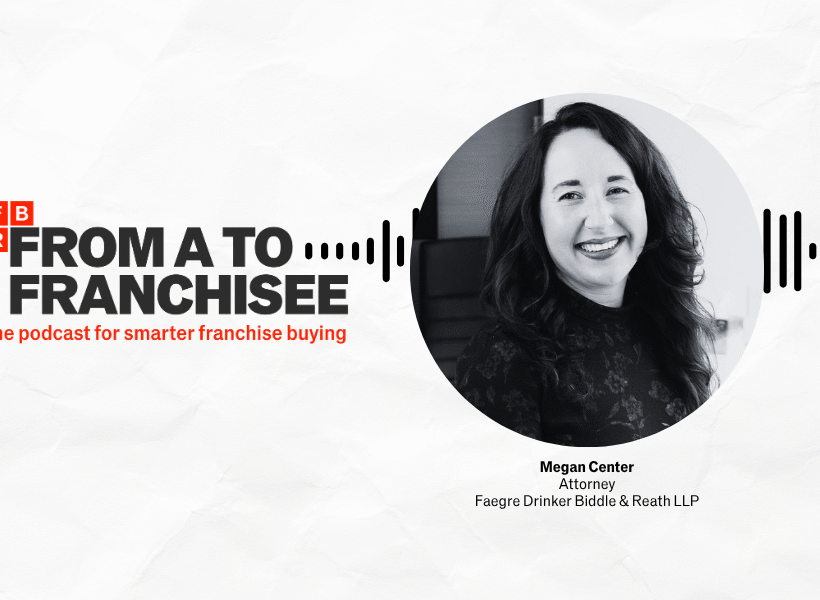
This episode is NOT sponsored. Megan Center is an attorney with Faegre, Drinker, Biddle, and Reath, a firm we at FBR enjoy working with.
Resources
- Listen: Understanding the Franchise Disclosure Document (FDD)
- Read: What is A Franchise Agreement? Everything You Need to Know
- Read: Do You Need A Franchise Lawyer?
- Download our FREE Industry Reports on Food & Beverage and Senior Care.
Transcript
Michelle Rowan (00:03)
All right, welcome back to From A to Franchisee. And today’s episode is about red flags in a franchise agreement that most buyers miss. Today, we’re gonna go deep on something that I think is the most underestimated step in the entire buying process. And that is the importance of what you’re signing in that franchise agreement.
If you’ve been listening for a while, may remember our episode with Tom Spadia where we spent a lot of time on the FDD, which is the franchise disclosure document. It’s a great foundation for today because the FDD tells you what you’re getting into, but the franchise agreement is what actually binds you to the brand. It is your contract for the next five to 10 years of your life. And most buyers treat it like a formality. And today we’re going to change that. I’m joined by Megan Center.
counsel in the franchise and distribution group at Faegre Drinker, Biddle, and Wreath. Megan has nearly 15 years of experience as a franchise attorney, advising franchisors at every stage of growth from emerging brands to large established systems.
She also represents buyers, sellers, and investors in franchise mergers and acquisitions, which means she’s been on both sides of this document. She’s written these agreements and she’s reviewed them on behalf of franchise buyers. That’s dual perspective that we are going to bring to you today. Megan, thank you so much for joining us today. We’re excited for your expertise.
Megan Center (01:08)
I know.
Thank you so much for having me.
Michelle Rowan (01:32)
So before we jump in, tell us a little bit about your background in franchising and what really drew you to this specialty of law that you’re practicing.
Megan Center (01:40)
So I think…
What happened to a lot of people is I just kind of fell into this industry. In college, I had no idea that this existed. In law school, I had no idea that this world, ⁓ this industry was as large and massive and fun as it is. So I graduated from law school in a time where the law, the legal market was not great. I moved out to my current ⁓ residence, not knowing anyone, not having a job. And ⁓ the franchise world was one of the
ones that offered me one. And I always enjoyed the intersection of regulatory law and the contract drafting. I knew I wanted to end up on the transactional side. Litigation just was not for me. This opportunity presented itself, and I am so happy that it did. I just can’t imagine not being in it now at this point. ⁓ And it’s such an interesting area of law that gets to touch on so many different things. And I’ll talk about that a little bit more.
Michelle Rowan (02:27)
Me too. I know, I know.
I love it. And we had the opportunity to work together on the Women’s Franchise Committee for the International Franchise Association. So I’m so glad you fell into franchising, that I fell into franchising and then we connected through that committee because that was the best. Okay. So on the podcast before, we’ve talked a lot about the FDD, just trying to kind of simplify it for people that aren’t familiar with franchising. But today we’re going to focus on the agreement.
Megan Center (02:44)
Yes.
Thank you.
I adore you. Yeah, absolutely.
Sure.
Michelle Rowan (03:02)
For anyone
Megan Center (03:02)
Yeah.
Michelle Rowan (03:03)
that hasn’t listened to the episode yet, can you just explain the difference between the FDD and the franchise agreement so that we can kind of highlight why this deserves its own episode?
Megan Center (03:13)
absolutely. So the franchise disclosure document gives you all of the information you need about what the offering is. So it goes through everything about the franchise or their background, the executive team, how much it costs, how much you may be able to make all of these different things about the offering. It also provides kind of a high level summary of certain portions of the franchise agreement. The contents of the FDD are governed by the FTC rule at the federal
level in certain states also require certain items to be in the FDD as well. But the franchise agreement is the actual binding, like you said in the beginning, the binding agreement that governs the relationship of the parties going forward. When you sign the franchise agreement, it’s not as though the FDD goes away because there is ⁓ available opportunities for claims in the event that the FDD was untrue, misleading those things. So it doesn’t really end there. But the franchise agreement is really what governs
the ongoing relationship between the franchisor and the franchisee during that 5-10 and then if you were new 20-30 whatever year period that you’re operating as business so I think it’s as important if not more important because of that.
Michelle Rowan (04:30)
Yeah, good. So in your experience, how many franchise buyers do you think actually read the agreement as careful as you would recommend before they sign off on it?
Megan Center (04:37)
⁓ gosh.
I would say not enough.
⁓ I think there’s a lot of heavy focus ⁓ on the FDD itself, which is a good starting point, particularly because it is written in a way that’s not legalese. It has to be written in plain English. So it’s easier to digest and read. But if you look at the parts that actually focus on the actual language of the franchise agreement, it’s very minimal compared to the 60 to 80 page agreement you may be signing. There are a lot of
nuances in that document. And from my perspective on the drafting side, it’s always drafted heavily in favor of the franchisor. So it’s incredibly important. course. Absolutely.
Michelle Rowan (05:21)
Right, which makes sense because they’re protecting this brand and if you
buy into the brand, they’re protecting your investment when you go to exit the system. So there’s a reason it is skewed towards the franchisor and that is really to protect your business. Yeah.
Megan Center (05:31)
Absolutely.
Absolutely. Yeah,
and at a certain point, you just need to understand, even if you’re not negotiating, even if you’re not trying to change any of the terms, you just need to understand what you’re signing and what you’re signing up for, truly.
Michelle Rowan (05:48)
Yeah. I think about when I signed my first mortgage and I was like, I don’t even want to read anything. Like just get me through this massive document. Seriously. was like, I assume that this company is big enough that they’ve done this a hundred times and I just signed my life away. It turned out well. Okay.
Megan Center (05:55)
I read
I know. Yeah. So glad it turned out well for you. ⁓ But I actually
read a lot of my mortgage documents because I’m a weirdo.
Michelle Rowan (06:10)
Yeah, yeah. Okay, so
let’s we’re going to talk about some red flags or and things to look for in that agreement. ⁓ Do you want to just kind of start with the list that we shared with you ahead of time? Or do you want to start with what you think is the biggest red flag or area to focus on in the agreement? Okay.
Megan Center (06:26)
I thought your list was good. So why don’t
we can start with the list and then from there, there may be offshoots.
Michelle Rowan (06:32)
Perfect.
So let’s start with the territory rights. I think that’s a big part of why people are buying into a franchise. ⁓ What should a buyer be looking for and how their territory is defined? And then what do you think are some red flags or warning signs that should kind of put their hackles up?
Megan Center (06:35)
Yeah.
Mm-hmm.
So the first thing is, what is the area in which you are looking at? And looking at how close the territory is or the proposed area is going to be to other units within the system and then other competitive businesses outside of the system. So at the start, how big is the territory? And I think from there, what you also wanna look at in the FTD, and not to tie it back to there, but making sure that the territory size is in line with any financial performance rep that is in the
because if the territories were much larger five, 10 years ago and it’s not representative of the size of the territory today, that’s something that you’ll, that you wouldn’t want to look at. But outside of that and the size and the location, because oftentimes it is not formally determined at signing of the franchise agreement because if it is a brick and mortar, you don’t know where the unit is actually going to be when you sign it. So understanding the typical size is very important.
Michelle Rowan (07:46)
Yeah. Yeah.
Megan Center (07:47)
From there,
you want to understand what are the protections that you’re getting, and then what are the rights that the franchisor is reserving. So typically, a franchise or is going to grant.
and say that they will not locate another affiliate-owned, corporate-owned, or ⁓ franchise unit within your territory. That’s what we would deem ⁓ exclusive or protected. So understanding if that’s the case at the outset. And if that’s not the case, what does that mean? Does it mean that they could locate someone literally next door to you? They could. Now, will they actually? You don’t know because they obviously don’t want to cannibalize.
as a unit. They want to make sure that everyone is able to grow. So probably wouldn’t be the best practice, but making sure that that rate is in there and you understand if they have the ability to do so. The second big point, sorry, go ahead. you want to? Yeah.
Michelle Rowan (08:47)
Yeah. Well, I was gonna say, so just on the territory, so you mentioned
the big territory is small. I think it’s good to explain. Sometimes when franchisers start, there’s less franchisees, zero franchisees in their system. So they give you this big territory because one, they probably don’t really know what they’re doing. And two, they just want to bring buyers on. So they’re promising a larger territory. They won’t change that on you within your agreement. When you come up for renewal,
they might look at your performance, where your customers are coming from and decide that it makes more sense to make it smaller. So really and truly the best protection you can have as a franchise owner is really work your territory because then that’s gonna be better for you when you come up on renewal. So I just wanted to explain that. And then also some franchisors have a model where they don’t give you protected territory, correct? Okay.
Megan Center (09:27)
Absolutely.
That is correct.
Michelle Rowan (09:40)
Are we seeing that less now
than we used to or is it still the same? Some people just think, especially if it’s not brick and mortar, that it’s population based and that there’s enough business in that area for multiple franchise owners to come into it. Do you see it as much? it less, is it happening less?
Megan Center (09:57)
I see it less than I saw five to 10 years ago. I see more systems and more of franchisees frankly demanding that there at least be some limited amount of protection. ⁓ And it sometimes is referred to particularly in service space when there’s not a brick and mortar ⁓ as a kind of a marketing protected area. maybe they will maybe some of the territories will overlap slightly or be really close, close to each other. But a franchise
will not allow a franchisee to market or solicit in another franchisees area, which is also incredibly important.
Michelle Rowan (10:35)
Yeah, yeah, absolutely. Okay, continue on. I just wanted to kind of hold up that territory.
Megan Center (10:39)
No, please.
⁓ So the other side of things is what the franchisor reserves the right to do. ⁓ Oftentimes these agreements are drafted when the franchisor is quite small. So in my practice, I advise my clients to make sure that they reserve the right to do any and everything that’s not granted to the franchisee. This means starting a new system that could be offering competitive services under different marks. ⁓ If it is a food-based, quick,
service, making sure that they have the right to do online sales directly to customers via their website. So lots of different things that the franchise or may not be doing at this moment, but that they have the right to do in the future. One that has come up incredibly common ⁓ because of private equity getting involved in the franchise space is the ability to be acquired by or acquire another competing brand, which could have units within the territory. So think of any of the conglomerates.
that exist out there. Part of the diligence that I do in my &A world is making sure that we’re not breaching the franchise agreement by having units that are deemed competitive with the system that’s already owned ⁓ and having that acquisition close. So those are all standard reservation of rights that I see. I would say that a franchise has never or should never negotiate those rights, but it is important for you to understand
Understand a franchisee that’s coming into a system what that means for you
Michelle Rowan (12:15)
Yeah. Okay, so this is called Territory Rights and Encroachment. Can you explain what encroachment means or give us an example of what that looks like from a franchisee’s perspective if it happens?
Megan Center (12:27)
Yeah, so I would say.
Anyone that’s trying to market in your territory, solicit a customer in your territory and encroaching on your territorial rights. So in the event that you are granted an exclusivity, ⁓ in the event that another franchisee within the system comes in, markets, solicits, services someone else within the territory. So what you would want to understand is does the franchisee have a policy in place if that happens? ⁓ What are they going to do? Are they going to step
in? Are they going to protect you? Are they going to take the steps to make sure that they are actively protecting ⁓ the rights of your territory? Now that’s a good question that I would say to ask not only to the franchisor, but when you’re doing your diligence and calling the franchisees that are in the system and even the franchisees that left the system, does the franchisor monitor this activity and protect the rights of all of the franchisees within the system in that way?
Michelle Rowan (13:26)
Okay, so you mentioned ⁓ the franchise or having the right to do e-commerce in the future or sell directly to your customers. What kind of questions should we be asking or looking at as far as what does that mean for sales that are happening from my territory?
Megan Center (13:31)
Okay.
Very good question.
⁓ What I always say is that typically the e-commerce sales, particularly in the food space, are not the typical customer, or not the typical person that would be taking away a customer from a quick service restaurant or thing like that. So a good example is ⁓ any restaurant has, you know, in the frozen food section, ⁓ different things that they may offer within their restaurant, but now they have a frozen version of it. It’s not the exact same thing. How I tell my franchise or client,
to pitch it to the franchisees is that, okay, we’re maybe getting another person exposed to the brand, exposed to the food item that may make them want to come into the restaurant instead. So I don’t view those as directly competitive per se, but it is still something that is a right that the franchisees are reserved. So asking the kind of questions about what is currently out there in the e-commerce space, what do they sell online? ⁓
Another example is soap making and then ⁓ one of, on the e-commerce site they can sell directly to the consumer. If you’re doing a soap making business, typically it’s a whole experience. So you go in, you smell everything, you get to pick your scents, you do all these different things. So I think ⁓ the franchise or should pitch it in a way that is…
demonstrating the increase of sales and the increase of exposure to the brand, but on the franchisee side, you want to ask what those activities are. And more importantly, do you derive any revenue from the sales that are made in the territory? 99 % of the time, you are not going to.
Michelle Rowan (15:23)
Yeah.
Yeah,
yeah. And so a well-known case of this is when Dunkin’ Donuts decided to put their coffee beans in stores and the franchisees did not react well to it. And then I think they moved forward and did kind of a rev share model. But the other story is a Roma Joes and they’re also a coffee place, but they do these rush drinks that people are nuts for.
Megan Center (15:34)
No.
Bye.
huh.
Mm-hmm.
Michelle Rowan (15:52)
And when they started
Megan Center (15:52)
Mm-hmm.
Michelle Rowan (15:53)
selling them in cans in stores, it actually increased traffic to the physical stores. So you could also think about this as a marketing cost and awareness. So yeah, so it can go well and it cannot go well, but I think just understanding that as you go into the system, what it looks like.
Megan Center (15:55)
Yeah.
Absolutely.
Yeah, and I think if the approach that the franchisor has is that there’s not a rev share model, this is another one that I would say the franchisor is not going to negotiate on because they’re not going to make a one-off exception for such a large part of the business.
Michelle Rowan (16:15)
Right. Yeah.
Yeah,
absolutely. Okay, next let’s talk about the renewal terms and fees. So we’re talking about a five to 10 year agreement that you first signed. What happens at a renewal that buyers don’t anticipate or don’t know from when they signed that first agreement?
Megan Center (16:27)
Yes.
Thank you.
Absolutely. The one term that it should always be in there, and I mostly see it, is that when you were new, you have to sign the then current form of agreement that they are offering to new people at the time of signing, which could mean differing fees, ⁓ differing software, computer, all of those different things. ⁓ And it could also mean it could also give them the right to adjust the territory size of circling back
to what we were talking about about the territories. A lot of systems for the legacy units that were granted kind of these very large swaths of land because they were brand new. ⁓ Oftentimes the franchise or at that point will try to take advantage of the opportunity to revisit the terms of the agreement and say, okay, the territory size is this now. So now you either have to break this up into three or we’re gonna cut down the territory and it’s gonna be more in line with what we’re offering today.
Michelle Rowan (17:36)
Yeah, so they’re gonna
Megan Center (17:37)
That’s number one.
Michelle Rowan (17:37)
say you’re paying for these other two territories we’ve created or we’re gonna sell them to someone else. That’s typical, yeah, okay.
Megan Center (17:44)
Correct. Correct.
with the fees, there could be new minimum performance standards that were not in there before. So making sure you understand if you were not subject to them, you may be now. Or if you were subject to them, they may be different on renewal based on the fact that it’s already an operating unit.
Michelle Rowan (18:01)
Yeah,
and that could be technology fees, marketing fees. You could see any difference of what they didn’t catch that first time they’ve added in since. We’ll get added to yours. How about renewal fees?
Megan Center (18:04)
anything.
Absolutely.
So I was just going to say a good way to look at that is just to ask for a red line copy of the franchise agreement. So you can say, hey, I signed in 2020. I want a red line against the 2025, 2026 version whenever you’re renewing. So you could quickly identify each of those things.
Michelle Rowan (18:27)
awesome.
Okay, so the franchise will provide that to you.
Megan Center (18:30)
Yeah, I mean they should, but yeah, you can ask. That’s an easy way to do it.
Michelle Rowan (18:32)
Okay, okay.
Okay, so how about renewal fees? Are those, are there always renewal fees? Are they standard? What do those look like?
Megan Center (18:42)
There are not always renewal fees. good friend Paul Pickett does not have a renewal fee in his Wild Birds and ⁓ he said that I had to shout him out because I told him I couldn’t do a call until later today. So there’s my shout out to him. ⁓ Typically I do see a renewal fee though. What I tell my Franchiseur clients is it’s not meant to be a moneymaker. It’s meant to recoup the cost that the Franchiseur incurs in connection with approving the renewal. So typically, depending upon the type of business that’s gonna be the
or maybe doing an audit on site, maybe doing an evaluation of modernization requirements, anything like that, the franchisees are having to provide additional training. ⁓ So typically I either see it as a flat amount, five, $10,000 or a percentage of the initial fee. as the initial fee grows, that fee grows slightly, but it’s usually not more than 25%.
of the current initial fee.
Michelle Rowan (19:44)
Yeah, and you brought up
a good point is that ⁓ franchise brands are, if you have a physical space, tend to go through remodels because they want to keep it a place that customers want to come into. So if you’ve not ⁓ done any of those remodels, it will be usually a contingency of that resigning that you do it. We lost our local Dairy Queen because of that. It was very sad. Yeah.
Megan Center (19:54)
correct.
really? I
love driving around and seeing the differing signage of those, because now that we’re so exposed to the industry, we know why all these signs are so different when you drive through and see such a different signage.
Michelle Rowan (20:18)
Yeah.
Yeah. How about any of the stuff that we just talked about in the renewal thing? Any of that negotiable or you’re no, you’re going to see the same thing.
Megan Center (20:27)
One thing that I have seen go through is if you request
on the request to sign the then current form of agreement. I would say a franchisee was probably not gonna agree to waive that requirement. However, what you can do is say, I wanna keep my territory and I wanna keep my fee structure. ⁓ So those are two things that you can kind of guarantee that I have seen so that you’re not paying a royalty of 7 % of gross sales now and all of a sudden it jumps to nine, 10, whatever it may be upon renewal. So that’s two good things that can give you a little bit of comfort. ⁓
as you renew, you can try and put a cap on the modernization requirement. ⁓ That’s a little bit more difficult to determine just because you can’t predict the future as to how that unit is going to be at that point. So you can try and do that, but generally those are the things that I would ⁓ request. The other thing is,
the renewal condition is probably that you have to be in compliance with your franchise agreement at the time that you renew, at the time that you request to renew, at renewal. And sometimes it’ll even say that you’ve had to comply with it during the entirety of the franchise relationship, which is a long period of time, you know, one little… ⁓
misstep could technically be a default. Now, there are state laws in place that protect against, you you missed a payment one month out of a five-year term. Is that really enough to not renew someone? Probably not. But you can try and say, so long as the franchisee has substantially complied with all of the terms of the franchise agreement and cured any defaults during the term of the agreement, that’s a good way to add a little bit of a layer of protection for that specific renewal condition.
Michelle Rowan (22:19)
Yeah, and I would say too, franchisees aren’t looking to default franchisees. It’s an expensive, it’s a distraction. Do they have to put that in their FDD if they default someone? Okay.
Megan Center (22:25)
Correct.
Not if they default,
but if a franchisee initiates some kind of litigation against them. then if a franchisee initiates a lawsuit, they have to disclose that as well. So we try to avoid that. No.
Michelle Rowan (22:35)
exit. Yeah, okay. yeah, litigation is always in the FTD.
Yeah, so I don’t want people to be scared. Yeah, they’re not looking to default you for a late
payment one time. Like that is not their, well, if they’re great franchisor, that’s not their go-to. They’re not, well, and Brian Schnell from Fagrey will always say, if you are pulling out your franchise agreement to have conversations and work things out with your franchisee, that is not good behavior. You are really trying to focus on that relationship before that agreement comes out. So yeah, yeah, yeah.
Megan Center (22:49)
all.
Thank you.
absolutely. And that’s why I
try and not get involved if I don’t have to. It’s like telling my two kids to work it out. ⁓
Michelle Rowan (23:15)
Yeah, right. OK. All right. Yeah, that’s right. ⁓
that must be so fun to have ⁓ a lawyer as a parent when you’re fighting with your sibling.
Megan Center (23:27)
Oh my gosh, side note, I was just talking to someone about this the other day because every time my kids ask for more screen time, I make them negotiate with me. I’m like, why should I give you more screen time? So my kids are gonna be insane. My kids are gonna be insane.
Michelle Rowan (23:35)
That would be done for me. I
love it. All right, so let’s talk about transfers and exits. So we really try and coach people that are just looking to get into franchise to think about that exit strategy from day one. Not enough people do that. And of course it can change over five or 10 years. But what does the franchise agreement usually say about when you can sell your business and any red flags that you would give the audience to consider when looking at those?
Megan Center (23:44)
Hmm. ⁓
Yeah.
So the transfer definition is usually incredibly broad. ⁓ It is usually… ⁓
covers any kind of assignment that you could think of. So it’s usually any assignment of the franchise agreement, any assignment of any rights under the franchise agreement that the franchisee has, but also any change in ownership. ⁓ Not necessarily, it could have a threshold, so you could transfer 5 % to someone else or something like that, but typically it is any change in ownership. the transfer definition is incredibly broad. So it’s important to know that you
really cannot make any changes without the franchisor’s approval.
⁓ So understanding anything that you may want to do. So if you sign it as an individual, create an entity, that’s technically a transfer. Now a franchise or is not gonna gawk at you assigning to an entity that you wholly own. But if you are working on tax structuring ⁓ and creating trusts or anything like that, that’s just something you have to think of in connection with the franchise agreement and making sure that you’re complying with all.
Michelle Rowan (25:13)
or bringing a partner
into your business. Yeah.
Megan Center (25:15)
Absolutely. If
you’re intending to bring someone else, understanding that that partner is probably going to have to sign the personal guarantee, the same thing that you did, and making sure that person is on board with that.
Michelle Rowan (25:27)
Yeah, well, and they’ll probably do all the same things they did for you when you went through that process. They’re going to do checks on you and that person. it’s basically starting from scratch with that new person you want to add. Yeah.
Megan Center (25:39)
Absolutely. And then
the red flags that I would say are similar to renewal. There’s going to be a ⁓ renewal fee. ⁓ I would say maybe you can ask for an exception ⁓ for if you’re transferring to someone already within the system. ⁓ So that’s a good way to reduce the cost because again, I tell my clients that the transfer fee is not a moneymaker. It is to cover your costs in connection with approving the transfer. So this unit is already open and operating. So the costs are slightly
less than a brand new unit that you have to get open and operating. However, if it’s a new system, if it’s a new person coming into the system, you still have to train them, you have to approve them, you have to go through all of those things to make sure that that’s a good person for the system. And also understanding that you don’t have the free discretion as you would if you had a separate business not associated with a franchise to sell to whoever you want. The franchisor still has that overarching approval of the person.
And for good reason, you can’t just sell to someone that they don’t know. It’s the same approval that this person obtained in order to start operating the franchise.
Michelle Rowan (26:52)
Okay, so I think it’s a little bit different from what you’re talking about with the approval process, but I want to talk about the right of first refusal. ⁓ So that’s, think, a little bit different. Can you just kind of talk through what the right of ⁓ first refusal means to a franchisee that’s signing this agreement?
Megan Center (26:59)
Yes.
Absolutely.
Typically, the franchisor will have a first right of refusal if there is someone that wants to come and buy your business. Typically, it’s any portion of your business. Now, franchisors are really not in the business that I’m aware of, of buying portions of an entity of a business. So it’s usually not, but that right is still in there and they still do technically have that right of first refusal for that portion of the business. So it means that if you have a third party buyer that comes in
and
wants to purchase your business. The franchisor has the option ⁓ to buy that business first on the terms that were offered to you by the third party. So they can step in and buy it at the same terms that the third party would. Now they typically, they have to match the terms. So you’re typically not getting any less money. They can usually substitute cash or differing payments in lieu of cash in the event that you’re getting an all cash offer.
So looking at the terms of the rofer in that way to make sure that you’re comfortable with it is an important thing to look at. Because I would say time value of money, you have to match the offer exactly as is. You can’t substitute a promissory note ⁓ or a different payment structure if this person’s gonna offer me cash upfront.
Michelle Rowan (28:31)
Okay, think that’s a good.
Megan Center (28:32)
And typically
it has to be accepted within a certain period of time. And then if the franchisor waves it right and they don’t want to exercise it, then typically the franchisee would have a certain period of time in order to close the deal afterwards. knowing that sometimes buyers get scared if there is a ropher and you don’t want to lose that buyer. So making sure that that time period is rather quick if the franchisor ultimately does want to exercise.
and then the time period within which that they have to give you an answer should be really quick.
Michelle Rowan (29:07)
Okay, first time I’ve heard that acronym. So, ROFER is right of first refusal. Look at that. Little, little legal lingo for us. Okay. All right. All right. Let’s talk about termination clauses. What are the most common grounds for termination? Anything that would surprise a buyer that’s reading this agreement?
Megan Center (29:10)
Roafer! yeah! Yeah!
Yeah.
I typically, as you can imagine, draft these termination provisions very broad. ⁓ They usually come in buckets, and the buckets are usually immediate term without notice. So think… ⁓
Think fraud, think transferring without approval, think bankruptcy, kind of these different things. There’s a second bucket of termination immediately with notice. ⁓ That’s one you really have to watch for because that one is usually pretty broad and that is one where you’ll probably want to revisit or at least ask for concessions or a cure period for some of the terminable offenses. I’ve seen failure to use
approved products, failure to use approved suppliers, ⁓ kind of what I would still deem a pretty big deal. But if you do it once and you cure within a short period of time, then that should probably be allowed. And I think that frantezors are more apt to give a little bit of wiggle room on that. But I’ve seen agreements that have 40 terminable clauses, and it’s important to read kind of each one of those and understand whether there’s a cure period or
not. then the last bucket is termination. Please. No, go ahead.
Michelle Rowan (30:49)
Well, just want to pause right there because I was going to explain. The cure period
is you’ve done something wrong. Here’s your opportunity to make it right, correct? OK.
Megan Center (30:59)
That’s exactly right. ⁓
the franchise or the franchise or does have to put you on notice if they are trying to terminate. So the agreement will say ⁓ you will be terminated if you fail to cure.
this thing within the cure period identified in the default notice. And the franchise or does have to provide you formal notice of the default and then formal ⁓ notice of what you have to do to cure. So it’ll outline what exactly it should, it should outline. What’s that? A PIP. That’s exactly what it is. It’s exactly what it is. So it’ll say you have to do this, you have to do this, you have to send us. ⁓
Michelle Rowan (31:26)
It’s like a PIP plan. It’s like a PIP. Yeah.
Megan Center (31:37)
written confirmation that you’ve handled these things and then it has a specific time period within which you are required to do so. Now there are state laws that also regulate when a franchisor can terminate, can refuse to renew, or can refuse to approve a transfer. So some of the time periods in the franchise agreement may differ based on what state you’re in. So think California for example, they have a statute in place that gives
longer cure periods for a lot of the terminable offenses. So making sure that you understand your rights under state law in addition to what the franchise agreement says. Correct. ⁓
Michelle Rowan (32:18)
Okay, so those could be two different things and you would have to call. Okay, got it. That’s why
you should have an attorney help you with this.
Megan Center (32:25)
That is why you
should have an attorney, not only an attorney, a franchise attorney, which we’ll talk about a little bit later, but a franchise attorney that understands the nuances of the franchise relationship, the regulatory scheme, ⁓ all of these different parts of it. It’s hyper-specific area of law.
Michelle Rowan (32:30)
Yes.
Absolutely.
the state laws. Yeah. Yeah.
Allison Dudas (32:46)
We at Franchise Business Review are always looking for new ways to support people who are curious about investing in a franchise. That’s why we created the new Food and Beverage Sector Report. If you’re curious about the food and beverage industry, you’ve got to download this free report on our site. This will give you insight into what this industry is like, from salary to how many hours on average franchisees work per week you need to have this resource.
Visit franchisebusinessreview.com slash food to download your free copy today.
Michelle Rowan (33:24)
Okay. Did you cover all the termination buckets? Because I know I stopped you for the cure period. Did we hit them all?
Megan Center (33:31)
⁓
Usually I see a bucket for termination with a short cure period and then a termination, anything else, 30 day cure period. So those are kind the last buckets that I see, but making sure that those are all in line. And if you want a cure period for one of the offenses that are in the earlier buckets, making sure that you understand exactly what your cure period is. a good one I see is failure to open on time. I often see it that it’s terminable upon notice without
out
a cure period. That’s a pretty easy one that you can say so long as everyone is progressing towards the opening and you’re doing everything using commercially reasonable efforts to open on time. If there’s a delay because a permit is delayed, know, things happen. We know this. ⁓ So that’s a good one to ask for a cure period, but just making sure that you understand what those are.
Michelle Rowan (34:22)
Yeah,
and that I think is also really aligned with what we talk about is franchise awards really sometimes want to focus on these multi-packs or these area development things and they’ll have a schedule for you to open and it would be great to kind of get an overall industry number of how many of those actually happen on time. But it would be really, really interesting because again, you should ease into this and you want to make sure one location or territory is really up and running and successful before you keep putting more money into it.
Megan Center (34:30)
Mmm.
That was really interesting.
Michelle Rowan (34:51)
And some franchisors will really hold you to that timetable, but others will allow you more space as long as they see that that effort is focused on growth for them, because otherwise they’re going to yank it back and sell it to someone else. Yeah.
Megan Center (35:00)
Absolutely.
Absolutely, because they
want you to open within that period of time and be able to penetrate the market and sell within that area within a quick period of time. I mean, circling on the multi-unit versus a single unit purchase in and of itself, both offerings will be described in the FDD. The multi-unit offering is typically a separate form of agreement that has a time period for payment of the fees, a time period for openings. ⁓ If you don’t have experience
Michelle Rowan (35:10)
Right.
Yeah.
Megan Center (35:33)
within the industry in which you are buying, definitely think twice about purchasing a multi-unit because you don’t know exactly what you’re getting into. I mean, if you’ve operated Duncan, going back to the examples before, if you’ve operated Duncan forever, you leave the system for whatever reason, you’re after your post-term non-compete, whatever it may be, and you want to open a Romajos, you have the experience necessary to understand kind of what it takes to operate a coffee shop. But if you’re brand new to one
Michelle Rowan (35:39)
great advice.
Megan Center (36:02)
of those two systems and you sign up to buy, to open five, 10, whatever it may be within a five, 10 year period, that’s aggressive. Unless you have a full built out team that’s gonna help you open all of those.
Michelle Rowan (36:14)
Yeah. Yeah,
absolutely. ⁓ Okay, so let’s talk about for again, thinking about the end, just being aware, educating people, what happens to the business if the franchisee is terminated? What happens to the equipment, the lease, the customers? How does that look like? And is it outlined in the agreement? But what is what should the franchisee expect if that happens? And we’re hoping we’re doing enough educating upfront that this is not going to happen. But again, we just want to share it.
Megan Center (36:24)
Mm-hmm.
Yeah, right.
No, of course. So typically the franchisor is going to say, I’ll start at the customer level because each one is a little bit different. So typically the franchise agreement is going to say that the franchise or owns all of the customers, no matter what kind of business you operate, whether it be the social media followers that you have for your brick and mortar, your customer list, your loyalty program. If you’re service based, all of the customers that you’ve ever serviced within your area, those are typically owned by the franchise or which means you
have no right to them post-term and the franchise or does not have to pay you any amount of money to continue to service those customers within that period of time.
Michelle Rowan (37:23)
So typically, you see the franchise or the corporate team will come in and run that location until they’re trying to find a new operator for it? Do you see them shut the door? What is most common that you kind of see when there is a termination?
Megan Center (37:39)
So it depends on the offense. ⁓ if it’s a ⁓ food issue, a public health and safety issue, something like that, and the corporate team has the capacity to go in and operate, then I will see that. Because best case scenario is for units to stay open. A franchise or does not want closed units under almost any circumstance unless they absolutely have to. their best case scenario is to
Michelle Rowan (37:58)
right.
Megan Center (38:09)
to
do some workout with the departing owner. So say, hey, you’re in default, you’re not meeting your minimums, you’re not doing X, Y, Z. We don’t think you’re a good fit for the system anymore, but we wanna give you the opportunity to get back part of your investment. So we’re gonna give you six months to sell. That is best case scenario.
⁓ So that still gives the franchisee an opportunity to recoup some of it because if they terminate without giving that opportunity, then you could lose everything. The franchisor likely has the right to step in and operate and manage during any default. So making sure that you understand.
Michelle Rowan (38:50)
So you default,
you lose everything inside that building. Good, okay, good.
Megan Center (38:54)
could potentially. ⁓
This is a really fact-dependent analysis as to whether the franchise or should go in and operate, because some states, again,
only allow you to operate in an interim fashion for 30, 60, 90 days without checking in with the franchisee during that period of time. But in states like the Midwest, like Ohio, where I’m from, there aren’t restrictions on that. So they could go in and take over the operation, take all of the funds and then take a management fee on top of the fees that you already have to pay, royalty fee, tech fees, ad fees, all
those things. ⁓
So they get compensated for going in and operating. And what they can also do is say, okay, we’re going in and operating because it’s term term terminated immediately. They usually have a right of first refusal to purchase the equipment. So you do own the equipment. If you have a brick and mortar, you buy ovens, chairs, tables, whatever it may be within the unit themselves. The franchisee does own that and the franchise or does have to compensate for those items. However, if you have other debt, they have the
to satisfy that debt first. If you have other creditors, they have the right to satisfy all of those things first. And then the valuation is usually outlined in the franchise agreement themselves. I feel like I’m giving away all my trade secrets here for what I draft. ⁓ The valuation is typically outlined in there and it’s usually fair market value, depreciation, depreciable. ⁓
value and it’s usually the lesser of those two things. So the franchise owner is going to choose the valuation that benefits them at the same time. So you’re not getting the exact amount that you paid for it, particularly. Correct.
Michelle Rowan (40:38)
Right, right, of course, yeah.
Well, and if you’re leasing that equipment and you don’t own it, you’re probably not
going to see anything after that’s all.
Megan Center (40:49)
Exactly correct. But then you
also have to think on the other side of the coin. The franchisor is stepping in and taking over the operation. If you have years left on your lease, that’s a liability that you could technically be responsible for, just like the franchise agreement. And tying into one thing that you always want to look for is whether there is a liquidated damages provision. So at a high level, a liquidated damages provision is a contractual rate that the franchise
Michelle Rowan (40:54)
Yeah.
Megan Center (41:19)
or will put in there because for a termination of a franchise agreement that ends prior to the end of the term to compensate the franchise or for what they deem the benefit of the bargain or what they were expecting to get out of the entire term of the franchise agreement. Typically, depending on the type of business in the state, it’s enforceable to a certain extent. So usually not more than two years ⁓ worth of royalty fees and ad fund fees.
Michelle Rowan (41:49)
Okay, that’s
what was going to say is I was going to put it into like you signed a 10 year agreement. They want royalties for 10 years. So if you get terminated in year five, they could ask for five additional years of royalties. And you’re saying typically a state comes in and says it’s up to two years.
Megan Center (41:49)
about it.
Correct.
So typically ⁓ in the franchise agreement, the contractual rate, what I advise my clients is you do the lesser of two years or the remaining amount under the franchise agreement. Five years is never gonna happen. mean, help me on that, but.
Michelle Rowan (42:15)
Okay, perfect. Yeah, yeah. Well, and if the person’s terminated, most likely there’s
money issues, so it’s…
Megan Center (42:25)
Well,
and that’s the other thing that I talked to my Franchise Aure clients about. Is this even worth it? What are you going after? You’re going in to operate because they weren’t able to operate. You’re really going to go after them for liquidated damages? And particularly when you’re in that scenario, the Franchise Aure is getting access to the unit and is able to operate. So how much are they actually losing outside of their expenses that they’re incurring? So looking at that, seeing if the Franchise Aure will remove that is one of the things
Michelle Rowan (42:36)
Yeah.
Yeah.
Megan Center (42:55)
that I would say at the top. absolutely.
Michelle Rowan (42:56)
is negotiable or to ask. so liquidated, liquidated damages. Is that how you stated
it? Okay.
Megan Center (43:03)
liquidated damages,
either removing it in its entirety, limiting it six months, limiting it in some fashion, because you will be signing a personal guarantee attached to this agreement. And that means you in your individual capacity are liable for any and everything under that agreement, including that liquidated damages clause.
Michelle Rowan (43:06)
Mm-hmm.
That’s right. Yeah.
And we’re hoping that no one ever gets to this point, but again, this is just knowledge. All right. Let’s talk about non-competes. Almost every franchise agreement has some kind of non-compete. What do you think is reasonable or what would be a red flag that you see under this area?
Megan Center (43:29)
⁓ never in her. Yeah.
Oof.
So it’s so funny that we’re talking about this now because I just posted about Virginia’s new law that. ⁓ yeah. So California has always had a very strict approach to non-competes. But now Virginia has outright banned post-term non-competes in branch’s agreements, which so like we’re all, my whole team is like meeting about it today as to how to approach it. But it’s another state that’s considering this.
Michelle Rowan (43:47)
I saw that because my family’s in Virginia. So I saw that post.
So like in
Virginia, technically I could own a Dave’s Hot Chicken and then go buy a KFC. I pulled that old brand out.
Megan Center (44:14)
So interim no, post-term yes, you would be able to do that. So essentially it’s giving people the right to continue to earn a living after the term of this agreement, which I have thought about it. the term. No.
Michelle Rowan (44:17)
Okay. Okay. Crazy.
after the term, not while they’re in it, because I was like, that is so scary, because then you can like basically take
people’s trade secrets from the brand across platforms. Okay, so it’s post.
Megan Center (44:37)
But
you could turn around the next day and do the same thing though, which is, is the crazy part. And I mean, I know this, this could be a whole separate podcast on this because you still have rights with respect to your confidential and proprietary information. And that is still yours. And they cannot technically use that. That’s why owning the customers, owning the customer list, data, everything around that stuff is so important. ⁓ But it’s very difficult to prove without a non-compete in place. Like it’s so hyper fact specific. You have to tie directly
Michelle Rowan (44:40)
Yeah, yeah. my gosh.
Megan Center (45:07)
parts of the manual that they are using in their new operations. And it’s an expensive ⁓ endeavor without that post term non-compete. So typically turning back to what, so franchisees in Virginia, you’re welcome, is what the answer is right now for them. most, so a non-compete is governed by state law and it has to be reasonable with respect to time, geography and scope. So time is usually
Michelle Rowan (45:13)
That’s right. Yeah.
Okay.
Megan Center (45:37)
no more than two years will be enforceable, lesser in certain states depending upon their approach to it. ⁓ Geography, so making sure that the geographical scope of the not compete ⁓ ties to where the franchisee is actually servicing. So it has to be tied to something. I’ve seen it too broad and unenforceable where it says you can’t open anything within your local territory, within the
a radius of your territory, but then also you can’t open anything within a radius of any other unit within our system. That’s typically where it gets too broad and unreasonable depending upon the state where it’s being enforced because…
Michelle Rowan (46:22)
Okay, so what you’re saying is like
I close my doors and then I couldn’t have a competing brand in a market that’s close to where that brand A exists. Okay, understood. Yep.
Megan Center (46:33)
Correct. You live in Florida, you own your unit
there, you end whatever relationship you have there, you move.
to North Carolina, but the system still has units there, you wouldn’t be able to open within a certain geography of those as well. But because that’s a moving target, so a not compete has to be reasonable when you sign it. It has to be definitive when you sign it. So that’s the problem with tying it to something in the future is that you have no idea where you’re gonna have units in five, 10 years when this relationship ends. So it’s unreasonable to ask someone to agree to a restriction
Michelle Rowan (46:45)
Understood. Okay.
Wow.
Megan Center (47:09)
that they don’t know about at the time that they are signing. So oftentimes I see that as one where it’s not gonna be enforceable. ⁓
Michelle Rowan (47:18)
Okay, so what about,
Megan, if I own, I’m gonna use this in the services space, because there’s so many platform brands now that own multiple brands. If I own a floor company that might be part of a larger brand system, is there something in the agreement that tells me I can’t open up a plumbing company that belongs to someone else?
Megan Center (47:41)
That is a really good question. The answer typically is no, because the franchise agreement ⁓ has to be, or the non-compete has to be tied to the business that you’re actually operating. So if you don’t have access to ⁓ the resources that ⁓ the plumbing business would offer to you, then you don’t, then they don’t really have anything to protect against. There’s not an interest that the franchise or is protecting against. However, I will say that some systems that have the platform brands
Michelle Rowan (47:44)
Okay.
Okay.
Megan Center (48:11)
that do see that activity may refuse a request for you to expand. So in the event that you are private equity buying a multi-unit operator within a system that has a platform brand and you say, well, we may want to expand in the plumbing area, but we don’t own that right now. But we want to maybe own a competitor of you in that space. Well, the franchise or can say, okay, if you want to do that, you’re allowed to do that, but we’re not going to sell you.
anymore units because we don’t like the optics of that. So I’ve seen that approach in the private equity space particularly. And it’s really interesting to see like you can do that, but we’re not going to sell to you anymore, which private equity, all they want to do is grow. They want to acquire more. They want to scoop it all up. Mumbos. That’s what they want to do as well. So making sure that you understand that.
Michelle Rowan (48:41)
Yeah. Yeah.
Yeah, and so just if you haven’t listened to past episodes of Mumbo is a multi-unit, multi-brand franchise owner. So they usually go in with this idea of what they want to own. And typically you stay within your parent brand because it makes sense. You have relationships there, you know them. So it’s rare, but you want to understand that before you sign anything.
Megan Center (49:18)
technically.
Absolutely. And on the negotiation side, the more power you have, the more money you have, the more likely you are going to be to gain some of these concessions that we’re talking about here. yeah. yeah. Welcome to the US, baby.
Michelle Rowan (49:37)
Isn’t that the way here in the United States?
⁓ goodness. All right. That’s another episode too. ⁓ All right. So dispute resolution and governing law. This is the last area that I want to dig into. ⁓ Most franchise agreements require arbitration before litigation or rather than litigation. Is that better or worse for a franchisee? How do you look at that or how do you explain it to people?
Megan Center (49:47)
That’s a nice episode.
So based on the litigator you talk to, you’re gonna get different answers about what method is better, honestly. ⁓ My preference, not a litigator at all. ⁓
Michelle Rowan (50:18)
You
Megan Center (50:20)
Arbitration has its benefits. One, you typically get to choose the arbitrator. So you get to choose someone potentially that has experience in the franchise industry. So it’ll have a procedure that’ll outline both parties will typically get to submit people ⁓ to be the arbitrator, to be the arbitrators, cross off people that they don’t like. Typically it’s gonna be franchise or crossing off the franchisee side people. But you eventually get to a person that has knowledge.
industry knowledge about what a franchise is, what types of disputes are typically, what come up and then how they are ⁓ resolved. So that’s a benefit. It’s usually quicker than court. Anyone who has experience going to court for literally anything, takes very, very, it can take a very, very long time ⁓ to get anything done.
Michelle Rowan (51:14)
Yeah, it usually costs less
too, right? Arbitration costs less than or no. Okay. ⁓ okay.
Megan Center (51:18)
No, it usually costs more actually because
you have to pay the arbitrator a fee.
⁓ per hour, which you don’t have to pay a judge, your taxes pay that. ⁓ And then you typically have to reimburse that person for all expenses. So you’re paying for their time to review any of the discovery prior to the arbitration, any mediations prior to that, and then anything, any day of costs as well. So typically it’s actually more expensive. But you usually get a result that is quicker. ⁓ One thing I’ll say,
Michelle Rowan (51:47)
Okay.
Megan Center (51:53)
about arbitration is that sometimes an arbitrator is more likely or more apt to find a resolution as opposed to finding the right resolution. So they’re more likely to what I say split the baby as opposed to really determining what is right. Yeah.
Michelle Rowan (52:09)
Yeah.
Yeah, okay, that’s interesting. Okay, so
Megan, what if I live in Maine and my franchisor’s in Texas? Where does that arbitration usually take place?
Megan Center (52:21)
typically in Texas, unless you have a state law that says the governing law is the law of this state and you have to have whatever ⁓ arbitration, litigation, whatever it may be in the state where the franchisee is. Think California, Illinois. There’s a couple of states. I don’t know them all off the top of head, but there are some states that do allow that to happen. And then even if you choose the law of the state where the franchisor is located, states like California, Illinois, Washington do not
Michelle Rowan (52:42)
Okay.
Megan Center (52:51)
that let you, ⁓ as the franchisor say, that the franchisee doesn’t have rights under the state laws where they are operating. So California and Illinois, Washington have state laws that protect the franchisee against termination, differing ends of the relationship. So they would still be able to avail themselves under those laws in the event that there is a dispute. So as a franchisee, knowing and understanding your rights under state law is so
Michelle Rowan (53:15)
All right.
Megan Center (53:21)
hugely important.
Michelle Rowan (53:22)
Yeah, well,
and this is why we’re gonna go to the comment you said before is, this is why you need a franchise attorney to help you work through this, because every situation is different. Okay, you went through a really great job of each part of those and red flags as far as what you feel like is negotiable versus not. Is there anything else that we didn’t talk about that the franchise buyer should be thinking about that they should ask for, negotiate that we didn’t cover?
Megan Center (53:29)
Yes.
Initial fees are always easy to negotiate if they’re a smaller system because sometimes they just want to get people in the door. So I would say, you know, that’s kind of a not long lasting change. So it’s just a one time thing. You’re like, I want to deal on the initial fee. I want to deal because I’m operating in a new market that you’ve never been in before. I deserve to get a little bit of a discount because of that. That’s an easy one to ask. ⁓ But otherwise, a lot of the agreement.
is gonna be non-negotiable and standard for good reason, frankly, because you want consistency of the brand. You want the experience in Ohio to be the same in Maine. You want those to be the same. And without the structure of the franchise agreement in place, not only is the franchise or not protected, but the franchisees are not protected either.
Michelle Rowan (54:20)
Yeah. Yeah.
Right,
and you want to know everyone coming in after you is in the same, held to the same standard as you are, so that’s great.
Megan Center (54:45)
the only other one that I would add is if it’s a brand new system, they don’t have a brand fee yet. And you ask, well, what are you going to do with a brand fee? There’s three units within the system. Like, well, how are you going to spend it and all this stuff? Asking the franchise or to not start a brand fund until you have 5, 10 units, or it actually makes sense to start collecting it. That’s usually one that I’ve seen as well.
Michelle Rowan (55:07)
Okay, that’s a good one. ⁓ Okay, so let’s talk about, I mean, we’ve already talked about in other episodes, but why do you think, I think we’ve covered it, that you need a franchise attorney versus just an attorney to help you through this process?
Megan Center (55:23)
Great question. So the first thing is a business attorney that has no exposure to franchising will not understand the typical terms in a franchise agreement. They may try and completely redline the 60 page agreement, waste hours and hours and hours of time trying to understand why this agreement is drafted so heavily in favor of one party over the other, where you get someone who has experience within the industry completely knows and understands
Okay, like this is standard, but here’s what you want to know about it. So a lot of, like I said in the beginning, it’s just understanding what you’re signing up for and trying to make those small concessions and asks within the document. I think oftentimes when I’ve seen a non, ⁓ just a business attorney that looks at a franchise agreement, they send back this red line document and I immediately send it back. said, I’m not even looking at this. This is not how we do this. Every change we make is in an addenda.
We’re not going to add reasonabiliy everywhere, substantial everywhere, material everywhere. We’re just not going to do it. So go back and tell your attorney to give us an issues list and then we’ll talk. ⁓
Michelle Rowan (56:33)
Yeah, so you’re just wasting your time and your money if you are
starting with someone that doesn’t really understand what is negotiable versus not. Yeah.
Megan Center (56:42)
correct. And
then that attorney may not also understand all of the rights that we were talking about earlier under these certain states where you have protections in place and making sure that you understand what those rights are in the event that there is a dispute, in the event that making sure that any addendum or any addenda that needs to be signed in connection with operation in those states is actually signed and that the agreement reflects whatever state laws are in place.
Michelle Rowan (57:08)
Yeah, I mean, and I would always recommend that people use the International Franchise Association, go to their website to make sure that the legal counsel is a member because I think that’s the best way to show that they’re engaged with our industry, which is very complex. And I know that we have a legal symposium, like there’s always changing laws, so it’s really important that they’re active in this community. Are there other questions you would recommend people ask their attorney before hiring them to just make sure that they really know franchising?
Megan Center (57:14)
Yes.
Thank you.
Yeah, I would say…
I think the engagement within the franchising community definitely is one thing. ⁓ I would say other experience and other systems that they have worked with. So oftentimes, so like I have referrals for franchisee side attorneys that I typically send stuffs to. Like we’re at opposite ends at times, but I also know that they are reasonable people. So even if you ask the franchise or themselves if their attorneys have recommendations, they will probably give people that are reasonable, probably not the people that are gonna fight for every single
little thing, but that will fight and get you things that will be most impactful for you. ⁓
Michelle Rowan (58:15)
Is it important that they’re in your state?
Does that matter? Okay.
Megan Center (58:19)
does not matter so much
because the franchise world is rather national based.
None of my clients really are based in PA. So because of the national scale of just franchising, just in general. But if you’re a one-off shop and you’re operating in Virginia, it probably could help to hire a Virginia attorney for the sheer fact that you’re probably going to need other help and assistance in connection with operating the business. And if that person is also a franchise attorney, that could also be a good thing. But certainly not a necessity.
Michelle Rowan (58:50)
that’s a great point. Yeah.
Okay, is there an average cost or time that you think people should expect to pay for help around this franchise agreement review?
Megan Center (59:03)
typically say three to $5,000 to review the FTD, review the franchise agreement, and then put together kind of a list of issues is what I would request if I was a franchisee asking my attorney to put something together because the franchisor is gonna look at that list of issues before you even start to put pen to paper on any amendment. So understanding kind of what your pressure points are and being able to put that in writing, but I would say three to $5,000 is a
Michelle Rowan (59:32)
Yeah,
Megan Center (59:33)
is a pretty good branch.
Michelle Rowan (59:33)
which can seem like a lot, but if you look at your total investment into this and you think about that 10 year term, just do it.
Megan Center (59:39)
Absolutely. Like,
no, I can’t like, it seems like a lot of front and there’s so many costs to this business upfront, any kind of business, frankly, but especially a franchise business, you’re looking at hundreds of thousands of dollars, sometimes a million dollars that you’re pouring into this business, like your livelihood, your potentially, your retirement funds are going into this and you’re not gonna spend three to $5,000 to make sure that you’re protected, I think. It’s money very, very well spent.
Michelle Rowan (1:00:06)
I agree,
I agree. Okay, so this has been unbelievable. It’s a nice, meaty episode. We got lots of free legal advice for these buyers, but we are not saying this replaces working with a franchise attorney by any means. Okay, one piece of advice that you would give someone that’s about to sign a franchise agreement for the first time. What would you say to them?
Megan Center (1:00:14)
I know. No.
my gosh, that’s such a good question. ⁓
Do your research on the culture and values of the system you are buying because it’s one thing to be in line with the operational structure, but it’s an entirely different thing ⁓ if your values don’t align with the people at the top. You will find yourself at odds at times. And just looking at their experience within the industry is so important. Looking at their terminations over the last few years, I know this is like multiple things of advice, but. ⁓
Michelle Rowan (1:00:57)
No, this is great. Yeah.
Well, terminations and litigation, that’s both in the FDD. Yeah.
Megan Center (1:01:00)
Terminations over the last few years and litigation calling
all of the people that left the system during the last year. Why did they leave the system? Were they happy when they left the system? That can’t be right. Oh my gosh. So one thing I look at.
Michelle Rowan (1:01:08)
⁓ I think that’s the first time people have given us that advice. Yeah.
They’re also listed
in the FDD, but yes.
Megan Center (1:01:18)
They’re
listed in the FDD on an annual basis and what I warn my franchise or clients about is that these people have to be listed in the FDD for a year and they’re gonna talk. Unless they’re under some kind of settlement agreement, they’re gonna talk and they’re gonna be very honest. And if they leave via a transfer, they’re probably pretty happy. But if they leave via a termination that was tumultuous or whatever it may be, they’re gonna be very unhappy. But it’s a good indication of what kind of system it is, how it’s growing, how it’s developing.
and why people are. Absolutely. Correct? Correct. Absolutely. Thank
Michelle Rowan (1:01:48)
well, and how they’re protecting the brand. A termination is not always a bad thing. ⁓ yeah, understanding that. That was great. Great advice. First
time advice, I think. I might be wrong, but. All right, this was amazing. And just to remind all of our listeners, our website is available to help you with resources to evaluate franchise brands. We really want you doing your research and talking to franchise owners before you ever get that franchise agreement in your hand. So that’s available for free.
Megan Center (1:02:01)
it.
Yes.
Michelle Rowan (1:02:17)
And also too, just going back to episode nine, Tom Spadia, where we talked about the FDD dive. I think that goes nicely with this franchise agreement talk. So thank you for joining us, Megan. This was amazing. We appreciate your time and your expertise.
Megan Center (1:02:24)
Absolutely.
⁓ thank you. Of course.