
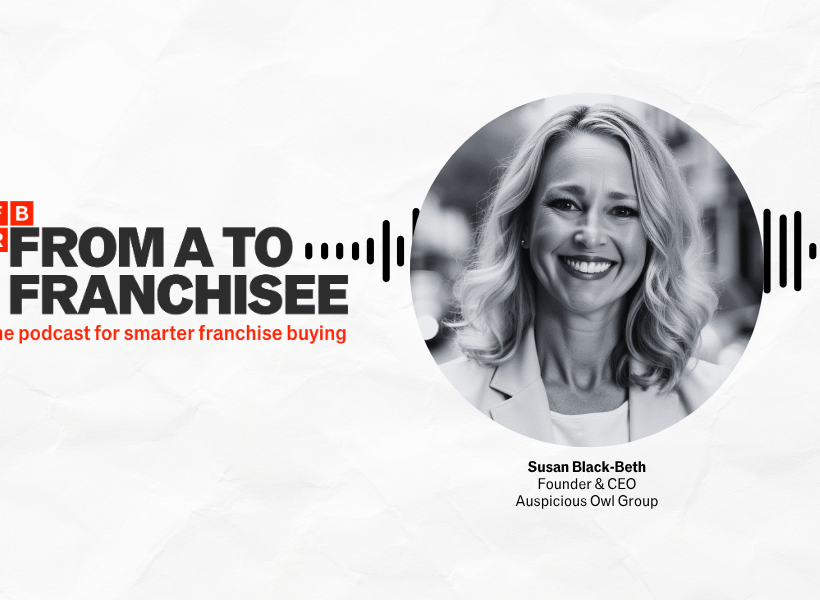
Listen on Apple Podcasts | Listen on Spotify | Watch on YouTube
Summary
In this episode of “From A to Franchisee,” hosts Michelle Rowan and Susan Black-Beth explore the impact of private equity on franchising. They discuss how private equity acquisitions can change priorities, timelines, and relationships within franchise systems. Susan, founder of Auspicious Owl Group, shares her extensive experience in the industry, emphasizing the importance of aligning private equity objectives with franchisee satisfaction. The conversation covers the evolution of private equity in franchising, the benefits and challenges it brings, and the importance of communication and understanding between franchisors and franchisees. The episode aims to prepare franchise buyers and owners for the changes and opportunities that private equity can introduce.
**Download our free Food & Beverage Industry Report
Resources
- Listen: Understanding the FDD
- Listen: Why You Should Think About An Exit Strategy Before You Invest
- Listen: The Importance of Franchisee Satisfaction
- Auspicious Owl Group
Transcript
Michelle Rowan (00:55)
Welcome back to From A to Franchisee. And today we are tackling a topic that affects more franchise buyers and existing franchise owners than most people even realize, and that’s private equity. Specifically, what it actually means for you when the franchisor you’ve invested in or are considering investing in gets acquired by a private equity firm. Now, I want to be upfront and say that this is not a doom and gloom episode. Private equity is not
the villain in this story, but it does change things. The priorities, the timeline, the people you’re working with, and you deserve to understand exactly how it changes all of that before you sign a 10-year agreement or before you get a letter saying that your corporate team has new owners. To help us navigate all of it, I could not be more excited about today’s guest. Disclosure, she’s not just our guest, but also one of my very good friends.
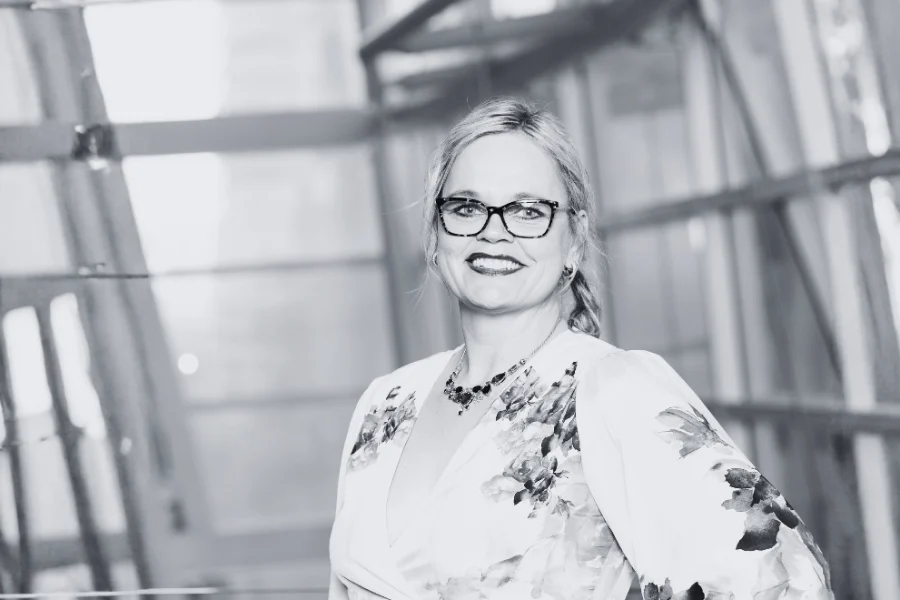
Susan Blackbeth is the founder and managing partner of Auspicious Owl Group. She’s one of those rare people in our industry who sat in almost every seat at the table. She’s been an operator, an investor, a board member, an advisor, a franchisee, and she’s worked on the corporate side, which means she does not just understand how private equity thinks about franchise brands. She understands what it actually feels like to be a franchisee inside a system when it happens.
Susan’s work focuses on aligning private equity objectives with franchise system health, which, and I love this, she approaches with what she calls a people first lens. Because at the end of the day, the unit economics that PE firms care so much about are driven by franchisee satisfaction. And that’s something we know a little bit about here at FBR. So beyond her work at Auspicious Owl, Susan’s also a keynote speaker and hosts her own podcast called The Owl’s Edge.
where she brings very candid and thoughtful conversations and she’s also very funny in her perspective of what actually drives sustainable returns in franchising. So she’s gonna fit in perfectly here and check out her podcast and her ⁓ social media mom-splaining she does to make it all really accessible. So Susan, welcome to the podcast. Thanks for joining us today.
Susan Black-Beth (03:01)
Ha!
Thank you so much, Michelle. I tell you what, one of my greatest honors is being a very, very, good friend of Michelle Rowan’s.
Michelle Rowan (03:14)
I feel the same way. We’re so blessed. We’re so blessed. All right. So Susan, I gave a quick highlight of all the different seats that you’ve been in, but tell us about your background. And I really want you to focus on what brought you to this intersection of private equity and franchising that brought you back to our industry or our sector. And how did you end up doing the work that you’re focused on today?
Susan Black-Beth (03:16)
Yep.
Yeah, you got it. So my parents are the founders of the nation’s largest self-serve car wash chain. And that is the business that I was born into. It is the business that I bought my first location of when I was 19. I built my first store from the ground up at 23. And then I joined ⁓ Superwash Franchiseur in 2000. Actually, we were a licensor at the time. And I joined the team at the corporate office to convert it into a franchise system. And that’s when I got bit by the franchise bug.
I spent 14 years as a franchisor, ⁓ eight as a multi-unit franchisee. And then in 2010, you mentioned my keynote speaking at the encouragement of Fred DeLuca, the founder of Subway. I launched a professional speaking career that has brought me so much joy and just, I love being with franchisees at their conventions and hopefully inspiring and providing some realistic talk about franchising and what it is and what it isn’t.
I’m the founder of Franchise Capital Exchange, which was a conference where we paired up franchisors who were searching for capital and private equity groups or ⁓ institutional capital looking to make investments. That ran for about five years. I really enjoyed that. And then I left the family business in 2014 to actually join a friend that many know, Aziz Hashim, in launching NRD Capital.
And so I’ve really spent the last sort of 10 to 12 years of my career more on the investor side than on the operator side. I did leave the franchise space for about three years following illness in my family. My youngest son had a tragic medical kind of situation. And so I started an advisory business at that time to really help him get kind of get back to living.
And through that experience, I was able to start coaching with a private credit firm. So that gave me the opportunity to then look at the debt side of the business as well, which I had never done before. And we did not, I did some light franchise work during that time, but we didn’t underwrite very many franchise deals. And so I was away from the space for about three years when I was on the private credit side.
I got to take a year long radical sabbatical ⁓ and you and our friend Sonda McDaniel very integral in me setting up that kind of plan for it to take a year to breathe and heal and reset and get ready for what’s next and what’s next is auspicious owl group because I am this kind of rare or one person I do believe I’m the only who’s sort of sat in a decision-making seat at every one of these tables now including
that my parents sold the family business to institutional capital last August. And so now I jokingly say that I am the Nikki Hilton of the car wash industry. ⁓ People say, don’t you want to be Paris? And I have an older sister. So no, let her be Paris. I’m going be Nikki. So ⁓ I just like to have some fun with it. But now I see, right, not only was I the equity going in and working alongside of teams and doing integrations and kind of five-year planning,
Michelle Rowan (06:18)
You
No, I was going to say if you’re going to pick a Hilton, yeah, she’s the most insane of the group, I think. That’s a good one.
Susan Black-Beth (06:40)
But also now I’m the daughter of founders who at 75 and 76 years old, my parents are trying to figure out who they want to be when they grow up. And it’s a big, big change after 50 years. Auspicious owl. So auspicious is that good fortune, right? Is kind of how I summarize it. And I had to be really clear that it’s not doom and gloom as you open the episode by saying like,
I truly believe if we take the time to pick our head up, open our eyes up a little bit wider, and open our hearts to the message too, if we understand each other’s objectives, there is good fortune available for all of us, right? Like the pie is big enough. So that’s the auspicious part, plus it put me first in the phone book, if you will, with auspicious. And then the owl part is owls can see 270 degrees side to side and turning their head. They’re the only animal that can do so.
can see things that other hunters don’t see. And I do picture myself in that role now. I have this really broad perspective that I want to share and teach on and hope open people’s eyes so that we can be asking better questions. So that’s auspicious owl group.
Michelle Rowan (07:44)
Yeah. Well,
and that’s perfect for our audience because what we’re trying to do is really prepare people eyes wide open as they get into franchise ownership or expand their franchise ⁓ empire, as we say. I think this will be good. let’s also because I think it’s important to acknowledge, too, that my next question is going to be give us a quick snapshot of how private equity activity is happening in franchising right now. So that can be in ⁓ the lens of like over the last 10 years, how it’s changed.
But I think it’s also good to point out that private equity also invests in franchisees, not just the franchisor. ⁓ let’s talk, give me kind of what you see as far as activity that’s happening now, comparative to 10 years ago or 20 years ago, and let’s start there.
Susan Black-Beth (08:26)
Yeah, so let’s do the timeline. sort of early 2000s was the first of sort of the institutional capital that came in. ⁓ And that was sort of one deal at a time, ⁓ know, kind of normal multiples, if you will. And let me just describe some stuff along the way too. I want to make sure that we’re just talking from a common platform. But when I say normal multiples, deals are often valued at a multiple of
EBITDA, right? Earnings Before Interest, Taxes, Depreciation, Amortization. So they are, you’ll hear 4X, 6X, 20X, right? The higher that that multiple goes, the tougher the
the hold period for the private equity group because they really have to do some substantial growing or I’m talking about the franchise or level now substantial growing or cutting in order to get the return that they are shooting for in their investment. So kind of normal multiples at the time what we watched over the years by the time I got in in 2015 early 2015 there still weren’t that many of us on the equity investor side there were probably
20 of us, maybe 30 if you kind of went to the edges. Now the statistics show us that we believe that that is well over 200 institutional investors or outside capital investors placing capital into the franchise space, both on the franchisor side, on the multi-unit franchisee side. Now we are also seeing on the supplier or vendor partner side. And what we’re going to see next is what I’m hearing.
is that franchisors are getting ready and allowing private equity to come in as the originating franchisee. And so that’s a very different take. Normally private equity would come into the franchisee space buying an existing territory, right, or an existing
Michelle Rowan (10:15)
okay.
Susan Black-Beth (10:23)
Contract if you will and then they either do more acquisitions or they build what’s called de novo So they build from the ground up ⁓ But they’re not to the best of my knowledge has it happened very much where they get to sign the original franchise agreement So what we’ve seen over years is we get more and more institutional capital coming into this space Oftentimes what folks don’t really know about private equity is we are great pattern identifiers
We are wonderful at saying, okay, this happened, it happened over and over again, this is where we should look to invest. And if you go and kind of look at private equity across the spectrum of industries, not just franchising, but go into aviation or manufacturing, like that’s what we do. We identify a pattern and then we decide whether we want to follow that pattern from an investment standpoint. And so there got to be more and more private equity players here. The more players that get to be here,
the more those multiples tend to drive up. Again, the higher those multiples get, the tougher and like you just have to really see some great with what we call runway or blue sky or white something. It was also white space. We’ve got all these colors for these different pieces. ⁓ And what we’re seeing now is that there’s been most of the franchisors that are the most desirable have all been.
Michelle Rowan (11:36)
Yeah.
Susan Black-Beth (11:49)
bought by private equity at this point. There’s just not that many left at this stage. And so now we’re identifying the pattern in the multi-unit franchisee space. And so that’s the next part of the pattern.
Michelle Rowan (11:59)
Okay, so yeah,
so what we’re saying is when a a PE firm comes in, they’re looking at a franchise and saying, how much growth opportunity is there for this brand, we’re going to buy it, and we’re expecting an X multiple to come in while we hold this company. And then there’s going to be a second turn, where they’re looking to get out of their investment, the next PE firm comes in, and then they’re looking for, okay, now what are the what are the growth opportunities? Are we going to spend more on this and help drive that growth? So
That just kind of, think, mom’s planes. Thumbs down what you’re saying. Yeah. OK. Got it. So why does private equity find franchising so attractive as an investment?
Susan Black-Beth (12:30)
summarizes. Yeah, mom’s blitz. That’s great. You did a great job.
So there’s a very obvious pattern recognition that’s here, right? We can look and we can say this is how many units were sold over this period of time. We can
pretty directly, or I almost want to use the word easily, but that’s not true. We can spec out like, okay, if they opened 50 units this year, we can logically expect that we could do 60, then 70, then 80. And so as we’re building out our model for what we think this investment can return over a five to seven year hold period, right? There’s very kind of logical growth strategies that are available here. So we love that pattern. We also love the pattern.
of saying that there are contractual obligations for certain royalty amounts to be charged for a certain period of time. Again, as we model out what we think this investment can do, that’s a lot easier than looking at a business that maybe has really short contracts or has no contracts for customers at all, or maybe they have a huge customer concentration in a manufacturing business.
of 50 % of their business comes from one customer, right? Something like that, which we don’t have in franchising. And customer concentration is one of the biggest concerns from a private equity investor standpoint. It’s also pretty straightforward diligence. got to be honest. We’ve got amazing partners and tools that we can use in diligence, like FBR surveys, where we can say, okay, the health of a system is X, right? We think that we can improve the health of the system by doing
Y and Z. But we’ve got great tools to diligence from. We’ve got item 23 receipts that we check all the way back to our initial disclosure. We can diligence through our attorneys. We can diligence through the CPA firms that we work with. And so it’s pretty, it’s pretty straightforward in a lot of ways because all the work you have to do as a franchisor and as a franchisee to get started is a pretty, there’s a pattern there that we love and that we can recognize.
Michelle Rowan (14:48)
Yeah, well, and the playbook of franchising is this model or this brand should work plug and play, no matter what market you’re in. That’s right. You’ve got a playbook. Okay. So let’s talk about what I would say the pros are or the benefits are. What stage of a franchisor does it make sense for private equity to get involved? And kind of what do you think are the ⁓ improvements or the opportunity that that brings to a brand?
Susan Black-Beth (14:55)
Play.
Michelle Rowan (15:15)
Let’s start with the kind of positive side that you’ve seen and we’ll, we’ll say, yeah, there’s, there’s good.
Susan Black-Beth (15:18)
For sure. And I’ll tell you, like,
this is absolutely the world that I lived for six years, right? And so I’ll tell you exactly what I was looking for and what I continue to look for as I advise and coach brands ⁓ and private equity groups. I’m actually having a call later today with a prospective franchisee on what they should look for in different brands. So I love this conversation a whole bunch. But some of the things that were important to me was I wanted to see three years
of operating financials from a franchise brand had to have franchisees who had three years of operating financials. Why is that important? Because it gives the P &L time to stabilize, right? I looked at a brand one time, the very first brands that I looked at and I loved these founders. They’re great guys. I’m actually still connected to them. One of the things they were early stage, probably 12 or 18 months in, they had some great big contracts with Walmart and some other places so that they could build out new units.
But what we saw is the franchisees that were open, including the company stores, I believe there were company stores in that one, know, cost of goods was like 63 % for one and 35 % for another and 52, like there just wasn’t any stability. So again, from a pattern recognition standpoint, I want to be able to say as an investor, I can spec out, model out what these franchisees could potentially ramp to.
Quite honestly, it’s something that a franchisee should look at as well. A prospect should say, okay, these guys have been at it for long enough to be able to give me a reasonably clear vision on what the next three to five to 10 years should look like for me. ⁓ I wanted folks that had at least 20 units, give or take, open and operating, not only for that P &L, but also to show proof of concept. You will often hear ⁓ investors talk about geographic portability.
All that means is if a fresh fish concept works on the coast, can it work in Illinois?
And if it doesn’t work in Illinois where I’m based, because we’re landlocked and people don’t trust their seafood, we’re in the land of cows, like, then we don’t have this kind of white space in the middle of the country. But you got to find out if it’s going to be geographically portable or not. So those are a few of the things we look at. We look at the management team, right? And a lot of times I was working with founders. And so part of the excitement ⁓ was getting to come in alongside of them and just help inform
that they didn’t know what they didn’t know and they had no reason to know. They were building amazing consumer brands or food brands, etc. And so they were doing the business of their business and happened to be franchising. And then we were able to bring in some additional perspective about franchising and about how to grow these businesses that I hope some of them found to be beneficial. those are a couple of things that immediately come to mind.
Michelle Rowan (18:17)
Yeah, so I would say, you know, a lot of franchises are started because a founder has created a great product or service and someone has said, hey, franchising is a way to scale. It’s a hard switch for those founders to understand once you do that, you’re now in the business of franchising. You’re not in the business of product or service delivery. So I do think PE coming in kind of helps them, ⁓ business more, more grown up kind of like, yeah, right. There’s strategy in how you grow and what that build out looks like.
Susan Black-Beth (18:41)
not what this is.
Michelle Rowan (18:46)
I would say another benefit to is shared services. So if they’ve been involved with this before, they’re going to have different services that can help reduce costs and that could be reducing costs to franchisees because they have access to better vendor terms or access to better vendors that’ll bring you a better product or service to support your business. So there’s a lot that that PE can bring to a brand. They’re obviously there to help accelerate growth. That is what PE is focused on.
⁓ so then let’s talk about the flip side as far as what are some common ways that franchisees feel negative effects of, of private equity coming in and what changes for them. Cause you know, the first thing that you always hear is nothing’s changing. We’ve talked about this. Like if we could just start by not saying nothing’s changing, that would help. I think a lot of franchisees understand, like, we don’t know how it’s going to change. We do not have crystal balls, but like here, here’s our intention today of what’s going to look the same.
Susan Black-Beth (19:28)
Nothing’s going to change.
Michelle Rowan (19:44)
And just kind of, if we just start with not saying that, I think a lot of good can come from it. But what are some negative effects that franchisees have seen or feel about when P.E. comes in?
Susan Black-Beth (19:49)
Great.
Yeah, I think there’s some that they feel like the growth trajectory is too dramatic, right? It’s too fast. And so when we grow systems too fast, franchise brands really aren’t meant to grow with this sort of exponential rate because there’s so much ⁓ support that’s required and that we commit to in that first sort of 12 to 18 months of getting a franchisee off the ground. If we start spinning so fast trying to get so many open and
We just can’t provide the same level of support unless you really, really, really develop your infrastructure and your training programming, which most earlier stage franchisors and even some mid to late stage franchisors aren’t amazing at, right? So adding a lot of fuel to the fire too fast is one thing I would say is a negative. I will tell you that sometimes me and my private equity brethren, we’re not great listeners.
we think we already know the answer to the test and so we don’t listen with the intent to understand. Sometimes we’re listening with the intent to respond ⁓ and so sometimes franchisees don’t feel heard and they don’t feel understood and they don’t feel like they are really getting a voice in the room and I would say that if I were to have
an open ballroom with all of my private equity buddies. ⁓ That’s probably what I would say is guys, like take a beat to listen and really understand where the challenges are at. ⁓ I would say too that just there’s a misalignment on timelines, right? And so typical or traditional private equity and you and I have personally talked about how there’s lots of different kinds of outside capital that come into these businesses. We just sort of use private equity.
as a big umbrella term, ⁓ but traditional private equity is generally in their hold of a system or a brand or a company for five to seven years, right? Most franchisees sign 10-year agreements with five-year renewal terms, right? I guess I don’t know that five-year renewal terms is standard market terms right now, but it was back in the day. ⁓ And so we’ve got a little bit of a misalignment on
on timelines. Again, I think the communication piece does a lot to assuage that timeline challenge. Right? We are a trust values relationship and culture business in franchising, regardless of what hat you’re wearing. And so we all need to be just more thoughtful, I think, and give more weight to trust and.
culture and values and certainly relationships. And I think you do see some relationships fracture ⁓ when private equity comes in and we think we already know the answer to the test.
Michelle Rowan (22:43)
Yeah. Well, and I think a common thing you’ll see when private equity comes in, sometimes they’ll leave the leadership in place, but sometimes that’s one of the first things to change. And that’s not always a bad thing. So I think as systems grow and it can be, well, people in general don’t like change, but if you’re a franchisee that came in or you’re buying in when the founder is still really involved in the day to day, it can be scary when they’re not involved when that new leadership team comes in. But it’s usually a decision that’s based on
Susan Black-Beth (22:54)
It’s not.
Michelle Rowan (23:12)
the experience or what that person and the role needs to get you to the next level. So I would just say, you know, as you’re looking at these changes that come in, being part of this PE kind of world, part of that is that they’re going to bring you more professional leadership because they’re driving to get that growth in your brand, which is really good to you as a franchisee because you want to sell your business when your term is up for the most amount you can. That’s the reason you’re in franchising.
So I think if you just think about it from that standpoint, what are the investments they’re making into your brand that’s actually making your business more valuable when you go to exit? So it’s not always a bad thing when that leadership changes, but I think that’s probably the thing that I’ve seen shake systems the most is just like the unknown of why is this founder not the person I’m calling directly? And that happens even when P is not involved as a brand scales. They’re hiring people that are more focused and more, ⁓
skilled in certain areas and not so much generalists. ⁓
Susan Black-Beth (24:15)
Actually, if I could interrupt, I think you really nailed something super important right on the head. And that is, I think we talk a lot in franchising about the ⁓ benefits in the first 12 to 18 months. We obviously referenced those just a minute ago. But what I don’t feel like we talk enough about is the power of franchising at exit.
right? Because it’s huge and that I would argue is actually more valuable to you as a franchisee than coming on board. Of course, that first 18 months you got to nail it and you got to know how to build your business going forward. So both are equally as important from an ops standpoint. But we do want to be a part of systems
Michelle Rowan (24:36)
yeah.
Susan Black-Beth (24:55)
that are growing, that are evolving, that are private equity pretty, right? That are because that simply increases our exit value. And another thing I feel like we don’t talk enough about in franchising is that we want you to exit, right? I’m going to wear a franchise or a hat for a minute. I know I switch hats a lot, but if I’m wearing my franchise or a hat right now, we want you to exit at some point. And here’s the ideal scenario.
Michelle Rowan (24:58)
Right.
Yes.
Susan Black-Beth (25:24)
You came in as a prospective franchisee with some goal or set of goals or objectives for you, for your family. We want you to recognize those goals and achieve them hopefully alongside us and we get to be there for the fun part of the ride, right? But at some point…
We do not want you to exit by throwing your keys on the table and being like, I can’t stand you guys anymore. This isn’t working. No, no, no. We want it to be like the ideal scenario is. It’s super orderly. We start talking about it.
two years in advance, right? A very good friend of both yours and mine, Paul Pickett is one of the very, very best at this transfer conversation at Wild Birds Unlimited. We start early, we talk through this, and it is a very natural transition where we can hopefully get you the highest value possible for your business once you’ve recognized those goals and then you get to go set new goals.
Michelle Rowan (26:14)
Right.
Yeah, yeah, right. I mean, you came into this business to be a franchisee to hit some goal in your life. The business is driving you towards that goal. So you nailed it too with, if you are in a brand, if you’re buying into a brand that’s PE backed, that is a signal that you have a strong brand and you’re backed to see growth in it. So I think that was a good call out.
Susan Black-Beth (26:28)
Yeah.
Allison Dudas (26:42)
We at Franchise Business Review are always looking for new ways to support people who are curious about investing in a franchise. That’s why we created the new Food and Beverage Sector Report. If you’re curious about the food and beverage industry, you’ve got to download this free report on our site. This will give you insight into what this industry is like, from salary to how many hours on average franchisees work per week you need to have this resource.
Visit franchisebusinessreview.com slash food to download your free copy today.
Michelle Rowan (27:19)
Okay, so if a candidate wants to figure out if the franchisor is backed by PE, is that something they can find out on their own or how do they go about understanding the investment in the corporate structure?
Susan Black-Beth (27:33)
You know, I still in many times I just go to my search engine and I just start searching because a lot of times there’s press releases that are done as part of acquisitions, right? As an investor, like we want the world to know that we bought into a certain brand. ⁓ I will tell you another benefit of being PE backed that if we can go back 10 minutes in our conversation is a lot of times private equity, we do have contacts to potential franchisees.
Michelle Rowan (27:53)
Of course.
Susan Black-Beth (27:59)
And so we can help you build out your system with professional franchisees who, especially on the food side, I would say it happens a lot more frequently. These are really big, really professional multi-unit franchisees and we can help you get to those. ⁓
Where was I going with my point after that? Private equity. you can go to your search engines. Sorry, I’m a woman of a certain age every once in a while. Anyways, I see you and I raise you a little eyebrow, a little lip sweat, Michelle. But I go, is that funny? We can’t help ourselves. We don’t have to take this too terribly seriously, right? Like we are still moving forward with businesses. I just go to my search engines and I look. ⁓ If I were a prospective franchisee and I’m
Michelle Rowan (28:25)
I see you.
That’s right. That’s right.
Susan Black-Beth (28:47)
going to coach somebody on this later today, I would ask. I would ask the question before I sign the contract. So whoever is my development main contact or my sales main contact, I would say, hey, are you guys currently private equity backed or institutional capital backed? Do you have outside in capital?
Michelle Rowan (28:51)
Okay.
Susan Black-Beth (29:08)
⁓ And if you don’t, like, are there any plans for that? Can you share with me anything that you’re aware of that would change my day-to-day operating scenario? I will tell you, in honor of total transparency, a lot of times we don’t know. Right? If we’re the franchise or executive, a lot of times we are just cranking through the day. Right? And so we may not know. We may also not be able to disclose.
Michelle Rowan (29:23)
Yeah.
Susan Black-Beth (29:33)
And so I give a speech called the seven secrets of dynamic franchise cultures. And one of the seven secrets is that when you can share as a franchisor, do. Like when you can share, do. We don’t have to keep everything like top secret, but there are some things that we are either contractually or otherwise bound that we’re not able to share. But you can still ask the question.
Michelle Rowan (29:46)
always.
Yeah. And so it’s not disclosed in an FDD if there’s private equity investment in the brand. Okay. Yeah. And I would also ask too, if they know of any of their franchisees that are private equity backed too. Again, you’re just getting all the information to help you make a decision. And going back to what your comment was with you guys know a lot of potential franchisees that can help build the brand.
Susan Black-Beth (30:03)
not to the best of my knowledge.
Michelle Rowan (30:21)
you are seeing PE especially ⁓ in these platform brands. So there’s Empower brands, there’s Neighborly, like these are large companies and that PE firm that’s backing them is going to make it pretty attractive for you as a franchisee of any of those brands to want to buy other brands in their system. So that’s called a mumbo. It’s a multi-unit franchise owner that has multiple brands. So they will make that very easy for you if you are a good operator to acquire other brands so that you’re building something beyond
a single unit or a single brand. So again, that’s just one of those additional kind of more professional type of models that you’ll see once there’s ⁓ investment in it.
Susan Black-Beth (31:00)
I
would also share that it’s important to know upfront as a franchisee or as a prospect, is the brand open to private equity coming in at the franchisee level, because there are many who are not.
And there are again pros and cons to that. There are certain brands that have said we are not letting private equity buy in at the franchisee level. They have their reasons for that. One of them is that they want to keep this a very individual Main Street franchise. They don’t want private equity coming in and driving the business from the inside. That’s their choice and that may evolve over time as well.
Michelle Rowan (31:14)
interest.
Susan Black-Beth (31:40)
But as a prospective franchisee, the reason that that’s important to know is because then that’s not an exit option for you. It takes a growth strategy.
Michelle Rowan (31:48)
Yeah, or a growth strategy for you.
Right.
Susan Black-Beth (31:52)
And so, and that was the conversation in Las Vegas, is how as a franchisee, how do I grow with outside capital? You and I were both at multi-unit franchise ⁓ conference and it was a great event and we were talking about growth strategies and private equity is one of several different ⁓ capital structures that you could go with. But if your brand is one that at the franchisor level, they are not going to approve private equity as a buyer, then that limits those options.
On the contrary, like there are literally pros and cons to every single conversation we can have. ⁓ If private equity is allowed to come into a brand at the franchisee level, right? They can start to drive the ship. That absolutely happens as more and more and more and more units or territories get bought up, as board seats get negotiated, like all of those things, again, they’re not necessarily black or white, good or bad.
It’s just being aware to ask the question, to understand how that might impact you. You likely will still move forward because you feel called to either help your community in some way or you feel called to be a part of a brand because it personally touched you in some way or, or, or, right? You will likely still go forward. The more you know and the more informed you are going in, I believe
the higher level of satisfaction that you will have throughout your term as a franchisee.
Michelle Rowan (33:18)
Absolutely. Yeah.
Yeah. So I think it’s important too, for if you are going to be a first time franchise buyer to understand that your franchisor does have to improve, approve any sale that you have so they can turn down a candidate. They’re not looking to block you and keep you in the system. They’re protecting the brand and making sure that the person coming in behind you is going to be the right franchisee to help build that brand. So that was a good call out too. ⁓ Okay. So there’s no good or bad. This is all just about
awareness. Are there specific questions you would encourage people to ask franchisees when they’re doing their validation or their due diligence about being PE owned if they are PE backed or PE owned? Can you think of anything from that standpoint?
Susan Black-Beth (34:01)
I’m not sure I’m following the chain of questions. What hat am I wearing? Okay.
Michelle Rowan (34:04)
So if I’m a candidate and part of my
due diligence is talking to franchisees that are in the brand, if they’re private equity backed, are there certain questions that you would direct them to just ask franchisees about understanding more about that relationship before they buy in?
Susan Black-Beth (34:10)
⁓ thank you. Okay.
I think it’s, I would probably ask this question, PE backed or not, but like, what does it appear like the leadership relationship is with any outside capital, right? Does it seem like there’s good communication and that leadership is representing franchisees interests? I will tell you in the last 10 to 12 years, 15 years, it has been so, so obvious to me that one of the…
I do believe that the franchise business consultant, the field consultants have the hardest job in franchising and you and I have had that conversation before, but it is getting more and more and more difficult to be a CEO, COO, CFO in private equity backed companies.
as years progress. And the reason is because it gets harder and harder to really represent multiple parties. You’ve got your board on one side, and they have a fiduciary responsibility in a boardroom. You have your franchisees on the other side who literally may have put a second mortgage on their house, or rolled their 401k. They took huge, huge personal risk. We’ve got institutional risk, other people’s money in the boardroom, and then we’ve got individual risk on this side.
And so I would want to understand, like I would want to understand leadership. I would want to understand their relationship with the boardroom and how that gets communicated down to the franchisees. Some of the very best franchisors that I’ve ever been a part of, I wish I could tell you it was one of mine. Like that I was an executive. I was not, I had so much to continue to learn, but they communicate in multiple ways the same information. They don’t just put it out on the intranet.
and expect that a franchisee has access to this information. They know that they have to meet franchisees where they’re at from a communication standpoint. And as we have multiple generations as franchisees in one system, like somebody may do best with a text message. Somebody may do best with a phone call, right? Somebody may do best with an email, right? It’s not just, I put it up in the internet and they didn’t read the newsletter.
These franchisees are fighting all sorts of fires any given day, right? Which is kind of the fun of being a franchisee. But it doesn’t mean that they got a chance to go sit down at the intranet. So how are they as communicators? The other part I would want to understand is, is there an informal or formal franchise advisory council?
And I don’t believe that you have to have a vote, like a true governed voting system for franchise advisory councils to be incredibly influential and impactful in a brand. And if the right franchisees are representing the voice of the franchise body.
Wow, that can be so powerful and impactful, right? One of the first episodes of Owl’s Edge that I did was with Doc Cohen, Doc’s a franchisee of Great American Cookie, and Doc told a story about like, look, we had our times that we didn’t get along so great. And then once we put that stuff to the side and we said, we are all going to row this boat in the same direction for the benefit of the brand, how everything else just kind of fell in line.
And I think that would be something I would want to understand is like, who are the leaders in the franchisee community? Are they speaking on behalf of themselves? Or are they truly speaking on behalf of the brand and the system? And then how that ties back through leadership to the boardroom is probably good advice, regardless of whether you’re a PE backed or not.
Michelle Rowan (37:55)
Yeah, that’s true. Yeah,
that franchisee franchise or alignment is so crucial in moving the brand forward because otherwise you’re just constantly fighting or selling your ideas on change. And I do think it’s fair to note that when we see leadership changes, it does come through in the franchisee engagement surveys we see. And that is the nature of the relationship. You’re going to see that up and down and it happens. And it’s the unknown. It’s just fearing the unknown. just. ⁓
Susan Black-Beth (38:11)
No doubt.
Michelle Rowan (38:21)
really constructively communicating the franchisor and the franchisee both sides of that as far as where that tension is, that misalignment. That’s perfect advice from Doc, I think, as far as the importance of both people understanding where you’re headed. ⁓
Susan Black-Beth (38:33)
Well and I think
too like ⁓ I talked about this in some of my keynotes like Changes Good, You Go First was a book that thought a franchise friend of ours Tom Feltenstein wrote years ago and I always reference this book. I still have it on my bookshelf upstairs. And Human Nature, I think there’s actually biological research I think Greg Nathan and I talked about it in that episode of Owl’s Edge but is that we resist change right? None of us like
Very few of us actually like and enjoy change. And one of the things that I say is, you know what’s more uncomfortable than change? Irrelevance. And as a prospective franchisee, as an existing franchisee, as an independent business owner, as a supplier, as a, like, all of us should fear becoming irrelevant, especially with how quickly business life is changing and moving forward.
Right? We, does not take long to get left behind. And then the exit value of that business is incredibly diminished. Right? So change sucks. Yes. Yep. And that’s, I get asked that question probably most frequently, like, Suze, how much is my business worth? Right? And I, people think I’m being like smarty pants and tongue in cheek when I say your business is worth what somebody’s willing to pay you for it. But that actually is the, is the answer.
Michelle Rowan (39:37)
Yes, yeah, you’re only as valuable as someone’s willing to pay for you. Yeah.
Yeah,
absolutely. And it’s probably less than you think.
Susan Black-Beth (40:00)
Correct. it’s $20 million is absolutely the number that every person I’ve ever
asked, they’re like, what’s your number? $20 million. There’s been inflation and I haven’t asked that lately, so it’s probably 25 now.
Michelle Rowan (40:07)
Yeah.
That’s funny.
That’s funny. Yeah, and again, if you’re part of a franchise system, you want them testing and changing that. mean, that’s a benefit of buying into a franchise system is they’re doing all that R &D. They’re making sure they’re ahead of whatever that trend is and making sure that your business has a good valuation. another plus for franchising. Okay, anything else that you feel like you want to share with existing franchisees, with people looking to get into franchising about…
the impact of private equity or anything else that you wanna share before we part today.
Susan Black-Beth (40:42)
Yeah, I would say a couple different things, but one that comes to mind immediately is I think traditional private equity that they’re, you know, they come in with their spreadsheets, they make it, they know the answer to the test. They’re only going to be there five to seven years. They start forcing change. I feel like a lot of people have the impression that that’s the only variety of private equity that’s out there. And that is just not true. Some of the
very best business minds, some of the very best people that I’ve gotten to meet. Like they get into franchising as investors because they see the power of the community, right? They see, yes, they can see all the patterns that we talked about earlier. Let’s just say that that’s table stakes and already there, but they see the power of the community and they want to be a part of helping to grow it and expand it. And so I would just say like, please don’t paint.
all investors with the same very broad brush that we are sharks or that we are private equity evil, the evil empire. Are there folks out there like that? Absolutely. Are there a lot of folks in the middle that are great investors and trying to move their businesses forward? They’re not going to be, you know, super touchy feely, but they’re also not going to be the sharks. Yes, there are. And there are absolutely investors out there who are top
Notch like they really truly move these businesses forward in very very positive ways and so Give people a chance keep an open mind keep an open heart have the conversation when it’s appropriate Try and learn as much as you can but it’s kind of the rule of thirds and I Truly believe that the rule of thirds sort of applies to life a third are awesome a third are average and a third are below average
We have that as private equity investors. We have that as franchisees. We have that as franchisors, like just kind of life. A third are awesome, a third are in the middle, and a third are at the bottom. And what we’re trying to do by conversations like this is minimize the amount of time that you spend with the bottom third. So that’s just kind of some parting advice that I would give. And I love franchising, and you should really think about it.
Michelle Rowan (42:49)
Yeah, yeah, yeah, I love it. Yeah.
I know, we love it too. So what we want to remind just if you are a franchisee listening to this and looking for other brands or if you’re new to franchising is that asking franchisees directly what their experience has been is the best way to understand eyes wide open what it will be like to run the business. And also too, just finding out what the culture of that organization is, how they work with those corporate teams can be really helpful to you.
⁓ If a brand scores well with their franchisees, you can check them out, data, ask them to share their data. It’s available on our site sometimes, but otherwise you can ask them directly. And just, again, if you have other questions, reach out to us, reach out to Susan. We wanna help you guys make good investments, and that’s what we’re trying to do is just really help you know what you’re getting into and figuring out if this is right for you or not. So Susan, thank you for joining us today and trying to help. Yeah, I see it, I see it.
Susan Black-Beth (43:46)
I did raise my hand. I raised my hand, look at that. I raised my hand
on that conversation of just the two of us. I’m so proud of my technological advancements. I would also say not private equity related. If I were in a franchisee shoes right now, I would do my best to not get rushed through the process. I’m sure you’ve touched on that. Okay.
Michelle Rowan (44:05)
yes, yeah, we talk about, that’s one of our red flags. Like if you
feel rushed, not a good sign, but yes, take your time, do your homework, talk to the people, talk to the corporate, talk to franchisees, that’s so important, but yes, good note, awesome. Yeah, so thank you so much for joining us. You always just have so much to share and I love your willingness to share, so check out Susan’s podcast, let us know how we can help you guys all make great buying decisions.
Susan Black-Beth (44:25)
My pleasure.