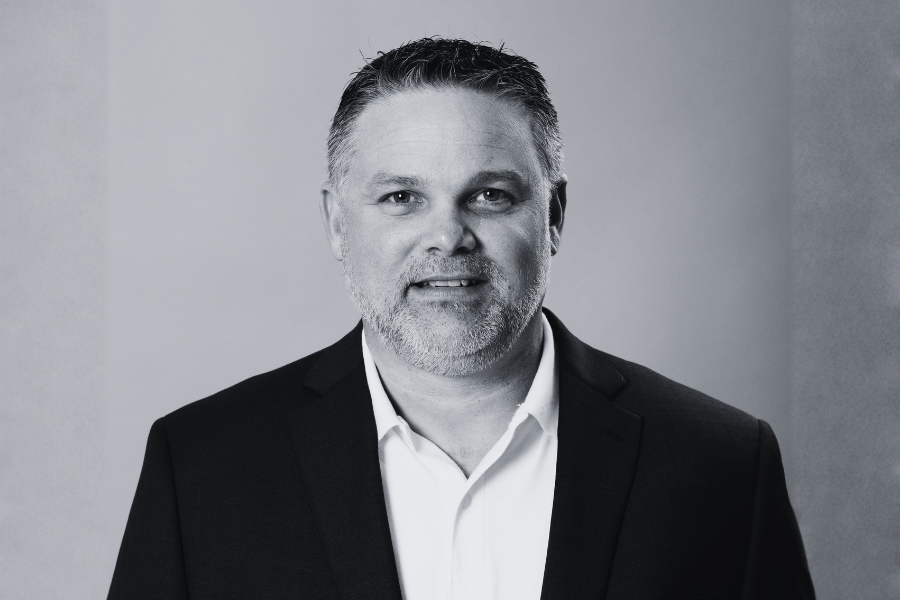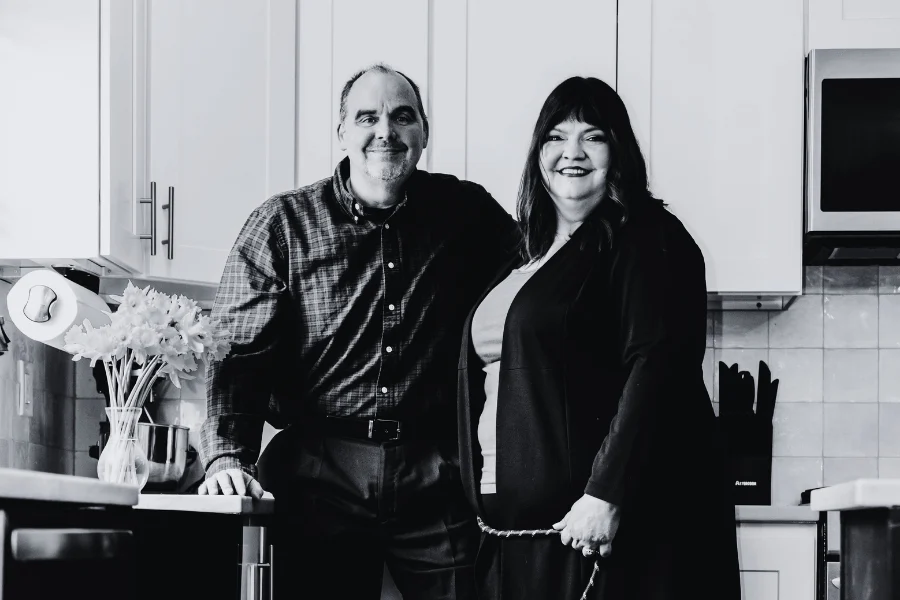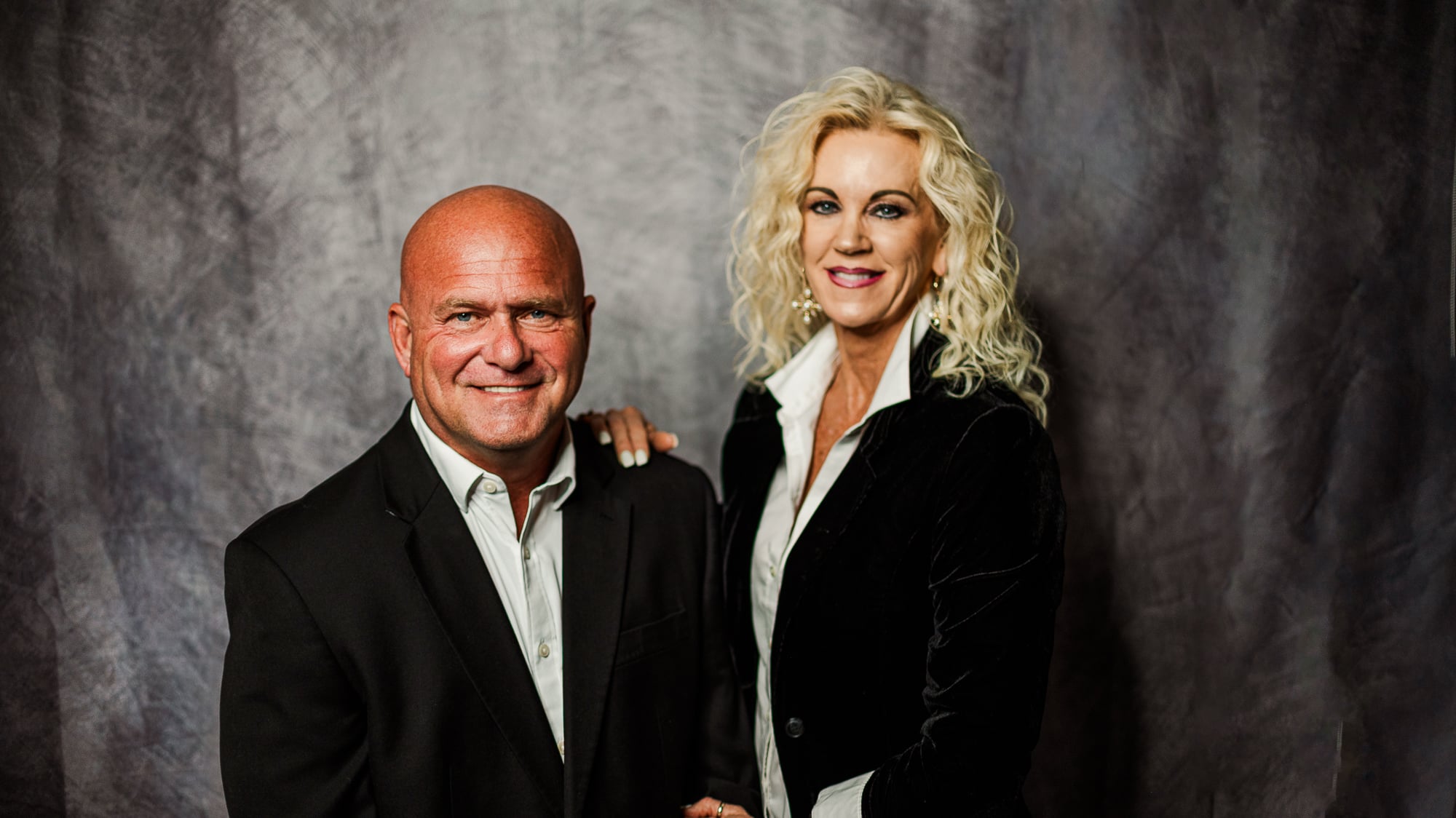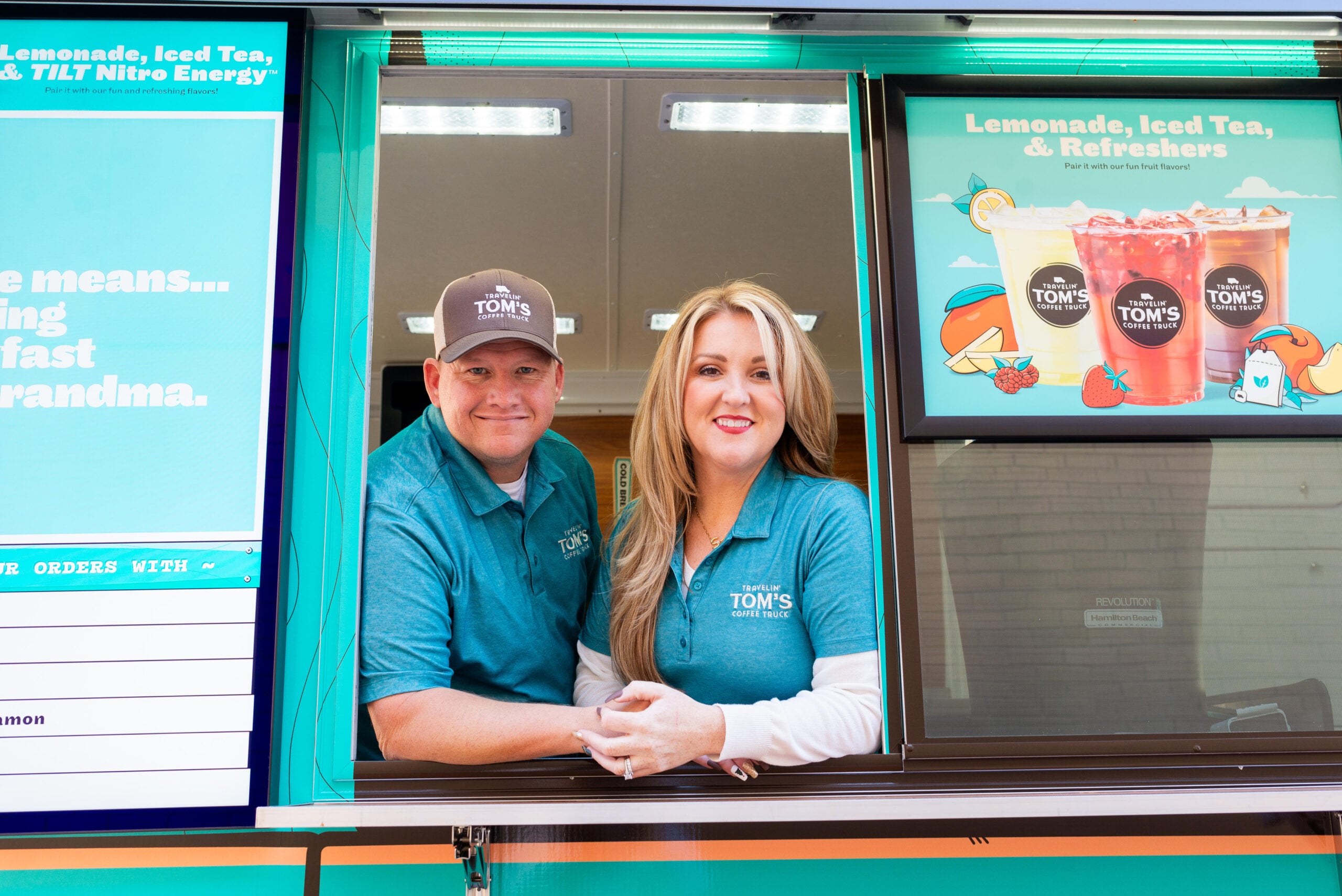

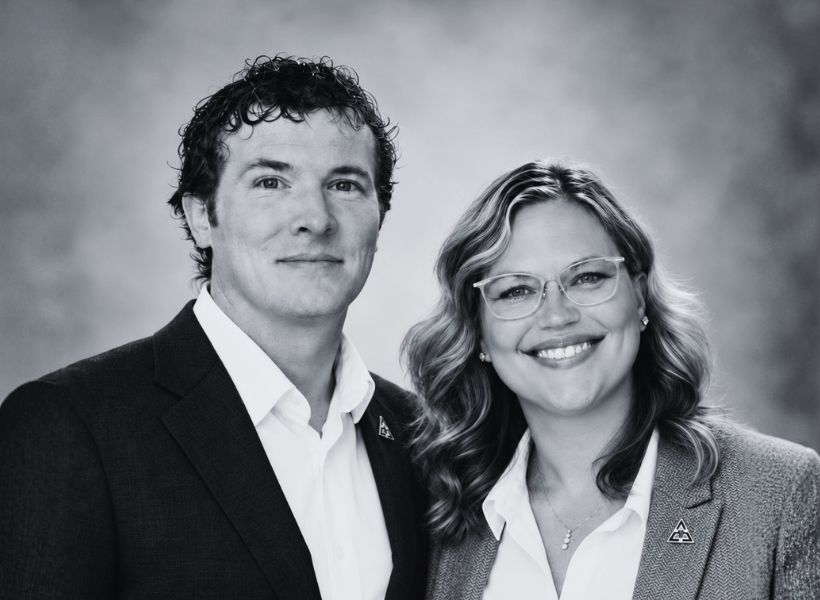
Mallory and Brian Towne are running a family business with their two PuroClean franchises in their hometown of Bloomington, Illinois. With a pair of Business Administration degrees, Mallory and Brian have always been interested in business, entrepreneurship, and building organizations. Brian purchased their first PuroClean in 2021, with Mallory joining the company full-time in November 2025 after leaving State Farm. Now, they have two locations, 14 employees, and their sons have joined them – one full-time and the other part-time. They work together to grow the company, develop their team, and continue expanding into new markets.
We talked with Brian about what it’s like to own PuroClean and work alongside his family members.
What made you decide to look into purchasing a franchise?
I had always wanted to build and own a business, but I also saw the value in starting with an established brand, proven systems, training, and a network of other owners rather than creating everything from scratch.
Restoration stood out because it is an essential service where you have the opportunity to genuinely help people during difficult situations. It also offered a business model with multiple service lines and significant room for growth. Over time, it has become something our entire family and our fantastic team have been able to build together.
When researching franchises, what criteria mattered to you most? How did your franchise meet that criteria?
We wanted a business with strong long-term demand, multiple revenue opportunities, the ability to scale, and a franchisor that provided systems and support while still allowing franchisees to be entrepreneurs.
PuroClean met those criteria. The restoration industry gives us opportunities across water, fire, mold, contents, biohazard, reconstruction, and other related services. That diversity gives us multiple avenues for growth within the same business. PuroClean also provided training, systems, vendor relationships, brand recognition, and a network of franchise owners we could learn from while still giving us the flexibility to build our company around our markets.
Financing can be an obstacle and/or intimidating factor for aspiring entrepreneurs. How did you find financing options to purchase your franchise?
We had just sold our house and purchased a new one, so we used some of the funds from the sale while financing our equipment and vehicle and also using a personal loan. We considered an SBA loan but ultimately decided to do it without one.
One thing we learned quickly is that the initial franchise investment is only part of the financial picture. Having enough working capital is extremely important, especially in restoration where payroll, equipment, materials, and subcontractors often have to be paid well before the corresponding receivables are collected.
As we have grown, Mallory and I have become increasingly focused on understanding cash flow, reinvesting into the business, and making sure growth is financially sustainable.
Which of your prior skills and experiences do you use in operating your business today?
My business background has been helpful, but some of the most important skills have been problem-solving, financial management, leadership, sales, and being willing to make decisions without always having perfect information.
Mallory brings a complementary skill set to the company. Since joining full-time, she has become heavily involved in business development, processes, billing, and helping us improve the systems behind the business.
As the company has grown, both of our roles have changed. In the beginning, you tend to be involved in almost everything. Eventually, your job becomes developing people, creating systems, understanding the numbers, holding the organization accountable, and building a company that does not depend on the owners personally touching every job.
During your research, did you use FBR’s website to compare franchise opportunities? What other resources did you use?
We used all sorts of sources, including FBR. We like to take the time to find as much information as we can and then verify that information against other sources.
One of the most valuable resources was talking directly with existing franchise owners. We also researched the restoration industry, local competition, market opportunity, franchise economics, and what the day-to-day operation of the business actually looked like.
There is a big difference between understanding a franchise on paper and understanding what it is really like to operate one. Talking with people who were already doing it gave us a much clearer picture.
When doing your research, which questions did you ask the franchisees?
We wanted to understand what the business was actually like after the sales and discovery process was over.
We asked about profitability, staffing, working capital, lead generation, insurance relationships, franchisor support, and what they wished they had known before opening. We also wanted to understand how involved the owner needed to be, what the biggest operational challenges were, how difficult it was to recruit and retain good employees, and whether they would make the same decision again knowing what they know now.
Those conversations were some of the most valuable parts of the research process.
Which questions did you ask the franchisor?
We focused heavily on the economics and scalability of the business. We wanted to understand training, ongoing support, fees, territories, marketing, national accounts and insurance relationships, technology, vendor programs, and what the most successful franchisees were doing differently.
We also wanted to understand what support looked like after the initial opening. Initial training is important, but building a successful company takes years, so we were interested in the quality of the long-term relationship as well.
What were your first 90 days like as a franchisee?
Busy and educational.
There is an enormous amount to learn in restoration between technical knowledge, estimating, insurance, equipment, documentation, customer service, sales, hiring, and actually running the business.
The first 90 days were really about learning as quickly as possible, building relationships, getting our name into the community, creating processes, and taking care of every opportunity that came through the door. It was like drinking from a fire hose.
Like most new business owners, we made mistakes along the way. The important part was learning from them quickly and continuing to improve.
At what point did you feel like you “got the hang of it” and settled in as a business owner?
I’m not sure there was ever one specific moment.
Every time you reach another level in the business, you discover a new set of challenges. At first, the challenge is getting jobs. Then it becomes hiring people, developing managers, controlling margins, managing cash flow, creating systems, and eventually expanding into additional markets.
Mallory joining the company full-time was another important stage in that evolution because it allowed us to divide responsibilities more effectively and focus more deliberately on building the company.
I think we became more comfortable once we had been through enough different situations to realize that almost every problem can be solved. We also learned that our job isn’t to personally have every answer—it is to build the people and systems capable of finding those answers.
How does the franchisor support and encourage your success?
One of the biggest advantages has been access to the larger PuroClean organization and franchisee network.
PuroClean provides technical and operational training, coaching, marketing resources, vendor relationships, national programs, technology, and people throughout the organization who can be resources when we encounter something new.
The franchisee network is especially valuable. Being able to call another owner who has already dealt with a similar situation can save an incredible amount of time and help prevent expensive mistakes.
What are you most proud of and why?
I’m most proud of the company and team that Mallory and I are building together.
We opened our Bloomington location in 2021 and have since expanded into Peoria. What began as one location has grown into a larger organization with employees in multiple roles and markets, and we continue to look for opportunities to grow.
Mallory joining the company full-time in November 2025 was an important milestone for us. It has allowed us to work together more closely on the business and combine our strengths as we continue building the organization. Having one of our sons working with us full-time and our other son working part-time when he isn’t in school has made it even more meaningful. What started as an idea to build a business has really become something our whole family has a part in.
We are not interested in simply creating jobs for ourselves. We want to build a company with strong leaders, career opportunities for our employees, a reputation for taking care of our customers, and something with long-term value that our family can continue to be proud of.
What advice would you give to potential franchise owners?
Do your homework and talk to as many existing franchisees as possible.
Don’t just talk to the top performers. Talk to average operators and owners who have struggled as well. Ask what surprised them, what went wrong, how much working capital they actually needed, how long it took to become profitable, and what they would do differently if they were starting again.
You also need to understand that buying a franchise gives you a system, a brand, resources, and a network—it does not eliminate the need to run a great business. You still have to sell, recruit people, lead your team, understand your numbers, manage cash flow, take care of customers, and continuously improve.
Finally, think beyond simply buying yourself a job. From the beginning, work toward creating systems and developing people so the company can eventually operate without depending on you for every decision. For Mallory and me, that has become one of the biggest focuses as we have grown. That’s when you begin building a company instead of simply owning a business.
More about the PuroClean franchise opportunity.
PuroClean provides fire and smoke damage remediation, water damage remediation, flood water removal, mold removal, and biohazard cleanup to commercial and residential customers. In addition to offering a valuable service, PuroClean is a top franchise in many areas. Because they survey their franchisees with us here at Franchise Business Review, we can take their data and rank them. With our unbiased information, we’ve ranked them on the following lists.
- Top Franchises for Culture
- Top Franchises for Veterans
- Most Profitable Franchises
- Top Franchises for Women
- Top 200 Franchises Overall
Additionally, PuroClean shares its full franchisee satisfaction report. Here are a few highlights from their report:
- 83% of franchisees agree that they enjoy operating this business
- 86% of franchisees are likely to recommend this franchise to others
- 83% of franchisees agree that they respect their franchisor