
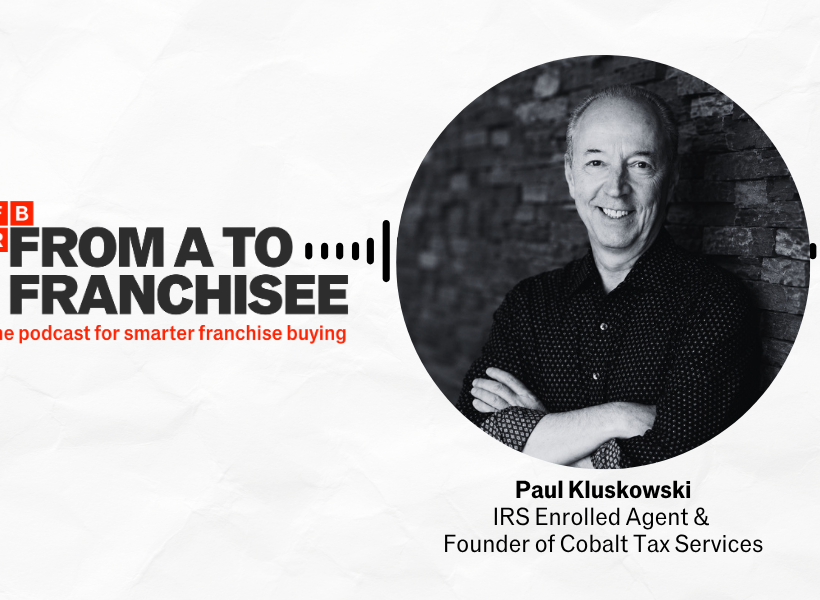
This week’s episode is about shifting from employee to owner.
Listen on Apple Podcasts | Listen on Spotify | Watch on YouTube
Host: Michelle Rowan, President, Franchise Business Review
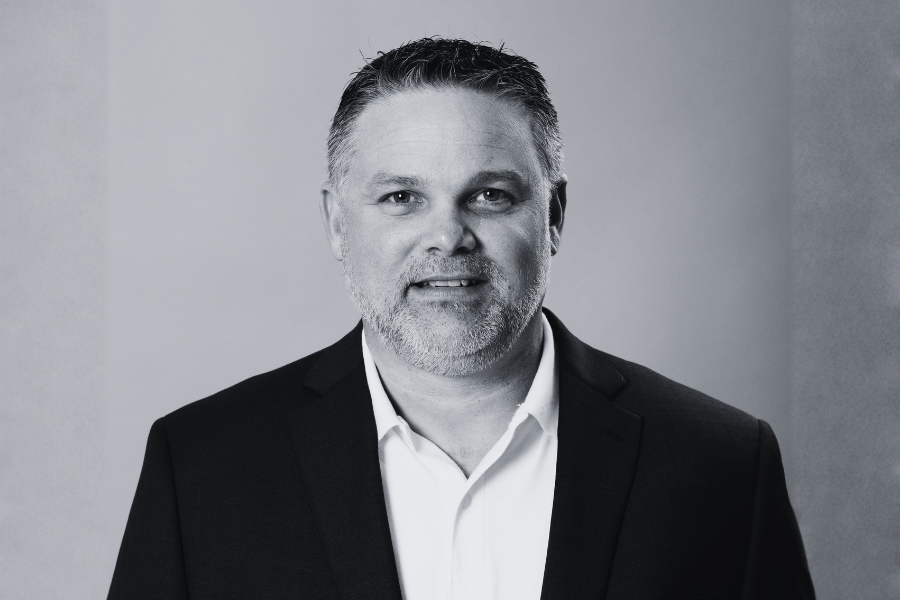
Guest: Paul Kuskowski, IRS Enrolled Agent and Founder of Cobalt Tax Services
Making the leap from employee to franchise owner means more than swapping a paycheck for a P&L — it means rethinking how you find business, manage cash flow, and structure your company from day one. In this episode of From A to Franchisee, host Michelle Rowan sits down with Paul Kluskowski, an IRS enrolled agent and founder of Cobalt Tax Services, who’s built his practice around serving Snap-on Tools franchisees and other franchise business owners.
Paul shares how he discovered his niche almost by accident, why entity structure decisions can make or break your first year, and why buying into an existing client base often beats starting from zero. He and Michelle dig into the mindset shift every new owner faces, the real cost of getting comfortable with discomfort, and the one question he wishes more prospective franchisees would ask before signing on the dotted line: what does failure actually cost?
Whether you’re weighing your first franchise purchase or already running one, this conversation offers a clear-eyed look at what it really takes to protect — and grow — what you earn.
Resources
- S1E22: The Pros and Cons of Buying an Existing Franchise
- Should You Buy An Existing Franchise?
- Top Considerations for Transferring a Franchise Business
- What to Expect in Your First Year As a Franchisee — also covers cash flow/budgeting, ties in well with Paul’s checkbook-buffer advice
- S1E9: Understanding the Franchise Disclosure Document
- Local Leader Transforms Wichita Falls Staffing Scene Through Spherion Franchise Ownership
- Hiring a Franchise Accountant – Is It Worth It?
- How to Prepare for Franchise Financing Before Making the Leap
- Trends in Franchise Financing
Transcript
Michelle (00:02)
Welcome back to our podcast from A to Franchisee. And today we’re going to be talking about navigating the leap from going from an employee to a franchise owner. And we have Paul Kluskowski here with us to talk about it. He’s an IRS enrolled agent and the founder of Cobalt Tax Services, where he’s carved out a niche serving Snap on Tools franchise owners. He helps clients transform their businesses into wealth building machines through strategic tax.
planning. Paul’s had quite an interesting start in his career working in the power industry, and he was one of the youngest nuclear reactor operators at 22 years old. He worked in that industry for years and then left to become a financial advisor. He has a very interesting career, including being a radio show host.
Paul (00:51)
Well thanks. Thank you, Michelle. Thanks for having me. I really appreciate
Michelle (00:53)
Yeah.
Paul (00:54)
the chance to be here with everybody today.
Michelle (00:56)
it’s it’s so clear that people definitely need tax help.
it’s complicated in a franchise. It’s complicated in any business. So I
Paul (01:05)
Yeah.
Michelle (01:05)
think on every podcast we’ve had, there’s been a recommendation of hire a a lawyer that knows franchising. and this might be the first that we’re gonna actually say and a tax person that really knows franchising, because you have the opportunity and the skill set to help them keep as much of their money as they can.
because we all see how much money goes out just running a business. So I think that there’s such a need for this because when you’re a business owner, you’re you’re wearing 150 hats. And I think that this is one you can easily hand over to someone. So I just want to before we get into this conversation say what I love is that you’re not selling franchises and you’re not you’re not selling any theory here that you are inside the books of franchisees.
And you can see what actually is happening as far as where people get to keep their money and and what they have to give up for taxes. So I I love your perspective to bring to us today. it’s just really interesting to hear how people we always talk about in franchising, people kind of fall into franchising, and it’s so interesting that it’s it’s the same in your story too. It just kinda finds you.
Paul (02:12)
Right.
Michelle (02:12)
so tell me then, you’re in you have some clients that are snap-on tool clients. How did you
Decide that this was a niche that really made sense for you and and turned your attention more to this audience.
Paul (02:25)
Good question. As a financial advisor, I tried to pick a niche. And when I was and I focused on commercial nuclear power workers, because that’s what I had been for 19 years at that point. And so I thought the affinity group theory would be more than enough for me to really get some traction. And what I discovered is that it matters more what’s what are the pain points in a niche? What are
What can a person really fix for that niche? What I discovered with the with the Snap-on franchisees is almost to a person, they can’t stand their accountant. They just they it’s like we it’s like we have these difficult conversations every year at tax time as we try to explain our business model to them, and it’s like, no, that’s not right, and this and that and the other thing. And so that was what clued me in that.
That was a real niche opportunity. So I tell people, and I even wrote an article about this, that we don’t pick a niche, we discover a niche. We find
Michelle (03:33)
Mm-hmm.
Paul (03:34)
it there. And then we test it and we make sure that it’s a viable niche. So that’s how we started digging in. And long story short, we’ve gone from 15 Snap-on franchisees that were doing, that were helping with their work in 2022. We’re over a hundred.
today. So so we we’ve had a a fair amount of success in that niche. And we also have other franchise business owners because once you know the model for the taxes and the wealth planning and the bookkeep, all these things, what we find is we can pick up the big pieces of that model and overlay it on someone else’s business.
Michelle (04:16)
Yeah. Yeah. So so this so this podcast is for people that are considering getting into franchising. So I want it I want you to think about because I mean, first of all, you’re going to from an employee to a business owner. So just the difference of what you need to know in taxes right there. But what when you look at or when you’re working with franchisees or business owners, what do you think is the biggest adjustment that you see people struggle with when they go from being an employee to that first year of
Business ownership.
Paul (04:48)
Yeah, that’s a that’s a very good question. Many people come out of large organizations. I certainly did. You know, working for a big company. And for lack of a better word, I call those bureaucracies because they have an organization, there’s there’s rules of engagement and and all these sorts of things. and when you’re in that organization, work just shows up at your desk. You do it and you pass it along. Well, once you step out of that organization,
of that disappears. And and in my case, you know, I was alone. I was, it’s like I had to make my way and and find out how to do that. And so now all of a sudden the work doesn’t just show up. You’ve got to go find it, you’ve got to convince them, and you’ve got to get it in the door and then get it done. So that’s one of the biggest changes and it’s a mindset that you are now responsible for everything, essentially.
You don’t have to do everything, but you’re certainly responsible for everything, and you have to run that work down and get it into the door so that you can.
Michelle (05:59)
Yeah, so so it sounds like what we’re talking about is what I hear from franchisors that their franchisees struggle with the most or that there’s some kind of disconnect because I think they all come in through to this process, learning about the brand and the business. And some might have the assumption, the franchise’s gonna drive all the business to my location, my business, which they have tools that will certainly help you, but there’s still an element of you, your team.
in your community that you have to be out there promoting your business. And so I I think you like you said, you don’t have to do all the things, but you have to have someone that fills all the roles. So if it’s not you, that is your salesperson specifically, you’re still you should still as a business owner anticipate or put effort into that sales side of your business. That that is how you grow your business. So
I think as much as franchise ours will tell a person coming into their brand like, hey, you know, we have these great tools and we have these great programs and we kind of make it easy for you to do this, you still have to have someone that’s the face for your community and show up at these things and meet these people. And that’s what keep brings people into your business, but it’s also what keeps them coming back, is that that local person is attached to your business. So I love that. I think that’s a good one.
Paul (07:21)
Yeah.
Michelle (07:22)
so
How do you feel like like where w when is if if we’re if we’re we’ve caught someone’s attention before they open their business, when should they be talking to someone about taxes surrounding the business? Is it too soon or to do it right when you’re opening the business or I don’t want them waiting until it’s too late. So when do you think that they should be talking to someone about the way that their business will look like tax wise?
Paul (07:49)
Good question. Before the LLC even gets formed, they should be
Michelle (07:53)
Interesting.
Paul (07:53)
talking to an attorney and and somebody for the accounting tax side. And those those people, those two people should be talking with each other to make sure that they’re aligned, primarily on who are the owners and what’s the entity type going to be, so that it gets off to a good start. We we have seen people try to do it themselves form the LLC and then they they put
you know, husband and wife on the LLC as owners and they really don’t need to, and now you’ve got different considerations on the tax side and other things and on and on. So we we really do like to see somebody find a tax person, find an attorney, get them connected, and then decide what’s the best structure, what’s the best and it for everybody it’s it’s really gonna be an LLC, but what’s gonna be the follow-on? Is it a sole proprietor? Is it gonna be single member? Is it gonna be a partnership?
escorp, those sorts of things. But do
Michelle (08:48)
Yeah.
Paul (08:48)
that in advance because then once you have the EIN, that drives things like the bank account opening and all these other things. So everything flows
Michelle (08:57)
Yeah.
Paul (08:58)
from that original set.
Michelle (09:00)
I love it. Okay, so let’s talk about just everything that you’ve seen. Let’s talk about if there’s a way for us to predic predict how successful someone’s gonna be or or set them up for success. So what do you think what do you think is important for that franchise owner before they become a part of the brand? What do they need to come in knowing or doing before they become a business owner? How can they how can they shift that mindset like you mentioned?
To set themselves up for the best possible outcome when they get this business started.
Paul (09:34)
You said the right word, Michelle, when you said mindset. It’s been said by by people smarter than me that every small business owner is in the ma is in the marketing and sales business. Forget what you’re doing. Your primary function, marketing and sales, regardless of what you’re really offering to everyone. because now you have to get the business in the door. So people just have to be prepared for that. The
You know, the line from the movie is build it and they will come. Sounds good in the movie, but that’s typically not how it works in real life. And
Michelle (10:11)
Yeah.
Paul (10:12)
so be mentally prepared to find the business. And
Michelle (10:17)
Yeah.
Paul (10:18)
that’s that is really the mindset right there that will make the difference.
Michelle (10:23)
Yeah. I like that ’cause, you know, especially in the beginning, you’re usually wearing more hats and as you grow your team you can figure out like what skill set you need. But I still think the w the way that I think about franchise business review, which we’re about a twenty person team, is everyone here contributes to that marketing and that sales effort because we love what we do. We take really
Paul (10:41)
Right. Yeah.
Michelle (10:44)
good care of our customers. So it’s just a natural way in that you’re you’re trying to
you’re trying to come up with solutions for our customers. And so in that, you are talking about our products and services that we have that they might not know about or that they’re not familiar with. So I I love that you kind of go in expecting that. what about prior experience inside the brand? If if I’m looking at something that I have maybe been a customer of, but I’ve never worked for them, what do you think could set them up for success as far as understanding what that brand or or what that business, running that business day to day, how can they figure that out?
to really understand what they’re getting into before they before they sign on the dotted line.
Paul (11:25)
Yeah, we have seen I want to say faster success with new franchisees that either worked in the corporation of the franchise or or worked for a franchisee in a meaningful capacity so that they could see the day-to-day operations of the business. What that does is it gives you a feel for the flow of work. And really it’s it’s a sense for how does the deliverable to the customer
Client. How does that deliverable happen from start to finish? So you can see how it happens. What’s the machinery that gets the customer the result they want from the franchisee?
Michelle (12:06)
Yeah.
Paul (12:09)
Now, and that can also be done on the corporate side. If somebody has a job within the corporation, you’ll still get that sense for how work flows through. But what those people gain is all of the personal connections.
with people within the franchise or that very well may be quite helpful once they’re a franchisee. Because you’ll know who to call. They’ll know you. You’ll and and
Michelle (12:34)
Yeah.
Paul (12:34)
you’ll be able to get answers quicker, get log jams, you know, broken free. And so we have seen it done both ways and both either way or both gives those franchisees a real leg up and they they succeed that much faster.
Michelle (12:52)
Yeah, I love that. Yeah, we keep I sit on some boards for universities that are now teaching franchising courses and we talk about this because so many young people come out and don’t want to work for other people. So there’s this uptick in younger people becoming franchise owners and which is great, but they’re usually funded by someone else, a parent or family or friends that they’re kind of pulling this together. And that’s one of the things I always say is there’s so much value in working.
For others before you start your own thing, so you can see those pieces of the business. And I’ve said when we hear from franchisors, what what’s the limitation for franchisees growing? It’s they can’t find great people to lead their current teams, their current locations that allow them to expand. So I think that there’s a real
Interesting kind of idea in this, like if you could find people that are interested in franchising to come in and be your general manager or be high up in your organization, they could also help you grow your your business or they become a franchise owner of themselves. So I think if people think about that too of when I’m hiring, I need that right hand or left hand person.
that
can help me grow this thing and maybe there’s an opportunity for them to to help grow your business together or it can be their launch pad to be their own franchisee. So I just want people thinking about that as they think about ways that they might grow this business. Coming in, you might start with one location, one territory, but as you think about ways to grow, this could be a solution where you’re giving someone the opportunity to understand the business and it might help you grow or it might set them up to become the next franchisee in your brand. I like that.
Paul (14:29)
Yeah, exactly.
Michelle (14:30)
okay, so
let’s talk about do you have any advice or opinions that you’d like to share if a franchise candidate has an opportunity to buy an existing market that has come up for sale or opening opening up their own in a new unit or territory? What are your thoughts on that from a tax or a business standpoint of how they should think about that?
Paul (14:53)
For a first timer in particular, I do like the idea of buying a franchise that has an existing customer base, an existing client base. That’s essentially how I survived my first year, year and a half at the brokerage in DC. I partnered up with a senior broker. He gave me his small accounts and let me manage them, and it gave me a lot of experience.
With people who are already customers of the business. So they’ve already made the commitment, they’re gonna do business with you, and they tend to be more forgiving of of any shortcomings you might have as a newbie. And and so it was the same in the tax business. When I started it, I just picked up clients as I could, and you know, the first year with just really not a lot of advertising, I think I picked up 40 clients.
Just by spreading some word through LinkedIn and that. But then by going out and purchasing clients, because that’s what I did, both practices, I just bought the clients. And now all of a sudden, you know, I’ve got a business. I had to hire a couple people to help me out. There was more work than what one person could do. And immediately I had cash flow. And that that
Michelle (16:13)
Yeah.
Paul (16:14)
is the lifeblood of every business.
especially new businesses. So having that, having an existing client base, it it’s just, it takes so much stress out of the startup. I I just can’t even, I cannot overstate the case, Michelle.
Michelle (16:34)
Yeah, well I was gonna say and then if if they’re engaging with with a tax and a lawyer before they go into this, I would imagine having that and I know we’ve done it we’ve done a show with someone that handles resales for a brand, so we can always put that in the show notes, but
Paul (16:48)
Yeah.
Michelle (16:49)
I think it probably helps you
forecast or plan what that business will look like because you have something to work with. You know, their their assumption
Paul (16:57)
Exactly.
Michelle (16:57)
is I’m gonna come in and do better. That’s why they’re buying the business. But at least you’re starting
Paul (17:00)
Right. Right.
Michelle (17:01)
with some kind of common language of looking at what the business is currently doing as you set those expectations or budgets.
Paul (17:09)
Exactly.
Michelle (17:10)
Yeah, I like that. have you seen when people go into that that especially that first that first time owner if you’re working with them.
Have you seen a difference in the stress level that be if they don’t have that cash flow coming in? What does that do to a business owner that is maybe uncomfortable with selling and kind of the the the sole entity of bringing business in? Have you seen a difference in how those types of owners might handle the stress of the business when they have that existing book of business versus starting from scratch?
Paul (17:41)
When you’re in a sales position, and and and all small business owners to a very high extent are are in a sales position to some extent, when you need to make a sale to pay your bills, clients can sense that. And and that’s not a good place to try to sell from.
Michelle (18:03)
Yeah. Yeah.
Paul (18:11)
And it’s and it lets you be a little more ambivalent to the outcome of the sales presentation. You can be more relaxed and just present better. Because one of the things that can happen is the client will still say yes, but you may be so desperate to get the deal done that you make up you make a bad offer. And it’s one that you’re going to end up regretting because you underpriced it.
you you’re all gonna overwork it and you end up you would have been better off not having that client than than
Michelle (18:42)
Yeah.
Paul (18:42)
getting it at any price. So
Michelle (18:44)
Yeah.
Paul (18:45)
so that’s why I like to have you know first first time business owners try to pick up something with an existing client base that provides that early cash flow.
Michelle (18:56)
Yeah, I love it. Okay. So it it seems you you really are encouraging people to have sales experience before they go into owning a business or a franchise specifically. For someone who’s still employed and is looking to buy a franchise, if they can’t make that opportunity happen where they can work directly for the brand or for the franchisee, how could they start building their their sales skill now, that they’ll need? What are s do you have some ideas for them of how they could really explore this before they
before they sign on the do s sign on the dotted line.
Paul (19:29)
I
I do. Now one that I that I came across is I always speak from direct experience. I never offer up ideas that are just ideas. So I I bumped into a CPA, we we tried we were gonna do a little bit of business together, it didn’t work out. But I was talking to her and asked her how’s her comfort on the phone. She said, it’s it’s fantastic. Okay, say more. She had been doing
Phone calls for political contributions for political candidates calling to raise money. And so I said, so you got pretty accustomed to being rejected on the phone and hard phone calls? yeah, all of that. It’s not a problem. I got no problems picking up the phone and calling people. And it’s like, what a clever way to get over some of that rejection reluctance. Pick up the phone and just call people. Because you
Michelle, you’d be surprised how many people have what what was used to be called phone call reluctance, phone sales reluctance.
Michelle (20:32)
Yeah.
Well, and that’s definitely grown, Paul, with with the with the younger generations coming up too, in that I think that we we talk about this a lot, what you see in your kids. They’re not as comfortable having phone conversations. It’s all done by text. It’s the the thought of talking to someone live just kind of paralyzes them. so I think that I and I see it too with people that come on our team with FBR, in that just that there there is just kind of a social skill that
of talking on the phone and building a rapport
with
Paul (21:03)
Right.
Michelle (21:03)
people that I think a lot of people are missing out. So that’s that’s a great point too, of just not even trying to get to the yes or no, but just that c comfort level of having a conversation with someone on the phone might be tough for some people. Yeah. Yeah. Yeah. So
Paul (21:12)
Right. Right. Exactly. Exactly. So then another
way yeah, another way I’ve seen is you know, do a little reading, get some marketing, sales ideas in your head, and then go go find a small business owner in your community that could use some extra clients and just offer to for free, hey, can I run a marketing and sales campaign for you to try to get some new business in? And
I think you’ll find that people will accept that offer. And and it’s a great way to just find out what it’s like making an offer to the marketplace and see what works and what doesn’t. But direct direct experience, there’s just there’s no substitute.
Michelle (21:56)
Yeah, that’s really interesting. Yeah.
Yeah, yeah. and I think that you can also think about it too, just there there’s tons of opportunity for you to volunteer for if maybe you went to a college and that alumni network
Paul (22:11)
Right?
Michelle (22:11)
would love to have you asking for donations for the school. You ha if you have children in
Paul (22:14)
Exactly. Yep.
Michelle (22:15)
school, there’s always fundraising happening for stuff. So
Paul (22:18)
Yeah.
Michelle (22:18)
I think that that direct experience can can happen for most people. I love it. Okay,
Paul (22:22)
Absolutely. Absolutely.
Michelle (22:24)
you mentioned
Being comfortable on the phone or being comfortable with sales. Let’s talk about this comfort, being comfortable with not being comfortable.
Paul (22:34)
huh.
It’s real.
Michelle (22:36)
Yeah, yeah.
T talk about what you’ve seen in your experiences as far as the the people that may be uncomfortable but s somehow talk themselves into doing it or just work through it versus those that don’t. What are you seeing the differences happening inside their business?
Paul (22:53)
Yeah, it can be huge. I I have one of our one of our dealers early in his career and he’s always he’s always been very good. He he came up through the ranks, he worked for another dealer, then got his own route, and and even he said he said, you know, I had to learn to be comfortable with discomfort.
Michelle (23:13)
Yeah.
Paul (23:14)
And and and he saw his business.
I saw his business take off. He’s now a multi-route guy, and he’s doing very well for himself. And this is this is the piece that we all experience this. There’s things that we just don’t want to do, that we we procrastinate, we hesitate, and yet it’s exactly those things that move the ball downfield.
for us that keep keep us making progress. And we have to avoid that temptation to do what’s easy to fill our time. We have to do the hard things, the uncomfortable things, because those are the things that move the needle on revenue and client base and those sorts of things. I’ve just seen it over and over and and sometimes we just need to verbalize it with others that it’s real. I experience it. I’m sure you experience it and we just have to
Just have to move forward.
Michelle (24:14)
Yeah, yeah. So how about will you share something in your day to day that you still don’t enjoy doing but you do? Just
Paul (24:22)
Yeah, yeah.
I will tell you in the tax business we are terrible at raising our prices, and I am too. So
Michelle (24:28)
Yeah. Yeah. Yeah.
Paul (24:30)
I did I did raise the price for tax returns for last year. I did I did bring myself to do that. But we haven’t budged our bookkeeping prices in four and a half years. We are still
Michelle (24:40)
Yeah.
Paul (24:41)
at basically entry level pricing and I’m and I I I’m gonna have to do it for twenty twenty seven. So I am
Michelle (24:48)
Yeah.
Paul (24:48)
just gonna grit my teeth and I’m gonna
Asked a few people, because that’s how I get over my resistance. I ask a few people, if I do this, what do you think?
Michelle (24:57)
Yeah.
Paul (24:58)
and so yeah, so that’s one of those things for sure that that brings that up.
Michelle (25:04)
Yeah, yeah. I mean I ha well right now with my role I do so much different stuff. But I always had and I coach this on my team as well, is that you have to block time. Like for the stuff you don’t want to do, if you stick it on your calendar, that can help you just make the time to do it and make it a priority. Or
Paul (25:20)
Yeah.
Michelle (25:20)
I would kind of reward myself and be like, Okay, if when I was in sales, I would be like, All right, if I just sit here and make five more calls, then I can go get a coffee or you know, I would just set these kind of little mini goals.
‘Cause of course you i you know, if you’re lucky enough to love every part of your job, that’s fantastic. But I think you
Paul (25:36)
Right.
Michelle (25:37)
go back to I think about the way that I parent and I’m like, well, I could just give a little treat at the end and lead with that, or just like block the time and it’s j just it forces myself to put my mind where it should be ’cause that’s what will help you grow your business. I think business owners get so wrapped up in the day to day and the fires, putting out the fires are just being responsive and reactive rather than
what’s really gonna move the needle in my business? Where does my attention have to be? So again, professional growth or networking, those kinds of things that you just need to make an effort with. I love
it.
Paul (26:11)
Yeah. Yeah.
Michelle (26:13)
Okay. How about let’s let’s share some what are some common misunderstandings that you see franchisees have in their first year?
Paul (26:22)
You touched on one earlier that the mistaken notion that the franchise or is going to do all the marketing, drive the customers to the door. At the end of the day, the the the business owner is responsible for the outcomes, plain and simple. And that means seeing to all of those things. Have to watch the cash flow much more carefully than than you did as an employee. Your earnings as an employee, that was all cash flow.
You know, they took out the taxes, of course, but you know, the money came to you. But in a business, some of that cash flow might go end up as accounts receivables. Some of it may have to be diverted to inventory. Some of it may be going to pay for capital equipment that’s gonna get depreciated. So it’s that’s how it’s an expense. It’s not a direct ex you it’s not a
ongoing expense in that sense of the word. So and then you got clients who aren’t gonna pay. And so there’ll
Michelle (27:25)
Yeah.
Paul (27:25)
be a certain amount of of write-offs that you have to deal with. All of those things impact how much is in the checkbook every month. And so I do caution people if you don’t do anything else, watch the checkbook balance and make sure that it’s it’s staying stable. Make sure you’ve got a buffer.
For the you know, for a f for a franchise doing a million dollars a year gross, I tell people you want 25 to 50,000 buffer in the checkbook. And so watch that and make sure it’s not dwindling every month. You want to make sure it’s staying stable or preferably going up every month. And and then do talk to your stay plugged in with your whoever’s doing your bookkeeping, your tax work, and just do that that pulsing every now and then.
It’s like, hey, are we doing okay? Are we missing it?
Michelle (28:20)
Yeah. Yeah. So I love that you gave a number. So we always talk about when a franchisee is doing their research and trying to understand, we always say have more set aside than you think you’ll need to break even because you just want to have that safety net. I love that you put a number on it. I think that’s helpful for people to understand the size of the business that you’re looking at. but but again, I think it’s also too a good lesson in revenue versus cash flow because
Paul (28:46)
Right,
right.
Michelle (28:47)
like you said, people aren’t gonna pay, or just knowing that you can’t always take money out as the owner if you don’t have a salary built in because you have things that come up in your business. And that’s why that cash flow is so important is that the things that you don’t anticipate coming is what you need that cash set aside for. So I love that. That was good. what about when they’re looking to join a franchise or buy a franchise and they have access to cash or they
have access to loans and things like that. How d how do you help them work through or what would you recommend as far as when does financing the purchase make sense versus using the money that they have to to fund the the new business?
Paul (29:33)
That is a very good question. I like to use financing for two things. Buying cash flow, which which in essence means a client base.
Michelle (29:46)
Mm-hmm.
Paul (29:47)
The other thing that I like to use borrowed money for is real estate. Those two things are generally very predictable. And so they make good collateral for using debt.
What I would be careful is using borrowed money to buy inventory that the supplier will not take back. I have seen people burn their checkbook to the ground.
Michelle (30:22)
Yeah.
Paul (30:23)
And
Michelle (30:24)
I have these visions of those multi level companies where you’re they have their garage full of stuff that they can’t sell. That’s what
Paul (30:32)
Well and you know
the one that the one that I’m aware of is clothing and kitschy type stuff,
Michelle (30:36)
Yeah.
Paul (30:37)
you know, that’s you know seems quaint and cute and and it’s like and I just I saw somebody just it it just it was ruinous. So so
Michelle (30:47)
Yeah, yeah.
Paul (30:48)
that’s the caution is that be just know what you’re borrowing money for. And
And be sure that you’ve you’re gonna get your money’s worth out of it.
Michelle (31:00)
Yeah,
yeah. So is there a s a franchise specific tax mistake that you see over and over, that you would want people to kind of think about avoiding or being more cognizant of when it shows up in their business?
Paul (31:18)
There’s probably entity choice is always a big one. And we do see we still see people coming in as partnerships, often with their spouse, and that’s not an optimal entity type for most any franchise operation. we’d rather see people single-member LLC or make the S Corp election. so that’s that’s certainly one.
So that’s a that’s a big one there. As far as other franchise specific mistakes, I you know it’s it’s really the the big thing is is just know what what you’re getting in for and be sure that your personality matches the business you’re buying. I saw one fella come in and it just his personality was not a good fit.
And it just became so painfully obvious so fast that the that the franchise or actually had to turn it off. They they
Michelle (32:26)
Yeah.
Paul (32:27)
didn’t even wait until the franchisee waved the white flag. It’s like this this is just not gonna work. and it was
Michelle (32:33)
Heartbreaking.
Paul (32:33)
unfortunate because it it really was, but it in in looking at that, I it was just it was the personality fit. So I I do encourage people
Get familiar with the franchise and you know talk to people who are in it, work in it if you can, and really take a hard look in the mirror and make sure that you as a as a business owner are a good fit for that business.
Michelle (32:59)
Yeah, that’s a good one. So if if we have someone that’s listening right now that’s got a steady paycheck, they’re employed, but they’re seriously weighing buying a franchise, what do you think they should be doing in the next three months to to prep them making that decision before they sign anything?
Paul (33:19)
It is amazing what people will share with you if you just go ask them. It’s how I ended up in the tax business by accident almost. I was trying to create a strategic alliance as an investment advisor with a tax firm for passing referrals back and forth. And what I learned in that 12 or so substantive conversations with different firms, they all had too much business.
And that’s when the light went on. It’s like, wait a minute. The the the opportunity here isn’t doing joint business with them. The opportunity is opening a tax business and start gathering up all of that, all those excess clients that are out there. And so when we just go and talk to people, it’s amazing if you just ask good questions and listen, how much you will learn. And many times secrets will be revealed to you that
It’ll completely turn the light on. now I know
Michelle (34:20)
Yeah.
Paul (34:20)
what I have to do. And you just go off and you do it.
Michelle (34:25)
Love it. How about do you want to share one of those questions or what do you what’s a question that you wish more prospective franchisees were asking before they they made that purchase?
Paul (34:35)
Well, certainly would like them, you know, to be in contact at least with an attorney and a tax person as they’re going through the evaluation process. Because that’s where you can get some hints as to how it should be structured and those things. but really, you know, some of the questions that you’d really want to know, how many hours a week are you working? What’s the worst part of this job in your opinion? What’s the best part of this job in your opinion?
What’s the thing you wish you knew before you got into this? That that you now know? And and just like I say, be ready to listen. Don’t go into it to convince yourself that you know, yeah, yeah, yeah, this is the right thing.
Michelle (35:19)
that’s a good tip. Yeah.
Paul (35:21)
Go into it open-minded. It’s like, all right, what do I really wanna know, need to know before I settle on this?
Michelle (35:29)
Yeah, I like that idea of of not going in assuming it’s gonna reinforce your decision, but use it to
Paul (35:35)
Correct.
Michelle (35:35)
poke holes or make sure that you’re seeing all potential hazards that could come your way. I like that.
Paul (35:42)
And then the follow-on with that, and this is a conversation again with the with the attorney, the tax person, and potentially the franchisor if this doesn’t work, if this if this just fails completely, what does that look like? What would it end up costing me start to finish? Is it a cost I can bear? Because sometimes you can try and fail, and it’s like, all right.
It cost me 25,000, 30,000, whatever, put a number to it. It’s not a life-changing loss. Okay. But if that number is a life-changing loss, well then you you really need to give that due consideration. If it was 300,000, it’s what’s going to cost you as an example if you fail. That’s something you’d want to know before you said yes and signed on the line. What’s I think the way to put it is what’s the cost of failure, Michelle?
Michelle (36:34)
I love that. Yeah, that might be the first time we’ve gotten that. Like we’ve we’ve talked about not looking at the F D D for what they might have for averages and understanding what that range looks like, but I the how much would it cost if this is a total awful experience? That’s a great one. Yeah. Yeah.
Paul (36:46)
fail. Right. Yeah. Exactly. Exactly.
Yeah.
Michelle (36:53)
Okay,
Paul. Well I know you certainly tell us where we can find you besides Cobalt Tax Services. I know that you are a contributor for entrepreneur if you want to talk about your column that you have there for people to check you out or just how do you want people to reach out to you if they are interested in talking more?
Paul (37:09)
Yeah. Certainly you know, you’re right, entrepreneur.com, if they just search on my last name, Kluskowski, it’s spelled just like it sounds. so they can go there and find that. And it’s a nice series of articles. I will tell you, it’s up to about eight or nine at this point, and it does provide a path of of the key things that you should know as a small business owner. It’s it’s it it’s turning out to be a nice collection of articles. There
Michelle (37:35)
That’s great.
Paul (37:36)
is yeah, there’s a contact us page.
on the Cobalt Tax Services website. A person can put in their name, email, phone number, and get in touch with me that way. And I give everybody my cell phone number. It it’s area code 202-421-4466. You’d be surprised how frequently I answer my phone because when I was in the brokerage business, that was the first thing you learned, answer the phone because it might be a commission. So so so I’m hardwired to answer a Ricking phone.
Michelle (38:03)
Yeah. That’s so funny. Yeah, I was I thought you were gonna say you’re you’d
be surprised at how many people don’t use it. ‘Cause I when I go to speak to college students, I’ll say, Here’s my cell phone, like if I can help you anyway and I’ve never gotten a call.
Paul (38:15)
Yeah. Wow. That’s that’s
that’s unfortunate. That’s unfortunate.
Michelle (38:20)
I know, I
know. If someone offers you help, certainly you should take it.
Paul (38:25)
Yeah, exactly. So yeah, maybe we can help
Michelle (38:26)
Yeah. I love it.
Paul (38:28)
people overcome their their phone call reluctance.
Michelle (38:30)
That’s right. That’s
why. I didn’t tell them they could text me, Paul. I told them they had to call me.
Paul (38:36)
Good strategy. Too funny.
Michelle (38:36)
That’s that’s my test for the college kids. That’s really fun.
Well, Paul, thank you so much for sharing your experience today. I think it’s I love hearing how people kind of f fall into franchising. but I know that this is a a hard topic for business owners and also one that’s so complex to make sure that you keep as much money as you can that leave it to the professionals. Hire someone that knows franchising, that knows your business and can help you hang on to all the dollars that you’re bringing in.
It’s it’s really, really hard. I I own an independent business too and I’m I realize it’s September eighth right now and we’re still waiting for the business taxes to be done so we can get our personal taxes done. Yeah, it’s been a complicated year, Paul.
Paul (39:19)
I’m sure.
Well if I can help at some point, you oughta find me.
Michelle (39:21)
Yeah. I appreciate that. Thank you so much. thanks
for joining us today and for all you listeners. We will link anything in the show notes going back to that resale one if you do want to take Paul’s advice and explore the idea of buying an existing business instead of starting from scratch. And we’ll link to to Paul’s entrepreneur articles as well. But thank you for joining us today, Paul. And absolutely if you’re researching franchising, please reach out to us if we can help you further.
Paul (39:47)
Thanks for having me, Michelle. Thank you.
Michelle (39:49)
Absolutely.