

Updated October 2026
Key Takeaways:
- Full-service is gaining on quick service. IFA and FRANdata project full-service franchise output to grow 2.0% in 2026, versus 0.5% for QSR, the first time full-service has outpaced QSR in output growth since the pandemic. QSR remains far larger, with about 281,000 franchised units to full-service’s 27,000-plus.
- Sales are strong, but margins are thin. U.S. restaurant and foodservice sales are forecast at $1.55 trillion in 2026, yet food and labor each take roughly 33 cents of every sales dollar. A third of operators reported they weren’t profitable in the first half of the year.
- It’s a strong fit for owners who can handle the demands. Opening a franchise restaurant takes a larger investment, long hours, and the ability to manage a team, but 85% of food franchisees say they enjoy operating their business.
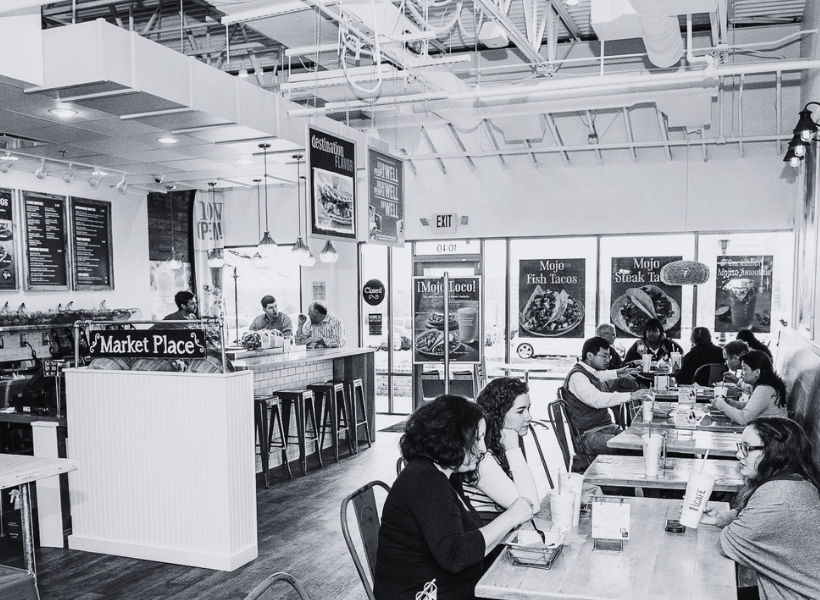
Photo courtesy of Tropical Smoothie Cafe
Well-known brands like McDonald’s, Wendy’s, and Chick-fil-A have made food and beverage the most popular franchise segment in the country. Quick service restaurants (QSR) accounts for the biggest share of franchised establishments and nearly 58% of all franchise employment. The IFA/FranDATA 2026 Franchising Economic Outlook projects roughly 281,000 units for 2026 and an additional 27,000 franchised full-service restaurants.
Restaurants also carry significant weight in the broader economy. The National Restaurant Association forecasts $1.55 trillion in sales and 15.8 million restaurant employees this year. That momentum draws plenty of aspiring owners looking to grab their slice of this popular sector. But with competition this fierce, it’s not the right move for everyone. Is it right for you?
Download a free copy of the latest Food & Beverage Franchise Performance Report for the latest trends gathered from over 60 leading food franchises across 40,000 locations.
Opening a Franchise Restaurant: Pros and Cons
People open food businesses every year because the work is fast-paced and genuinely rewarding. Think of Cheers, the sitcom (and real Boston bar) built around a place where everyone knows your name and regulars can’t wait to return. Food and beverage businesses can be that kind of place, where people relax after a long day or celebrate with the people they love. It’s also an industry that will always be in demand and can’t easily be outsourced. The hours are long, but so is the potential for a satisfying career.
But owning a food franchise isn’t for the faint of heart. The industry is competitive, trend-driven, and sensitive to forces like climate and politics. Turnover is high, food costs swing, and long hours come with the territory. Entry and ongoing costs also run higher than in many other sectors.
Let’s break down the sweet AND the sour of owning a food franchise.
The Sweet
Demand
People will always eat. “It takes a lot of hard work and tenacity to make it in the sector but one thing that never changes is people keep eating!” joked Tony Lamb, CEO and founder of Kona Ice.
Relationships
Few businesses are as relationship-driven as food and beverage. Bartev Avakian opened a Pizza Factory in Paradise, CA, in January 2025, in a town still recovering from the devastating 2018 wildfire. “The restaurant has fostered connections with lifelong friends and neighbors, strengthening our ties to and furthering our investment in Paradise CA. Creating a welcoming, family-oriented space that contributes to the town’s recovery is a source of immense pride.”
High satisfaction
Food franchisees are generally happy owners. When surveyed, 85% of food franchisees agreed that they enjoy operating their business and 84% said they enjoy being part of their franchise.
See the list of this year’s Top Food franchises.
The Sour
High initial investment
Getting started in food typically takes a large investment, and early margins can trail other service industries, especially for single-unit operators. Recouping startup costs can take a while. Many franchisees open multiple locations to gain efficiencies, such as sharing staff and buying in bulk. Still, operating multiple business locations significantly increases your investment and the overall complexity of the business, and is only recommended for experienced, well-financed candidates.
Labor challenges
Finding and keeping good people remains one of the hardest parts of the job. A 2026 State of the Restaurant Industry report showed that recruiting and retaining staff climbed back to the top challenge by mid-2026.
Low margins
Many food franchises post strong unit-level sales, but sales aren’t profit. Food and labor each take roughly 33 cents of every sales dollar, and 33% of operators said they weren’t profitable in the first half of 2026, reports the National Restaurant Association.
Long hours
This isn’t a “set and forget” business. The work is often exhausting, though owners do get more say over how they schedule their days. Pizza Factory franchisee Ernie Amorim explained on our podcast that part of being a restaurant owner is that you have to be there for your stores. “What’s rewarding the most is you get to make your own schedule, but it is a very busy schedule,” he said.
Trends and competition
Food is a trendy industry, and diet fads can help or hurt you. Competition is fierce. “There is so much competition out there that it is mind boggling!” said Lamb. “Everyone is competing for your mouth and stomach. There better be something that sets you apart. Fads come and go, and trends change continually. Even changing traffic patterns can ruin a thriving restaurant.”
The Future of Food
Before you commit, look at the long-term viability of the brands you’re considering. Which concepts fit today’s consumer, and which can keep up as demands change? It’s also worth watching where growth is headed. The IFA’s Franchising Economic Outlook report projects full-service restaurant output to outpace quick-service for the first time since the pandemic, while QSR growth is projected at just 0.5%.
The National Restaurant Association’s Culinary Forecast names comfort food with a global twist, as well as health-minded choices that feed the desire for value and quality, as some of top trends.
Listen as we reveal the top food franchises of 2026 on our podcast, From A to Franchisee.
Exploring the Top-Rated Food Brands
With hundreds of food franchise brands to choose from, thorough research matters. Reviews from current franchisees offer unbiased, first-hand insight into the brands on your list. To help, FBR surveyed over 11,000 franchisees representing more than 42,000 restaurant locations from leading brands. We asked each survey participant 33 benchmark questions about their franchisor that focused on areas such as leadership, training, and core values as well 16 more personal questions concerning their business lifestyle and overall enjoyment of running their franchise. From there we identified the Top Food and Beverage Franchises of 2026 based exclusively on franchisee satisfaction.
See the full list of this year’s top 25 food franchises.
Franchise restaurants offer an exciting environment to business owners who don’t mind making a bigger financial investment, working long hours, and managing a large and diverse workforce. Food operators remain some of the most passionate in all of franchising. While the investment is higher, so is the potential for returns. If you are interested in pursuing franchise ownership in the food sector, this year’s list of the top 25 food franchises is a great place to start.