
Photo credit: Penn Station East Coast Subs
The Proof Is in the Pudding
Thinking about buying a food franchise? If you’re like most potential franchisees, the large, well-established brands may be the first to come to mind (McDonald’s, Wendy’s, Taco Bell, Subway).
While these heavy hitters have certainly helped pave the way for food and beverage franchise growth, there are plenty of other fast food franchise opportunities available, each with varying entry costs, franchise fees, training, marketing, and support programs.
What Is a Food Franchise Business?
A food franchise is a business model where an individual or company purchases the rights to use the name, brand, and established business model of a restaurant or food establishment from the original owner, known as the franchisor.
This arrangement allows the franchisee to operate a business using the franchisor’s well-known brand, menu, and operating procedures. Food franchises can range from fast food restaurants to full-service establishments, offering a proven business model and brand recognition that can be highly beneficial for entrepreneurs looking to enter the food industry.
Exploring the Various Types of Food Franchise Opportunities
Part of your due diligence in exploring food franchises should include understanding the various types available, researching which have the highest franchisee satisfaction ratings, and identifying which brand resonates with your own priorities, values, and goals.
Quick Service Restaurants
Quick Service Restaurants (QSR) such as Wendy’s, MacDonald’s, and Church’s Chicken are typically referred to as “fast food”. They are associated with speed of service, low price points, and meals that are most often taken away rather than dining in—although the option to dine in exists for most brands.
Fast Casual Restaurants
This concept combines quality casual dining with the speed of fast-food restaurants. Culvers, Donato’s, and Captain D’s are examples of fast-casual restaurants. The food is more customized, freshly prepared, and of higher quality, with a dining area that is more upscale and inviting than a QSR. Customers typically order and pay at the counter and either dine-in or take out with little to no table service.
Full Service Restaurants
Full-service restaurants serve food and drink directly to customers’ tables. They may sell alcoholic beverages, provide take-out or curbside service, and provide live entertainment. The full-service concept includes restaurants like East Coast Wings + Grill, Eggs Up Grill, and Fuzzy’s Taco Shop.
Retail Food Concepts
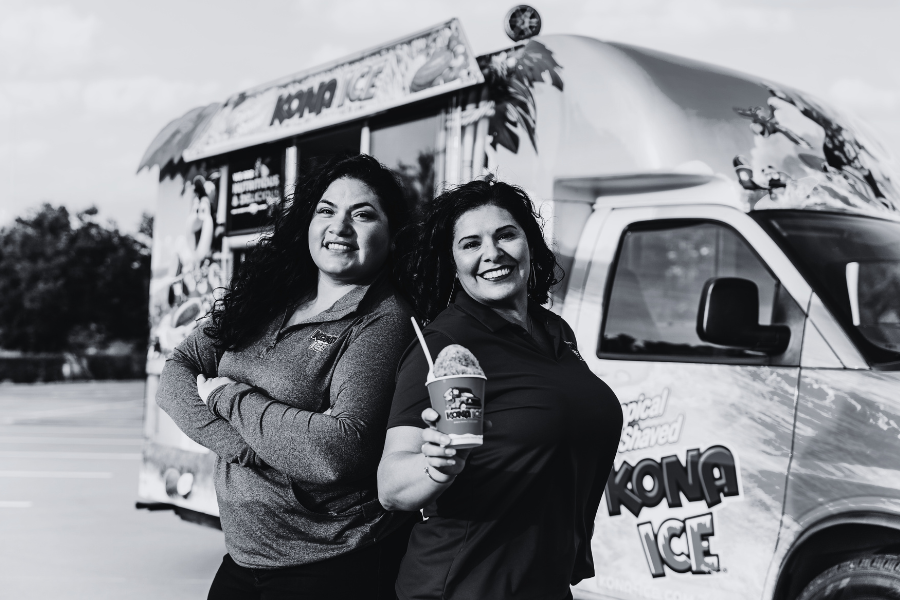
Retail food concepts include everything from coffee shops, bakeries, and ice cream shops, to food trucks, vending machines, and convenience stores. Brands that fall under the retail category include The Haagen-Dazs Shoppe, Nothing Bundt Cakes, and Kona Ice.
No Matter How You Slice It, Food Franchises Are Doing Well
The International Franchise Association (IFA) released its 2025 Franchising Economic Outlook report which details the franchise sector’s performance for the past year and the projected economic outlook for the year ahead. This year’s report indicates that personal services and retail food, products, and services are expected to be the fastest-growing industries in 2025. Fast food already accounts for more than a third of franchising economic output. The fast food industry in particular will benefit from increased return-to-office movements, especially in breakfast and lunch sales.
Key Highlights from the IFA 2025 Franchising Economic Outlook:
- Quick-service restaurant franchises will account for $322 billion in economic output this year, up 5.4% compared with last year.
- Employment at fast-food restaurants, which accounts for 45% of the franchise workforce, is expected to top 4 million this year, up 2.6%.
- The number of fast-food franchise establishments is expected to grow 2.2% to 204,366.
Acquiring a Taste for Food Franchise Success
Food franchise owners report high satisfaction in operating their businesses. After all, they’re delivering a favorite pastime to their customers—eating and drinking! Plus, restaurant franchise owners report a great deal of satisfaction in building relationships with their customers, their employees, and their communities. Developing a client base of satisfied return customers and a loyal staff can help set the stage for long-term growth and financial returns.
Emerging food industry trends of 2025:
- Sustainable practices and sourcing
- Health and wellness, including plant-based menu items and locally sourced ingredients
- Non-traditional locations such as kiosks and food trucks
- “Ghost Kitchens” prepare food for multiple brands and use third-party delivery
- Mobile-only or in-store self-ordering to improve efficiencies
Owning and operating a restaurant franchise requires some chops. The food and beverage industry is competitive and trend-driven. It is affected by global market fluctuations such as supply chain factors and food price volatility. And, since food and beverage franchises typically have low-profit margins, managing expenses is a top priority.
It takes time to establish best practices, grow a clientele, and hire and train the right people. It can also take a while for new franchisees to recoup startup costs.
Having prior experience in the restaurant industry is a big help for potential franchisees, as it helps navigate the unique challenges within the restaurant franchising landscape. But, once you’ve put in the time, prep work, and due diligence of setting up your business, you will be in a position to experience the rewards of sweet success.
Buying a Fast Food Franchise: Initial Investment & Costs
The initial investment for a food franchise can vary widely depending on the type of franchise, its size, and the location. Here are some estimated initial investment ranges for different types of food franchises:
- Fast food franchises: $200,000 to $1 million
- Full-service restaurants: $500,000 to $2 million
- Specialty food franchises (e.g., ice cream, coffee): $100,000 to $500,000
Exploring FBR’s Top Food Franchise Opportunities
If you think you’ve got the chops to make a restaurant franchise work for you, it’s time to explore your options. Examining FBR’s reviews, advice, and unbiased feedback from franchisees who’ve already made the leap is a great place to start! On average, the brands on FBR’s Top Food Franchises List rank 15% – 25% higher than other food industry competitors in overall franchisee satisfaction.
According to our 2025 Top Food Franchises Report:
- 82% enjoy being part of the franchise organization
- 82% enjoy operating their business
- 78% respect their franchisor
- 78% agree that franchisees are supportive of each other
- 76% support the brand
Food Service Franchising vs. Independent Ownership
Franchising and independent ownership are two distinct business models, each with its own set of advantages and disadvantages. Here are some key differences:
- Business model: Franchisees operate a business using a proven business model and brand, while independent owners create their own business model and brand from scratch.
- Support: Franchisees typically receive extensive support from the franchisor, including training, marketing, and operational assistance. Independent owners, on the other hand, must rely on their own resources and expertise.
- Brand recognition: Franchisees benefit from the established brand recognition and reputation of the franchisor, which can attract customers more easily. Independent owners must build their brand and reputation over time.
- Initial investment: The initial investment for a franchise can be higher than for an independent business, but franchisees may have access to financing options and support from the franchisor, which can offset some of the costs.
Getting Your Piece of the Pie
Some of the higher-investment franchises—such as McDonald’s, Wendy’s, TGI Friday’s, Culver’s, Walk-On’s Sports Bistreaux, Pizza Ranch, Slim Chickens, Golden Chick, Chick-fil-A, Another Broken Egg, and LaRosa’s Pizzeria—can potentially carry a million-dollar price tag and generally have a minimum cash requirement of $500,000. This may put them out of reach for some first-time franchise buyers, but there are plenty of food and drink franchise opportunities available today.
The median total investment for a food franchise business is $700K, with a median cash required of $200K. The range of investments starts under $100k (with some low-cost brands starting at around $20,000) and exceeds $4M.
No matter how you slice it, food and beverage franchises offer entrepreneurs an opportunity for success. If you’re considering buying a food franchise, reviewing our 2025 Top Food Franchise List can help you compare top franchises, understand their business model and startup costs, and weigh the pros and cons of each.