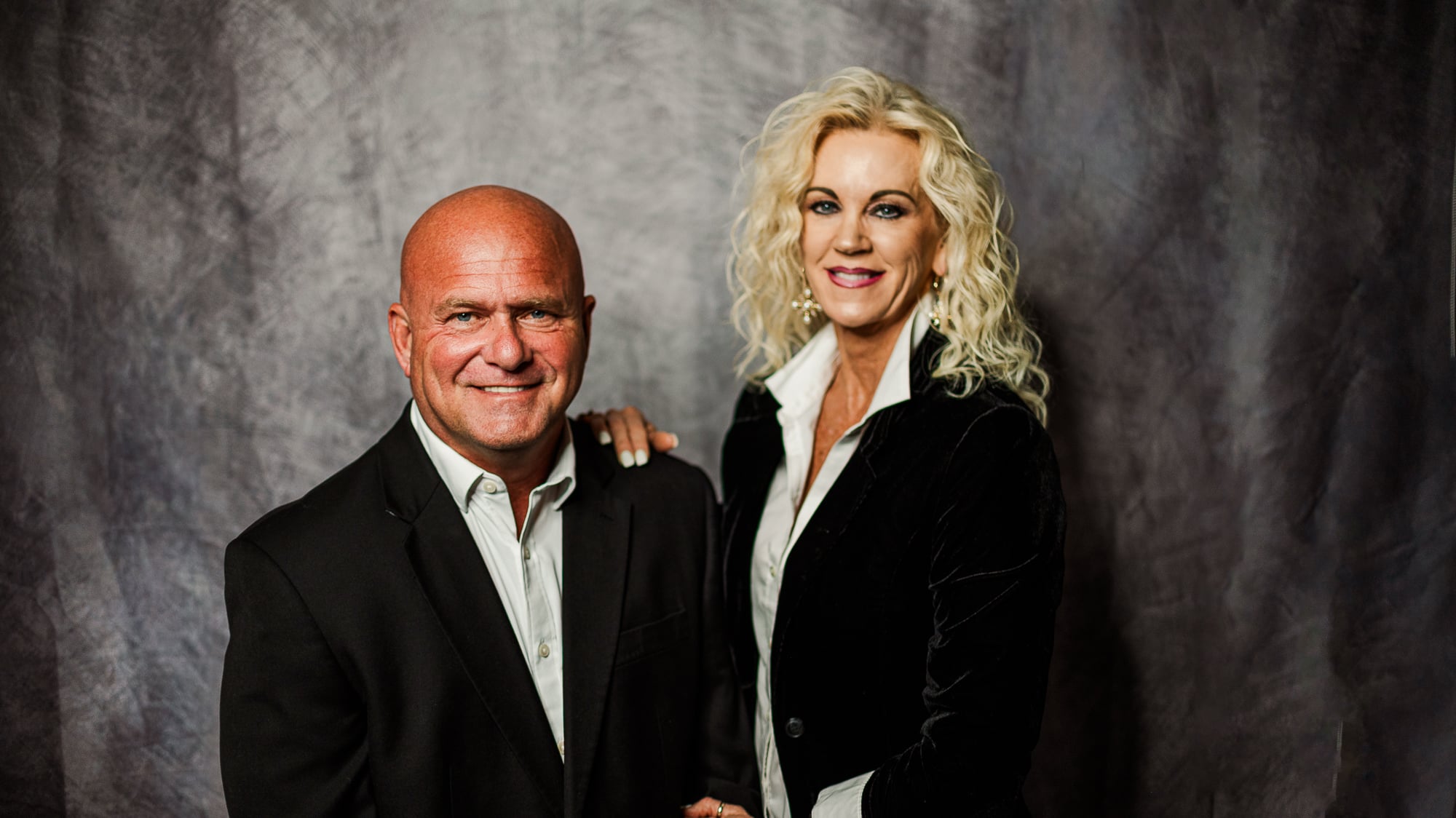

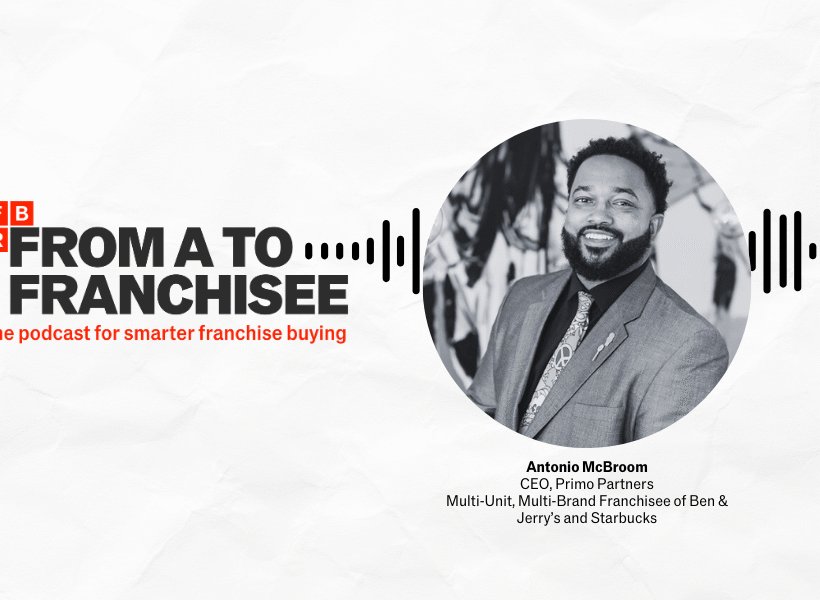
Michelle talks to Antonio McBroom of Primo Partners. He is a multi-unit, multi-brand franchisee with Ben & Jerry’s and Starbucks
Listen on Apple Podcasts | Listen on Spotify | Watch on YouTube
Summary
Most entrepreneurs kill their growth momentum by overcomplicating the journey—Antonio McBroom reveals how a simple mindset shift accelerated his rise from a college student scooper to one of the largest Ben & Jerry’s franchisees on the planet. Discover the high-impact strategies that turned a small ice cream shop into a multi-million dollar empire, and learn how to build a culture that attracts top talent and drives exponential growth.
In this episode, Antonio shares his remarkable origin story: how a college job sparked a multi-decade pursuit of franchising success, all fueled by a high risk tolerance and relentless focus. You’ll discover the power of investing in human capital—why your team is your secret weapon—and how intentional leadership and community engagement can create lasting impact. We break down the pivotal moments when Antonio navigated fierce competition, financing challenges, and franchise relationships, offering concrete lessons for anyone aspiring to scale.
You’ll learn the proven frameworks Antonio uses to grow fast while maintaining quality—such as the importance of focus, risk balancing, and strategic partnerships. He sheds light on integrating your core passions, leading a team through inevitable change, and leveraging franchisee communities for mutual success. Plus, get his insider tips on how to work effectively with franchisors when disagreements arise and why impact matters more than just profits.
Whether you’re considering your first store or looking to elevate your existing business, this conversation is packed with actionable insights from a true industry leader. Antonio’s story proves that with purpose, resilience, and the right network, you can turn a simple idea into a powerful movement—don’t miss this episode if you’re ready to make your mark.
Resources
- Top Food and Beverage Franchises
- Read: 6 Top-Rated Dessert Franchises for Sugar Lovers
- Read: Sub-franchising, Master Franchisees, and Multi-Unit Area Developers: What You Need to Know
- Read: Franchise Glossary
- Download our FREE Food and Beverage Industry Report for 2026
- Read: Should You Buy An Existing Franchise?
- Read: Franchisee Profiles
Transcript
Michelle Rowan (00:03)
welcome back to the podcast from A to Franchisee. I am so excited to have Antonio McBroom join us today from Primo Partners. Antonio and I have known each other for many years and we had…
the great blessing to have him keynote our FBR Summit. He is a multi-unit franchisee, multi-unit, multi-brand franchisee, a term in franchising that’s called a mumbo. So he has got so much to share with anyone that’s considering becoming a franchise owner. When he speaks, the amount of people taking notes is ⁓ visual. There’s always nuggets that you will get from conversations with Antonio. So I’m so thrilled to have him here, Antonio.
Thank you for joining us to talk to our audience today.
Antonio McBroom (00:48)
Hello, Michelle. Hello, everyone. I’m so proud to be here and happy that you were able to connect today.
Michelle Rowan (00:55)
Yeah, and I should also tell people, we are getting to talk to a very successful franchise owner. So this is what everyone will be aspiring to. And I know that it’s been a lot of hard work. So I wanna start by saying ⁓ that Antonio, I would love for you to just tell us a little bit about your origin story. ⁓ Kind of what were you doing? I know that this all happened kind of early, but.
Tell us about what you’re doing in school and how you ended up where you are today in any length of time you want to say. I know it’s a long complicated journey, but tell us about that.
Antonio McBroom (01:27)
Long complicated winding road. No, the year was 2004. I was at my orientation at college, University of North Carolina at Chapel Hill. And I was walking down Franklin Street during orientation and I saw a now hiring sign at a local ice cream store, Ben & Jerry’s. And ⁓ I love Ben & Jerry’s. I love ice cream. I’ve always been a connoisseur. And so I really wanted to work there. And I started there as a scooper my freshman year.
⁓ I really scooped myself an amazing opportunity by my senior year I was managing the store ⁓ and I started asking some crazy questions. It was 2008 by then. So talk about wild economic times like now, right? It was really, really wild. And I started asking crazy questions like, what would it take for me to buy this franchise? Not one day, not someday, but by the Sunday that I graduate later this year. And folks thought I was crazy as a 21 year old college kid.
But I went on this journey of learning about franchising, learning about, you know, what does the discovery process look like and what does it take for me to put together the resources needed to get the yes. And fortunately two days before I graduated, it was a magical weekend because yes, I graduated, it’s Mother’s Day, but also I became the first franchise business owner in my family.
Michelle Rowan (02:45)
It’s unbelievable. you’re 20, 21 years old when you’re a senior in college and you’ve been working there for how long?
Antonio McBroom (02:50)
Yeah, yeah,
I’ve been working there for years.
Michelle Rowan (02:55)
Okay, and so you were like, by the time I hit graduation, this is what I wanna do. You knew that this was, and did you end up buying that store or did you buy a different territory?
Antonio McBroom (03:05)
I ended up buying that store. know, ⁓ shoot for the moon if you miss, you end up with the stars. So I came in trying to be multi-unit from day one. The person who I worked for had several stores in the area and I wanted to buy two. And so I did all the stuff needed to buy both locations and you know, at the end of the day just wasn’t quite there and ready. So I bought the store in Chapel Hill that I worked at. And that was my first one. I mean, it’s kind of like having children. I was able to focus in and spoil that first store.
for the first three or four years. was just that story got pretty much all of my energy and focus and we grew it ⁓ in a tremendous way just by being hands in, hands on, hands wrapped around. I had my head in a dip case literally all the time. ⁓ that gave me all the fundamentals I needed to form a system that I felt I could duplicate along with the franchise or system and say, hey, I’m comfortable now taking the leap into multi-unit.
2013 I purchased my second store about an hour away and that was really a big leap for me as a leader because I went from having kind of one location with a lot of part-time and seasonal staff to now I’ve got two locations that I can hire a manager at each store and so now I can start leading adults and kind of form a leadership team.
And that allowed us to just really start to create synergy. I was able to take one plus one and make it equal three. And the reason being is because I had the one store that I originally had plus the second store I purchased, but together their off-premise omnichannel business was a store in and of itself. And so that allowed me to kind of have three different departments, three different units, so to speak. And from there, I built a leadership team that now
has propelled us to being the largest, fastest growing Ben & Jerry’s operator ⁓ on the planet. I mean, we’ve got a couple of dozen locations spanning from Washington DC down to Florida and over to Texas.
Michelle Rowan (05:07)
Yeah, so, and we could probably have three more podcast episodes because I do want to touch upon ⁓ how you’ve built your team. I think that is something that a lot of not just franchise owners, but business owners really struggle with. I think putting the intention into the culture they’re creating. And I’ve had a chance to see you with your team at the Ben and Jerry’s convention. And I just would love for you to touch upon how, how mindful were you of that? Do you think because you were part of the staff?
Or just how did you really build that culture from the start to have this team of people from the scoopers up to this leadership team? Like what were you thinking about how you did that? Did it just accidentally happen or was it something that you were really focused on making sure happened within your organization?
Antonio McBroom (05:55)
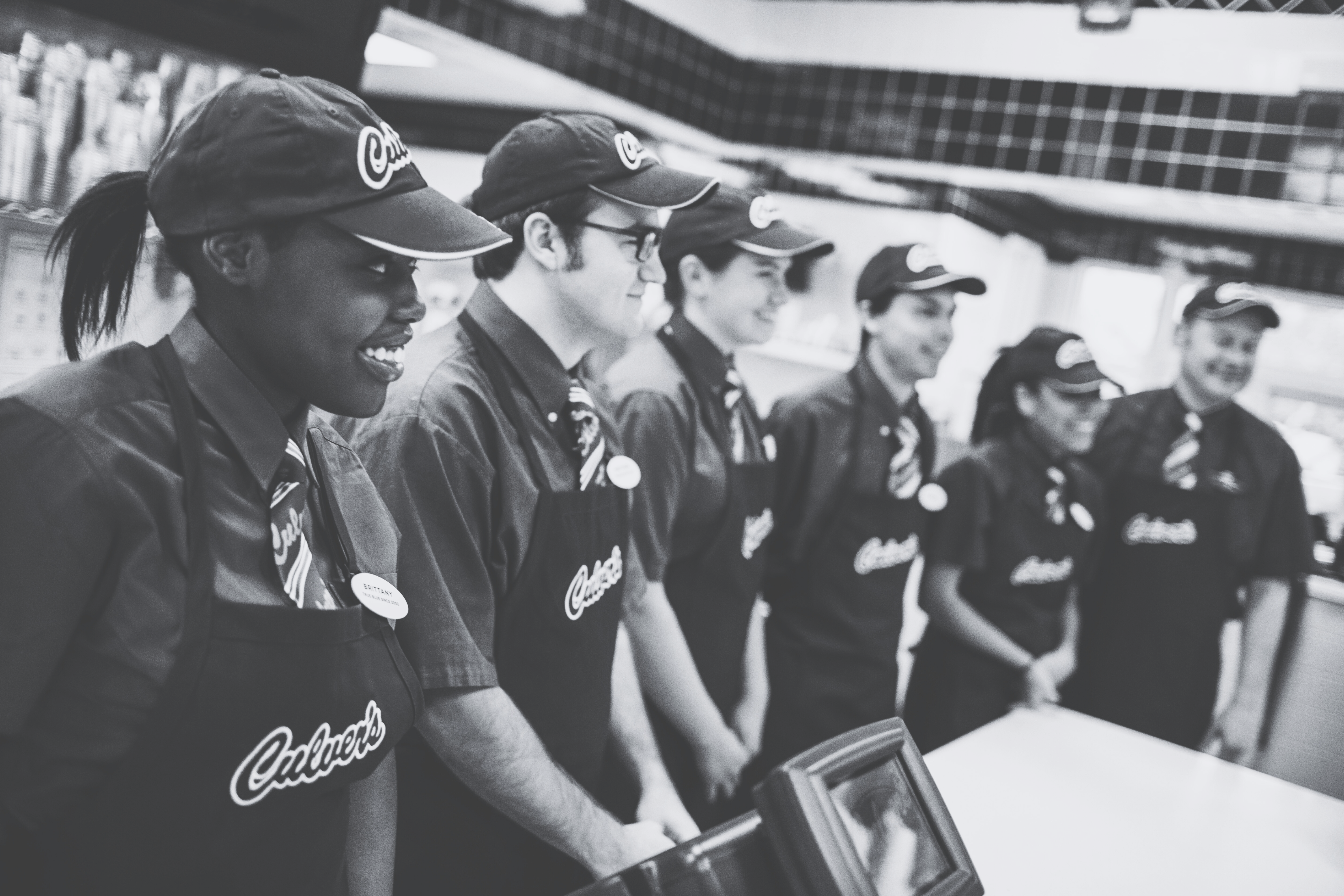
I was deeply focused on it, Michelle. ⁓ I’ve always been fascinated with leadership. Like any kind of leadership was just something I chose to be a student of, whether it was like leadership in sports, tribal leadership, family leadership, and really servant leadership is what resonates deeply with me and my faith. And so the whole time I was building my franchise business, I really looked at it as a ⁓ platform for impact and to serve others.
I come from a bloodline of educators. And so my mom was a teacher and I knew that I had a responsibility for my family to be that kind of generational changing entrepreneur. I knew that that’s what the family looked at me for and I’ve been blessed with gifts to do that. At the same time, I’m a teacher at heart. And so I always looked at my business as a classroom. so it kind of pouring into my staff and my leaders was always something that came pretty natural for me.
From there, I just saw it as a powerful secret weapon. I feel like a positive team has so much, possesses so much power and can achieve so much more. so that was a part of what I made my biggest non-negotiable investment. I think that, you know, a lot of times we make investments for marketing in our business or we make investments for a different piece of equipment. From day one.
I always said the most important investment I’ll make is in my human capital. And from there, it’s really served us well.
Michelle Rowan (07:27)
And I just think this is such a great lesson for business leaders in general and business owners because well, one in franchising, how you treat your people, I do think is part of your brand’s brand standard. It is something that when they leave your organization, how they talk about you does impact your business or make it easier to hire that next hire. So I just really want to encourage business owners to think about their teams. And again, you said it, they are a secret weapon. They will accelerate your dreams and
and make those realities. So it is the best piece of advice is don’t think of these people as just hourly work or filling a role that you need, but how can you grow them while they’re helping you grow will just serve you really well as a business owner. So again, that could be a whole nother episode, but I just, I’ve seen it in action and I’ve seen your people and there’s something really special about it, but so many business lessons as far as how it’s helped you get to where you are. So that’s great. So sometimes I think even
Antonio McBroom (08:23)
Thank you, Richard.
Michelle Rowan (08:26)
people that work for franchisees don’t understand franchising. Do you feel like the owner of your business when you were a worker there, like you understood what franchising was being on staff there and you understood kind of the business model? Because I think that there’s a lot of opportunity for us to all talk about that as well in that it’s a very misunderstood or not even known the types of franchises that are out there that can create wealth for people.
Antonio McBroom (08:52)
You know, the first couple of years being on staff as a scooper and then as a shift leader, I didn’t understand it at all. And I remember my junior year was the time that it clicked. I’d been working for about three years and we had a staff meeting and our franchisee did this exercise called the penny game. And the penny game was, you start thinking about it right now where like pennies are being, pennies are becoming obsolete.
is really a full circle moment, but for those who won’t know in the future when you watch this podcast, a penny is a one cent copper piece of currency that was once a thing in the early 2000s when me and Michelle were cutting our teeth. So the penny game is a hundred of them make a dollar bill. And we would just go to the bank and bust down a hundred pennies. And the franchisee went through the exercise of, hey, these hundred pennies are all the sales that we’re
that we get this month. Let me show you where each penny goes to. And I remember doing that exercise and it really opened my eyes up as a staff member of two things. One, franchising is hard. Two, franchising can be very, very interesting and competitive and like a game that you could gamify it almost like how do we have more pennies left for the business and.
I remember learning about kind of that 5 % or that 7%, whatever your different franchise is that goes to the franchisor and asking the question of, what do we get for that? What is the value that comes from that? And that really unlocked for me how the relationship works. And to me, I love the structure of franchising. The structure actually gives creativity for you to go do what you do well.
I think if I weren’t in franchising, I’m not sure I would have been able to go as deep as I have on my leadership development, which is kind of my passion and my secret sauce is pouring into my leaders. If I was having to come up with R &D and product and the marketing campaigns, ⁓ I’m not sure I’d have the time to focus as deep on that. So I think it’s allowed me that space and creativity to go deep on what I love.
Michelle Rowan (11:05)
That’s a really, that’s great perspective. I’ve never really thought about that. ⁓ And you’re doing what you love, the part of the business you love and kind of letting their systems and processes run the business or let your team implement those. So that’s great. So I’m going to ask you to go back to 2009. It’s been a while, but can you think of what surprised you the most when you went from being a staff member to the business owner?
Antonio McBroom (11:30)
Yeah, yeah, surprise. So I think first was just the change dynamic I went through with my coworkers now that I became the franchisee. I mean, that’s the real thing is you can’t dismiss it. These were folks who I’d worked with for several years, kind of shoulder to shoulder. And so there were a couple that like went for the ride with me and were really excited and in my corner. And those folks, like I still have a relationship with today.
one of which still works with me today. But then there were a couple that were just like, we weren’t gonna make it in that dynamic. We were good as coworkers, but as far as me being the operator, was just a mental block at that time that wasn’t gonna allow us to be successful. And I had to realize that and stop forcing the issue of like, hey, let’s make this work. So that was one of the biggest learnings. I think the second was just, it makes you think about competitive landscape in a totally different way.
You know, it’s one thing to like be working in a business and you realize, ⁓ we’ve got a neighboring ice cream store coming down the block and it doesn’t really affect your paycheck as an employee. But like as a business owner and franchisee, know, within the first six months, within a football throw of my front door were not one but two new competitors in my space. And so that was kind of like a…
You know, I went through a soaking period for a couple of months. And finally I went through like, get mad and do something period. And that kind of energized me in a way that I wouldn’t have been energized as a team member. you know, it was just, I think it was the people dynamic was embracing competition. And then, you know, it was the leaning into weaknesses. You know, I think I had to now embrace that as much as I love operations and
Michelle Rowan (13:02)
I think.
Antonio McBroom (13:28)
and serving guests, you know, I’ve got to figure out some way to do this administrative stuff that I don’t like to sit still and do. ⁓ And so just kind of leaning into those weaknesses, it made me become a better leader because I had to find people who could do things that I couldn’t do that well. And so that was probably that first year’s biggest three learnings.
Michelle Rowan (13:50)
That’s great and great memory too that you can go back and think about that. I also want to talk about too ⁓ the relationship you have with the franchisor. So we try and be really honest with people to understand like this. You’re not going to always love working with them or the decisions they’re making, but you are part of a system and you do have to work through those ups and downs. And I think you do a really good job of that, both with your support person that you have in your business, but also the corporate office.
What advice would you give to people as far as how you ⁓ bring up your ⁓ sometimes issues or just when you have a differing opinion or you feel like ⁓ they’re not doing the right things for your business specifically, what advice would you give for people to work through those times with the brand or how you balance kind of not loving the initiative that’s being put on you but you still have to kind of…
deliver within the scope of what your business is.
Antonio McBroom (14:51)
Yeah, I think with our franchise or franchisee relationships, it’s no different than other really important relationships in that, you you need to keep a positive net value in that relationship account. And I think there’s inevitably going to be things that like debit the account, things where you don’t see eye eye, you know, there’s a misalignment or disagreement.
Michelle Rowan (15:20)
Yeah.
Antonio McBroom (15:20)
But on the front end, before you get into the negative, can you deposit the equity and build it up? It has been one of the keys. think that, you know, I’ve made it an intention to have like corporate liaising as one of our things that we do with our team, from me to certain people at the franchise or to even my operational leaders. And they plug in differently with different people.
with the franchisor, but we are intentional about not just reaching out when things aren’t going right and we need something, but just providing general updates for our business. know, general updates, any opportunities we get to spend time or if we’re having a new opening or some celebration, being inclusive of our field rep in that on the front end, all of that builds the right kind of positive momentum.
And then I think the other thing is just when things don’t go right, know, just there’s always a nuclear option, but just try to try to stay away from that, you know, try to try not to even put that on the table. And I think that those are those are some of the biggest learnings I’ve had as it relates to franchise management. think, you know, there’s inevitably going to be change ⁓ within within the dynamics to, you know, our teams change some and.
Michelle Rowan (16:42)
Right.
Antonio McBroom (16:47)
We have a new manager, but more often, from a corporate standpoint, we’ll have a new person that we’re working with. There’s a restructuring that happens, and so now you’ve got a new person you’re working with. Those have been some of the harder times for me, just simply because I’m such a relational person. And so I get used to, we’ve got our cadence, and now ⁓ my field rep or business consultant is gonna go and…
now be restructured and work with someone else. mean, those are some of harder things to do. ⁓ I look at enfranchising, having this team that supports you, whether it’s your franchise or lawyer or accountant, and looking at it like a kind three, four year journey of, this is the team that’s intact. Let me make the most of this moment. And being open to every three or four years, there will likely be some reset or change within that team dynamic.
Michelle Rowan (17:39)
Yeah, that’s great. I mean, I think all humans have a hard time with any kind of change. just kind of knowing that it’s part of doing business and prepping your team for that is a great way to kind of think about that. Like it’s, it’s inevitable. And, and especially if you’re part of a franchise system, they are supposed to be rolling out things that change and keep you at the top of your, consumer’s mind. So it comes with being part of a franchise system. How about your franchisee community? So I’m, I’m guessing that
Now that you are one of the largest franchisees of Ben and Jerry’s and you’ve been in the system for a long time, your relationship with the franchisee community has probably changed from when you were new. How do you feel like, especially franchisees that are new or candidates that are coming into the brand, what’s the best way to really tap into that franchisee community? How can they help that business? And then I would love for you to go into how has that changed as far as now that you’re so seasoned?
And I know that you’re probably tapped a lot from other franchisees to kind of tap into what’s behind all of your success. How do you manage that just to give them the mindset of these people that they’re reaching out to that might be the top performers, the biggest in their network, to get some time with them and help their business?
Antonio McBroom (18:55)
Yeah, one simple word on that one, Michelle, engage. know, I think bringing like level 10 engagement to the franchise community has been one of the best things about being a part of this Ben & Jerry system. And from the early days when, you know, I was the 21 year old with kind of wide eyes, not knowing anything about business and you’ve got folks who had been doing it for 25 or 30 years and everything I was able to kind of…
just soak up like a sponge from them. ⁓ I would say the biggest things to do is if there is a kind of global franchise meeting or franchise gathering, do not miss it. Go, plug in, dial in, fully be fully present, and that’s where you get to build authentic relationships. Secondly, I really embrace the idea of franchisee exchanges.
I mean, so much so we’ve advocated for it to be just like a fund that our franchise or like matches us with, ⁓ you know, to promote exchanges where two franchisees get together. We’ve got a template of kind of the things we’ll cover and stuff we’ll talk about. But, you know, you either come see me or I come see you and we just talk business and we see, you know, we see the difference in our operations and get a best practice or two from each other. So that’s been really, really important.
⁓ and then, you know, I think one of the things that I think is about the community that’s really impacted my team a lot now that we’re larger is really being in a leadership role on like regional meetups. You know, you can do something fun or cool, call it a, you know, people love competition, so make it a game, make it Olympics. We’re going to have the, the, ⁓ you know, barista Olympics or whatever your, your, your concept is and, and have a day.
you know, leading up to peak season where you get together at a mutually beneficial, you know, kind of location. For me, it’s Charlotte. Charlotte’s kind of in between everything in the South. And we get a lot of teams together and we’ll kind of talk about the plan for the year and we’ll do some kind of competitive training stuff. And between doing like a competition regionally, doing one-on-one exchanges and then plugging in to kind of the big annual events, that’s really helped.
me feel part of the community and I think it allows me to give back in a real unique way as well.
Michelle Rowan (21:26)
Yeah, I love that. ⁓ I’ve not heard of the franchisee exchanges. I jotted that down. That’s a great idea. ⁓ How about, can you think of ⁓ anything that you would have done differently, either in your, I mean, I’m curious what your due diligence looked like before you decided to buy, because you were in the brand. So I don’t know if you, kind of like how you.
looked at the brand before you invested in it, but can you think of anything that you wish you’d done differently or any mistakes that you made that people could learn from as they kind of jump into franchising?
Antonio McBroom (21:58)
I mean, I’m constantly making mistakes every day. team is around actually to just kind of call out my mistakes and correct them. I’m one of those folks who just comes up with all these ideas all the time and most of the time they’re not good ideas. Every now and then it’s a great one. And so I had one time where I really lost focus on kind of my main thing, what we were doing in the business.
Michelle Rowan (22:06)
I’m
Antonio McBroom (22:24)
I got so focused on like the weaknesses of the business and seasonality of the business that I was trying to add too many different concepts and too many different new products and just, you know, kind of going all these different skews ⁓ of ⁓ retail, you know, special approved products to sell like pretzels or ⁓ some other outside of our main thing trying to compliment the seasonality of the business.
You know, that was actually the worst year that I had from a business performance standpoint. And I learned to really embrace the Stephen Covey mantra of your main thing is to keep your main thing the main thing. And so for me, that has turned into instead of getting so locked in on, you know, what do I do with snow outside and I’m not making any money? How do I sell ice? Instead, I shifted my mindset to say,
How do I use this season of winter to prepare for spring and summer so that I can accelerate the business even higher? And that was a critical change for me to just get real focused with my time and then also get real focused with menu. A lot of times our franchisors obviously set the menu and mix, but one thing I’ve noticed with our franchisor and several other successful franchisors is the more focused the product offering is,
so that you can deliver a kind of elite guest experience and you’re not trying to be a jack of all trades, but you really master what you do, the better. And so those are the types of concepts that I think about the future that I wanna be involved with. That’s why I love ⁓ my partnership with Ben & Jerry’s and Starbucks. I see them get more more focused on their core niche.
Michelle Rowan (24:14)
Yeah, we didn’t even
talk about that. You’re a franchisee of Starbucks, which is a very small group of people that they allow to do that. So that I think that’s a testament to how you run your business. What about how do you define success now? You’re so on top of your game. What do you how do you look at what’s next for you? How do you think about how you measure your success and and kind of where you’re going next? You don’t seem like you’re ever going to be the person that is going to stop in place where they are.
Antonio McBroom (24:43)
Can’t even slow down Michelle, that’s too close to stop. Yeah, so at this point in our journey with Primo, you know, we’ve been in business now for 18 years and we’ve been, you know, more successful than we ever dreamed of from just the size business that we run, the footprint that we have, the people that are within our company. And I think the…
Michelle Rowan (24:48)
I know.
Antonio McBroom (25:12)
The name of the game for us now is about impact. That’s how we’re measuring success is how are we impacting the lives of our leaders and how are we sharing what’s worked for us to really benefit our community. And so ⁓ I’ve kind of pivoted that and made it one of our key metrics that we measure. By the end of this decade, we want to have invested over $10 million in leadership in life.
And so when I talk about that most important investment we make every year is in our leaders in org development. I mean, we do kind of best in class leadership training and development in a very robust way. We’ve got one on our staff who is their whole job is exclusively, they’re the hot performance coach and they coach our unit managers. So they’re not the unit manager’s boss. They’re just an extra resource as kind of a life coach for our unit managers. And so.
continue to make those investments so that by the end of the decade, we can say we’ve invested over $10 million in leadership enlightenment. That’s what is driving us. That’s what we’re doing is growing leaders. We’re halfway there right now. So, you know, it took us 18 years to get halfway there, but I’m committed that in four years that we can close the gap. And I’m really excited to do that.
Michelle Rowan (26:25)
unbelievable.
Yeah, it’s amazing. ⁓ I think, so you’re obviously, you’ve got this, I would say, of like bigger empire. I wanna go back to the first one when you’re about to graduate from college. How did you finance your first two stores? How did you finance the first store?
Antonio McBroom (26:48)
Yeah, I was was greedy. I was greedy. So back then, it’s 2008 recession. store that I purchased was was really struggling because they were doing a really big mixed use development on that side of the road. So nobody was walking in front of it and the lease was coming up. So I was able to purchase that store for about a fourth of the cost of a normal store. But I was taking a big risk. I’m taking a store that is not generating profit.
but I purchased it really low saying, hey, I’m gonna get in here, roll my sleeves up and do whatever it takes. Even if I’ve got to stay in here to 4 a.m. selling ice cream. After the bar is let out, I’m gonna see if I can get a couple people to stagger in here and buy ice cream, I’m gonna do whatever it takes. So I purchased that store at a deep discount and we purchased it cash. So me and my business partner, Eric, who’s a few years older than me,
You know, we did the venture together. I had the operational experience. He was already doing kind of his corporate engineering job. So collectively we put our stuff together and that’s how we qualified as young franchisees. Neither one of us could stand on our own, but together we were kind of where we needed to be. And ⁓ so we put our cash together to close it. We had some real estate we’d purchased early and we used it as collateral to do like a line of credit for the working capital and stuff.
And that’s how we purchased the first one. Going to the second one, we built our, we kind of recouped our cash, had some savings, ⁓ and it was about to cover half the cost of the business. And we had the seller do a seller note for the other half. And it only took us two years to pay him back. And since then, you know, we kind of learned to not be as old school as we were. At that time, we were really like not open to banking very, very much. were.
We had uncles who told us, whatever you want, go save cash, go buy it. And that’s why it took us four or five years to do the second store. It just takes a long time. And so as we did the second store, we recouped that cash, and then it was like, OK, we want to grow again. We were about to do the third, and then we met a banker who was like, hey, you guys are really doing a good job. I can give you the cash if you want to go from two to five.
Michelle Rowan (28:50)
Yeah, it’s a great theory, it just takes longer.
Antonio McBroom (29:11)
Or you can use all your cash and go from two to three. And we thought about it, we read the numbers, and we took a big leap and said, OK, we’ll go from two to five this year in 2017. And that’s what started our faster momentum.
Michelle Rowan (29:25)
So do you have any advice for people that are thinking about risk or trying to not mitigate it, but like you have to be comfortable with it. was there anything, is it just a natural part of your ethos that you’re like, okay, we’re gonna just take this shot or is there any kind of advice you would give to people as they’re looking at something that has that level of risk?
Antonio McBroom (29:47)
think the key is to balance risk. know, I mean, every day in life is a risk. So there’s no way to just be immune to risk at all. I do have a high risk tolerance, but as I’m getting older, as I’ve been doing this now for 18 plus years, I’ve got a 16 year old daughter, Michelle, we’ve got to start thinking kind of about the next generation. And so I can’t just sign my name and put all my money into things like I used to.
whenever I was 21 and was only responsible for myself. So how do I balance risk? And I think the ways you balance it is you, for one, be purposeful in drawing a line between personal assets and business assets. And when possible, not secure everything for the business with everything personally.
Michelle Rowan (30:33)
advice.
Antonio McBroom (30:40)
I also think there are different kind of insurance profiles to have in place to cover you if things go wrong. And then I think having partners ⁓ is also a way to kind of de-risk as you go along. So I’ve used that collectively to kind of balance and manage my risk as I’ve grown.
Michelle Rowan (31:01)
I love that. I think everyone’s risk does change through it, but I think that that first unit, that first location is probably the hardest hurdle for anyone that’s thinking about doing this. It’s the scariest. So that’s good. That’s good. Yeah, yeah, absolutely. So if you could, if you could control the way that people leave this episode, what they’re thinking about, what’s the one takeaway you would want to make sure anyone considering going into business for themselves or becoming a franchisee?
Antonio McBroom (31:13)
Yeah, ⁓
Michelle Rowan (31:29)
would take away from your experience or from your advice that you’ve put out today.
Antonio McBroom (31:35)
biggest takeaway that I love for everyone to walk away from this with is the most valuable and rewarding part of franchising ⁓ is not the economics and the financial wherewithal that allows you to create. It’s not even the kind of lifestyle and ⁓ the freedom it gives you as a ⁓ business owner and operator. It’s really…
the ability it gives you to impact others. It gives you a platform that you can really pour into the people that come into your business and you serve every day with your product. You can pour into the people that you work with and closely as part of their lives and as a leader in their lives. And it also gives you just a platform to really be a pillar in your community. And I think that the folks who I’ve…
observed and mentored under that embrace that focus in franchising are the ones that have been wildly successful in every other aspect.
Michelle Rowan (32:42)
Yeah, that’s such great advice. Antonio, I just always enjoy talking with you. You have so much to offer and I hope that people are inspired by your story because you’ve really done it all. And I was going to ask you if you had to choose between hustle or education, which would you say is more important? But I don’t know that I want to make you make that choice because you certainly embody both of those things. So I just love it. I just love it. I always love speaking with you. I love your team.
Antonio McBroom (33:04)
and better men.
Michelle Rowan (33:10)
Love cheering you on so really appreciate you kind of sharing your story and giving hope to people that might be like how would I ever even get started or where could this go? I think this has been a really powerful conversation for them. So thank you so much for spending some time with us today
Antonio McBroom (33:25)
Of course, Michelle, thank you for having me. I appreciate it.
Michelle Rowan (33:29)
All right.