
Listen on Apple Podcasts | Listen on Spotify | Watch on YouTube
Episode Summary of Industry Spotlight on Senior Care Franchisee
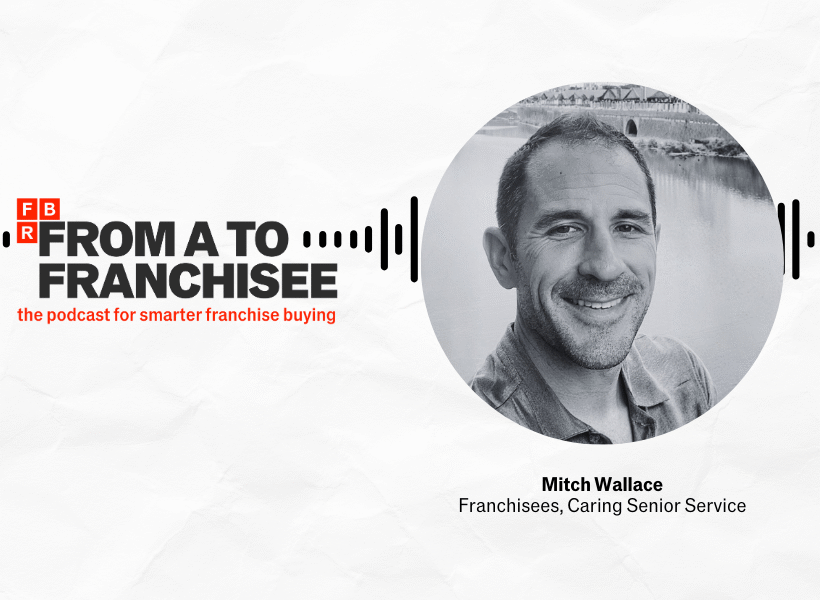
In this episode of “From A to Franchisee,” Michelle Rowan interviews Mitch Wallace, a franchisee with Caring Senior Services, to explore the journey of transforming an existing senior care business into a franchise. Mitch shares his personal story of entering the senior care industry, driven by the need to care for his own family members. Initially starting as an independent business, Mitch and his family recognized the need for more structure and support, leading them to transition into a franchise model. The discussion highlights the challenges and rewards of operating a senior care franchise, the importance of training and support, and the emotional aspects of caregiving. Mitch emphasizes the significance of grassroots recruiting and community involvement in building a successful business. The episode provides valuable insights for those considering a franchise in the senior care sector, underscoring the growing demand and opportunities in this field.
*This episode is not sponsored by Caring Senior Service, but they are one of our clients. We chose to feature them because they survey their franchisees yearly and really care about their responses. You can check out more about them here.
Resources for this Episode
- Top Senior Care Franchises based on FBR data
- Why Entrepreneurs that Help People Choose Senior Care Franchises
- Franchisee Profile: From Immigrants to Senior Care Franchisees
- Franchisee Profile: Helping Others Every Day Fulfills this Senior Care Authority Owner’s Mission
- Webinar: A Thriving Business With Purpose
Transcript
Michelle Rowan (00:52)
And welcome back to our podcast from A to Franchisee, the show that helps aspiring entrepreneurs navigate the world of franchising with real stories, honest insights, and practical guidance. Today, we are going to talk about one of the fastest growing and most meaningful sectors in franchising, senior care. As America’s aging population continues to expand, the demand for in-home support
companionship and specialized care has never been higher. And for many franchise owners, this industry offers a rare combination, strong market demand, recurring revenue, and the opportunity to make a real difference in people’s lives. To help us understand what it’s actually like to own and operate a senior care franchise, we’ve asked Mitch Wallace, a franchisee with Caring Senior Services, to join us today.
He’s living this every day and we’ll talk about his journey into the space, the realities of ramping up the business, and what it takes to build and support a caregiving team. We’ll also touch on the emotional rewards and challenges that come along with serving an aging population. Whether you’re considering a franchise in senior services or simply just curious about what makes this sector unique, this conversation will give you a grounded, behind-the-scenes look at the work. The impact.
and the business model behind one of franchising’s most essential industries. So let’s get to it. My favorite question to start with, Mitch, what were you doing before you got involved in franchising and how did you find your way to Caring senior services?
Mitch Wallace (02:32)
Well, I have degree, a background in supply chain and operations management. straight out of college, I jumped into the steel industry and started my career there as a buyer. And throughout the years, I kind of worked my way through pretty much in the same industry, the steel industry.
Prior to coming as an owner of a franchise, my last 10 years I worked as a purchasing manager for an engineering company locally. So most of my business background has been with mid-sized to large corporations in the steel and engineering side of things.
Michelle Rowan (03:12)
Awesome. So what was the trigger or what happened that made you decide that you wanted to change from the industry you had been in and how did you find your way to franchising?
Mitch Wallace (03:23)
Well, ⁓ prior to coming into this, my dad’s mom had been diagnosed with dementia. And my mom’s dad, was a healthy guy. his wife, my grandma had passed and he just did not know how to take care of himself. He was just a working man and that’s all he did.
So at the same time we brought him and my dad’s mom to live with my parents in their house. And we took care of them there for about 10 years.
We saw there was a need for what we were doing for them. Didn’t really think much of it at first, but as time went on, we saw that, there could be a better way to do things. And that’s kind of how we started on that journey.
And at the time I was still working full time, you know, in my career. ⁓ And both of my parents had recently retired. They were long time business owners. They retired, got bored, and decided they wanted to come out of retirement. So I said, okay, you know, I think I’m looking to make a change here with my career and there’s a need for this.
So that’s how we got into it. started our own small business doing exactly what we’re doing today. It just wasn’t nearly as structured or organized as what we are with the franchise.
Michelle Rowan (04:51)
interesting, I wanna dig into that. Okay, so most people that I talk to that are senior care franchisees had a personal experience with someone older in their family and went through that and saw how hard it was to find the services that they needed or the limited options. So I think that’s a common thing that kind of builds awareness that there’s this need out there
There’s plenty of opportunities now, but I think 10 years ago, 20 years ago, there really wasn’t. So I love this ⁓ little comment you put in there. So you guys started as an independent business in the senior care space. And how long did you operate that before you decided to look at a franchise system?
Mitch Wallace (05:19)
Right.
Yes.
We did this for about a year. We started from the ground up and it was good. We just got to a point where it was, we need more structure and that’s what we were lacking. And so at that time we started looking into franchises, interviewed several different brands and eventually found out about Caring Senior Service here in Canton.
And from there, we had a few meetings with leadership on the corporate side. And it spiraled into the right direction. that’s how we landed where we are now.
Michelle Rowan (06:09)
Yeah.
Awesome. Okay. So you had experience in the industry, you were running this business. So when you decided to start interviewing the different senior care franchise opportunities out there, what factors mattered most to you when you were considering how a franchise would bring more of that process and structure to your business that you wanted?
Mitch Wallace (06:30)
I think probably the biggest would have been training and support because we had a great idea of how to do everything but we didn’t have any support beyond ourselves and that’s for us, Caring really brought that. They brought the support, they brought the leadership, the know-how as industry experts.
Michelle Rowan (06:53)
So when you were looking at this, you weren’t part of franchising before this, was there anything that surprised you during your research about senior care specifically or just about franchising in general, what it was like to become a franchisee? Was there anything that just kind of took you by surprise as you dug into this idea of franchising?
Mitch Wallace (07:14)
My dad had owned a Honda franchise in the late 80s and 90s. So, you know, he was very familiar with it, which definitely helped. And he was the one that actually suggested we look at franchise opportunities. So, wasn’t much surprises there, but, yeah, I guess if there was any surprises, they would
would have been pleasant surprises.
Michelle Rowan (07:35)
Yeah, yeah. So what kinds of questions were you asking to identify the level of training and support that you’ll receive? How did you dig into that?
Mitch Wallace (07:44)
⁓ Well, we really looked at being able to get on a personal level with the corporate side of things because for us, we didn’t want to just be another number, know, just another owner out there in the middle of nowhere that didn’t have the support. So we really looked at, what kind of training opportunities they had, what kind of ongoing support they had.
how often, how frequent we could get support when needed. So that played a big factor for us.
Michelle Rowan (08:13)
great questions. Yeah and I think that’s something that the larger the system gets it’s sometimes harder to get access to that corporate team so I think that’s a good tip for people that are listening to this and that just being able to know who these people are at the leadership level and having what level is important to you to have access to them as well so that those are good questions. what how so how long have you been in business with the franchise part?
Mitch Wallace (08:32)
Yes,
we’ll be going into our fourth year Yeah
Michelle Rowan (08:42)
Okay, perfect. Because I’m
gonna ask you, what were those first 90 days like as you converted from an independent to a franchise? What was your main focus and what was that like transitioning the business?
Mitch Wallace (08:53)
I’ll be honest, it was sometimes a little bit hectic. Nothing that we really didn’t expect. We just knew that there’d be a lot of getting down, grinding, getting straight to the point of things. So initially some long hours, but we actually have three owners. I’m one of the owners and both my parents are owners as well.
So I had the support there from them, which really helped spread the workload out. But the first 90 days was really a learning curve, figuring out things that we thought we knew, which we obviously hadn’t had a great idea on.
That first 90 days really got us dug deep in and gave us a good understanding of what we were facing.
Michelle Rowan (09:36)
Awesome, yeah, so we actually had years ago an editorial director here and she left us to join her husband in a senior care franchise opportunity. And she joined, she loved working here, but she joined because her brand said you really need two full-time people that are focused on this business. And so when they looked at it they said you can’t hire someone that’s gonna care as much about the business succeeding as family. So.
Mitch Wallace (09:44)
Okay.
Right.
Michelle Rowan (10:04)
she left and they’re still around. It’s probably been about ⁓ seven or eight years now, but yeah, so I understand that and that’s great that you had partners to lean on. Do you think any of the skills from your corporate life translated well to running a business, either specifically to senior care or just in general, the day to day or managing a business?
Mitch Wallace (10:10)
Okay.
Yeah, absolutely. Obviously, schooling helped generate different ways of thinking. over the years, kind of learn how to, in the corporate life, you learn how to navigate many times bigger systems, bigger different operations. And so coming down to a smaller scale, it was a good fit just because
I had good leadership skills, I understood how businesses operate and what it takes to succeed. definitely my experience in procurement and operations management helped me propel, helped the business succeed as it has.
Michelle Rowan (11:02)
When you are starting or in that beginning, from what I understand in talking to franchisees in senior care, one of the hardest things is hiring caregivers. So what advice would you give to someone looking to come in, thinking about how you staff for those positions? How did you go about it or what lessons have you learned?
Mitch Wallace (11:13)
Yes, yes.
Michelle Rowan (11:25)
in finding those caregivers because they really, they are the heart of your business.
Mitch Wallace (11:30)
I think we’ve gone through every route possible to find great caregivers. ⁓ It all comes down to I think grassroots recruiting, getting out in the community and word of mouth. There’s tons of market or job boards out there and they play an important role for hiring but really having
Michelle Rowan (11:35)
Yeah.
Mitch Wallace (11:53)
your caregivers that you have on staff now, them spreading the word, them doing the recruiting for you is ⁓ in my opinion really where it’s at the grassroots side of things.
Michelle Rowan (12:03)
Yeah, hiring caregivers, that’s a big part of your job. Let’s talk about what your day-to-day looks like. What are you spending your time on? How big is your staff? What does a typical day look like for you running the business?
Mitch Wallace (12:17)
on a day to day, I can be anywhere doing anything, I guess there’s not a typical day. If I had to narrow it down, I still do billing and payroll. I like being involved in the numbers side of things. myself, my dad, we go, we’ll do all the client care consultations, so we meet with every client.
regardless of where they’re at and when, we’ll find time to go see them. Which for me, that’s the best part is actually getting to meet the clients. But I typically try to, beyond that, just make sure everything is operating the way it should be, having good report from staff. We have four managers, four care managers on staff.
And then we have approximately 60 caregivers as well. ⁓ So we’ve definitely grown and everybody has their roles to play. don’t deal with scheduling it or any of that. That’s just in my mind a huge puzzle that I can never solve. So there’s people that are better at that than I am. So I try to stay out of that side of things.
Michelle Rowan (13:04)
Wow.
Mitch Wallace (13:22)
Any issues with clients or caregivers, I always have an open door. Anything I can do to help either side is really where my focus is at.
Michelle Rowan (13:33)
Yeah, well, and I think part of being a business owner, you figure out what you’re really good at and what parts of the business you like. So you’ve nailed some of the different areas of hiring. There’s obviously some kind of focus around taking care of your staff, so you keep them.
⁓ and you keep them referring other people to you. The number side, that’s another thing. What about how you find new business? Do you have someone on your staff that is in charge of that or are you involved in kind of getting the word out in your community that you’re there to help these families?
Mitch Wallace (14:04)
Yeah, so we have a marketing salesperson who visits all our referral sources and they’re really in the community keeping touch with different facilities, rehab facilities and whatnot. So there’s a constant contact there, making sure that our referral sources know we’re out there because that’s important. But really the word of mouth is really, I think what sets us apart.
locally is people find out what we’re doing and how we’re doing it and that’s where a majority of our referrals come from.
Michelle Rowan (14:38)
So you talked about kind of the part of the business you love is the client intake or understanding the projects that are coming on. What are the hardest parts of your day to day or your job ⁓ just being involved in a senior care franchise?
Mitch Wallace (14:53)
You know, there’s always dealing with the call-offs or there could be issues the clients are experiencing that maybe we haven’t dealt with in the past, which doesn’t happen very often anymore, I think we’ve seen it all.
But usually the biggest challenges would be just making sure our staffing levels are good and that we’re providing the care to our clients that we made a promise to do.
Michelle Rowan (15:23)
Yeah. Are there things that you think people often misunderstand about senior care franchises that we could kind of get people thinking along that track or things to consider as they look at becoming a franchisee in the space?
Mitch Wallace (15:39)
I think probably the cost, I think there’s a misunderstanding of the cost to get started, is a very low startup cost initially to get going.
well, say initially, but ongoing as well. That’d be one misconception. The other misconception would be, what state requirements that there might be. a lot of states have different requirements. Ohio is pretty lenient, I, and speak with other owners throughout different states, I know there are more hurdles out there than what we deal with, but.
Michelle Rowan (16:02)
Yeah.
Mitch Wallace (16:15)
Overall I’d say it’s a generally easy process to get started.
Michelle Rowan (16:20)
Yeah,
that’s important that the state regulations are different everywhere. And I also have heard that they tend to change year to year as well. You got to stay on top of that. Okay, I’m going to just take a pause real quick. We have data that we reach out to franchise owners and existing systems and gather the feedback from them. And I just wanted to share the highest areas that come up from senior care franchisees, what they rate the highest as far as being part of their brands.
Mitch Wallace (16:28)
Yes, yes.
Okay.
Michelle Rowan (16:48)
They rate that the franchisees are supportive of each other within the brand, that they enjoy being part of the organization that they’ve joined, that they feel the fellow franchisees are supportive of the brand, and that they enjoy operating their business. And I think it’s also fair to share that those are also the top five across all franchises, so it’s not specific to senior care.
And then I wanted to tackle the low areas that we see in senior care, and that’s around marketing and promotions. But I will say that when I looked at that data, so that is one of the lower scores, 76 % of franchisees are rating their marketing and promotional program support from their franchisors above average. So that includes good, very good, and excellent. So it’s still, it’s a lower rated area, but three quarters of the franchisees feel supported from the brands that they’re part of.
The fees that they pay, that was one of the lower areas. 54 % are agreeing or strongly agreeing that the fees that they pay are good for the level of support that they’re receiving. ⁓ Innovation was one of the lowest scores and still 77 % of franchise owners are reporting the innovation within their brands above average. Technology, 78 % reported above average, but it was one of the lower areas. And then today’s financial picture,
but 87 % of franchisees are reporting their current financial picture as moderate, strong, or very strong. And I also took a look, not a low area for senior care. I looked at the long-term growth opportunity question we ask, and 95 % of franchisees in senior care rate their long-term growth opportunity as moderate, strong, or very strong. So that’s like a clear indicator that…
Mitch Wallace (18:34)
huge.
Michelle Rowan (18:35)
There’s a need for the service that people haven’t figured out how to care for their aging family or family needs that they have. So you’re filling a much needed service ⁓ for families. So I just wanted to pause and share that.
Mitch Wallace (18:49)
Yeah, I’ll just note that there’s 10,000 baby boomers coming to age every day. So that need is definitely growing and it’s increasing year by year.
Michelle Rowan (18:58)
Yeah.
Yeah, and it doesn’t feel like ⁓ our government is figuring out how to help support that. figuring this out on our own is really important as we all continue to age or take care of our aging family as well. So it’s great. Okay, so let’s get back to the financial realities then. ⁓ What does the ramp up time look like for you? We don’t have to talk about dollars, but did you, cause you were an existing business that converted, did you ramp up?
Mitch Wallace (19:16)
Okay.
Michelle Rowan (19:26)
like you thought you would in your plan? Did you break even when you were planning to in your business plan?
Mitch Wallace (19:32)
Yeah, so we had very strategic goals that we were looking to accomplish over a certain period. We came into break even after about four months, which in our eyes was really great. we had a small existing client base and when we purchased this location, we acquired some, but it was very low hours at the time.
So within four months we had more than doubled our clientele or hours, which in our eyes was great. And from there we just, had different goals throughout the year that we wanted to meet. And our primary goal was to get to the 800 hour a week mark, which we finally did after, I want to say nine months. And we haven’t looked back since.
Michelle Rowan (20:20)
Yeah, I mean, that’s fantastic, the number of people that you’re serving. So let’s talk about the emotional side of being a caretaker of the aging population. What do you find and what do you think your staff finds rewarding about the work that you guys are doing and what parts are really hard for you guys to work through as well?
Mitch Wallace (20:40)
The emotional side for caregivers can be tough, especially if they see a client who is suffering or not maybe in the same state that they were months or years ago, especially if a client passes, that’s emotionally draining on the caregivers.
But that’s probably the hardest thing for anyone to go through because really the caregivers, they develop a close bond, a good relationship with their clients because being compassionate and having a little bit of grace and mercy is a big part of being a caregiver. without that, then we just have nothing.
Michelle Rowan (21:23)
Yeah, so is there anything that you do, especially to take care of your caregivers when they’re expressing those harder days? Is there a way that you can help them kind of work through the highs and lows that they experience working with these people?
Mitch Wallace (21:37)
Yeah, our care managers, they like to reach out to our caregivers on a weekly basis, usually on a Friday, just to see how the week went, how the day went, to make sure they’re not getting burnt out or if there’s anything that we can do to support them to make their job a little easier. then, like I said earlier, we always have an open door policy. If there’s a problem personally or in your work life, come talk to us.
Michelle Rowan (21:43)
That’s great.
Yeah.
Mitch Wallace (22:04)
We don’t know all the answers, we’ve been through a lot ourselves and we like to try to help our caregivers however we can, whether it’s emotionally or financially in some cases as well.
Michelle Rowan (22:17)
Yeah,
no, that’s great. so my next question for you, this has been great. There’s a lot of senior care franchise opportunities out there, which means that in your market, and you talk about your business comes from referral sources. How do you differentiate your business from all the other companies that they could be referring to their patients?
Mitch Wallace (22:40)
The small business guy, know, we’re the local family owned
senior care facility here so that’s that’s kinda where i think we differentiate is you’re not going to get somebody off the street or just another marketing person who may be passing jobs you’re gonna meet with me or or my dad we’re gonna be there
You have an open door to communication, so we’re in the community, we’re talking to the people, ⁓ the different networks and whatnot. So we’re here, whereas you may not get that owner with a different type of company or different franchise owner.
Michelle Rowan (23:17)
about, I mean, are you getting feedback from your customers or from the, your customer is not usually the person that you’re giving the care to, it’s usually someone around them, but do you get any feedback or data that you’re using to share with these referral sources or testimonials, things like that, to really show the work that you’ve done with others that could help them elevate your brand over others?
Mitch Wallace (23:39)
Yeah, I’m always happy to share our satisfaction scores. We have client surveys that go out almost weekly. So we like to share those as much as possible, just to show folks, we’re here, we’re serious, we’re committed to doing what we’re doing, and if there’s anything we can do to be better, we will.
Michelle Rowan (24:00)
Yeah, that’s great. mean, putting someone in charge of the care of your family is probably a very large decision that everybody wants to get right. that’s great. ⁓ How about ⁓ any shifts in the senior care industry from a consumer standpoint or in your business or trends that you’re seeing that you think prospective franchise ⁓ owners should be thinking about or considering as they weigh their options?
Mitch Wallace (24:26)
I hit on this a little earlier, but as the baby boomers keep coming into the market, we can definitely see that there’s going to be a growing need for more of us out there. The shift to Medicare, I think at some point Medicare is going to take more responsibility for keeping seniors at home.
versus a senior living facility. So that’s something to consider. I think there will be a bigger shift in the coming years. We’re already starting to see pilot programs in Medicare just for respite care. So that’s a good starting point. So overall, I think there’s a very bright future the next 10, 20 years in this industry.
Michelle Rowan (25:09)
Yeah. ⁓ Are you part of any industry groups or local networks, programs for seniors, anything like that that’s helped support you as a business owner in this space as well?
Mitch Wallace (25:19)
Yes, we are partnered with some local not-for-profits, which in our area would be Compassion Delivered. They’re a meal delivery service. They make fresh meals, so that would be one. I’m part of a B NI group, Business Network International. So I get to see local business owners that are kind of in the same boat as me every week.
Michelle Rowan (25:33)
Great.
Mitch Wallace (25:41)
So that’s a great support system for what we do. And then, you know, your local chambers, we’re part of local chamber of commerce. And then your Alzheimer’s Association and then various veterans organizations as well.
Michelle Rowan (25:57)
That’s great, awesome. So now thinking about the four years that you’ve been in the business, is there anything that you wish you’d known or any advice that you would give someone that is doing their research before they make their decision about being a franchise owner in the senior care space?
Mitch Wallace (26:14)
Yeah, just take your time, do your research and interviewing as many owners or leadership positions as you can. You really have to build a full story to see where you want to be, what you want to do and you know every franchise I think offers something a little bit different so you just have to find the right fit for yourself.
Michelle Rowan (26:36)
Yeah, that’s great advice. Awesome. Mitch, thank you so much for joining us today to talk about what it’s like to be in the Senior Care Space. And thank you for all the work you do in your community in helping to take care of people. I know it’s hard, but I also know that it’s rewarding for you all.
Mitch Wallace (26:51)
It is, yes. Thank you so much for having me. It was a pleasure.
Michelle Rowan (26:54)
Absolutely.
Thank you so much.
Mitch Wallace (26:56)
Bye.