
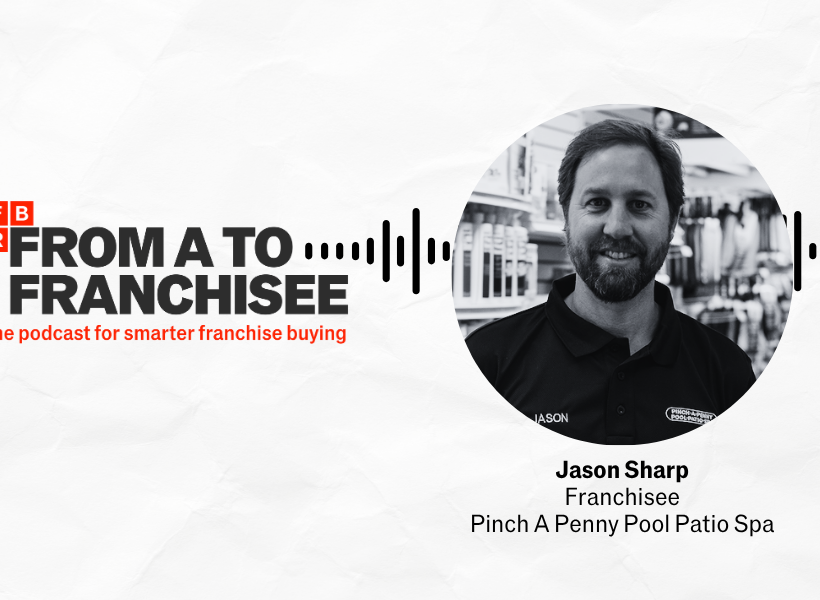
This week’s episode delves into the ins and outs of owning a retail franchise.
Listen on Apple Podcasts | Listen on Spotify | Watch on YouTube
Episode Summary
Jason Sharp’s journey from corporate healthcare to owning a pool supply franchise in Alabama reveals the real secret to success: building a community-focused team and letting your leadership shine behind the scenes. Discover how Jason’s strategic approach and operational systems turned a stagnant business into a thriving enterprise, even amidst COVID chaos. In this episode, you’ll learn:
- How to identify and seize low-hanging fruit during a business acquisition
- The importance of having a strong, engaged local team that embodies your vision
- The critical role of systems—POS, inventory, and franchise support—in scaling operations with ease
- The power of owner-operator presence versus behind-the-scenes leadership
- Creative strategies to manage seasonality and off-season revenue streams in a niche industry
If you’re contemplating franchising or buying an existing business, understanding the dynamics of community involvement, staff culture, and franchise support can make all the difference. Jason shares personal insights on navigating the seasonal swings of a pool business, hiring the right people, and maintaining customer loyalty—lessons applicable across any retail or service franchise.Why does most franchise success boil down to owner engagement and team culture? Because in retail, your business is only as strong as the relationships you build—both with your team and your customers. With proven systems and a dedicated support network, Jason’s story proves that with the right mindset, you don’t need to be in the water every day to run a profitable, scalable franchise.This episode is perfect for aspiring franchisees, small business owners, or anyone curious about how operational systems and community leadership fuel long-term success. Take this as your blueprint to avoid common pitfalls and unlock the true potential of retail franchise ownership.
*This episode is NOT sponsored but does feature a franchisee from Pinch A Penny. Pinch A Penny surveys its franchisees yearly with FBR. Because of the positive responses we get from their franchisees, you can find Pinch A Penny on many of our “Top” lists.
Resources
- Awards List: Top 200 Franchises of 2026
- Read: Should You Buy an Existing Franchise?
- Listen: The Pros and Cons of Buying An Existing Franchise
- Listen: 5 Marketing Questions to Ask Before You Buy A Franchise
Transcript
Michelle Rowan (00:51)
Welcome back to our podcast from A to franchisee. And today we are going to be talking about what it’s really like to own a retail franchise. Today we’re going to get into ⁓ the realities of what it’s like to run the day to day and your brain might go to food, might go to services that are out there that you could join a franchise, but you might also see all the retail spots when you’re driving through your community like Wireless Zone or Wild Birds Unlimited. And these are retail franchises.
that provide an amazing opportunity for business ownership that you should think about and consider. So today we’re gonna get into the day-to-day operations, staffing, inventory, customer expectations, and we are talking with a franchisee from Pinch A Penny Pool and Spa to get what their perspective is like on running their business day-to-day. So we are so pleased to have Jason Sharp join us today and talk about his business, which is located in Alabama.
and how he actually got into franchise ownership. So Jason, thank you so much for joining us today. Yeah, so tell us what were you doing before you became a franchise owner within Pinch-A-Penny?
Jason Sharp (01:56)
Thank you for having me.
Yes, so I was quite on the opposite end of the business spectrum. was in corporate America working for a big healthcare conglomerate in the southeast.
did that for a number of years, had various roles, which led me to realize, okay, I have a lot of duties at this place, which I enjoy and I love, but, I have four children who were very active in all of children things and the healthcare environment was, as fun as it was, took a lot of my
time and was preventing me from doing what I really wanted to do which was see my kids ball games and functions and go to their events and I remember the first time I missed one I said this is it the money is great it’s great system great great employees but
this is not my family. And so when I started missing the threat of missing family events, said, you know what, I’ve got to do something different. made the decision to leave, left on great terms, not a big deal, you know, but knew that I didn’t want to get in that situation again. and
knew that I probably didn’t need to jump right back into another corporately owned company or even be an employee for that matter because as children, age and get into things and they more and more the events don’t get less, they get more and more. And so I knew that I needed to be in control of my schedule in order to really maximize what I thought my family life wanted to look like.
So I proceeded.
the exhausting journey of finding a business. And I’d been, you years ago, right out of college, I was in business for myself. I was in real estate and development. And so I, I had a taste of it. So I knew, obviously I was in real estate between 04 and 08 when the economy tanked. So I had to get out of real estate because I liked to live indoors and, and have running water. So I had to make a change, but so it was not foreign to me to be kind of working for myself. It just been a long
time. And so I started looking and I looked at hundreds of businesses, startups, local businesses.
and franchises, I knew in the season of life I didn’t need to take on a startup business. I gravitated toward franchises and knew, okay, I need support while still being able to own the business and make the decisions myself, being able to be in a franchise and…
really still be in control of your business, the decision making, the day to day,
So we bought a house. It was a fixer It was a redo. Complete gut job, and there was a pool in the backyard and it was black. Like it was out. It wasn’t even water. I know it was, it was nasty. And I’m like, I was telling my wife, Amy, do you sure? She’s like, I love this house. We can make it. It’s going to be great. I was like, but it’s got this thing in the backyard. So anyway,
there’s a guy working on the equipment and he said take some pool water over to one of these places and I so I took it to a place and they said it’s a money pit you need to fill it in and I said hmm all right I’m not gonna do that just yet because I just bought it so then another guy a little a young kid is working on my equipment he said man you take your pool water pinch a penny
I was like, okay, I’ll take it to pinch a penny In two weeks we had a beautiful pool and we’re swimming in this beautiful, and I’m telling you, was nasty. And so ⁓ not only did I buy pinch a penny, I hired that kid that told me to go to pinch a penny. so that’s kind of how I got into it. That started the conversation. I did, I’ve sold the house since and have a neighborhood pool.
Michelle Rowan (05:10)
Okay. They do have a pool. You do have a pool. okay.
Okay, that’s even better.
No maintenance for you.
Jason Sharp (05:20)
Well, it’s not better for pinch a penny because I need every house to have a pool. So
I do not support neighborhood pools, but I love them when I live there.
Michelle Rowan (05:32)
You’re down
Jason Sharp (05:33)
know, Pinch A Penny has been in my community for 30 years. And it’s funny story because the gentleman that owns the retail center that we’re in is a physician. And so he and I know each other from my days in healthcare. And he’s like, Hey, I got a, I got a tenant guy wants to sell. I know you’re looking for a business. He told me what it was. I said, no, thanks. I don’t, I don’t know.
Michelle Rowan (05:48)
Thank you.
Jason Sharp (05:52)
anything about pools? So I said no three times to this business and it kept coming back. I was like, okay, well, Lord, you’re obviously telling me something that I need to look into this business a little bit more. So I did and I had my list of check boxes and it kept checking the boxes.
everything I wanted from a business. everybody wants a pool. What do you do when you get a pool? I don’t know what to do. Well, that’s where we come in. There wasn’t a lot of competition in town.
I had a staff in place that had been here, my manager’s been here 20 years. I’ve only owned it six, so he’s been here a long time. And it was a good location, there was room for growth. So there was some low hanging fruit.
immediately upon just changing ownership, just breathing some new life into it. we determined all these things before we purchased the business. And so all those things kind of lined up with, this is even though I know nothing about swimming pools.
Was I looking for something that I loved or was I looking for a business that I could pour into and either grow it and sell it or keep it forever and let my children come and run it? All those things.
People are to sell a business for a few reasons.
This one was the owner had some serious health problems. So the business had just kind of gone down. So people were not coming to pinch a penny and having been born and raised in this town.
I knew people were like, we don’t really want to go there because it’s, it’s, just, we don’t feel like we’re getting what we want. This is not a knock on the staff because I kept all the staff. Um, so they hear this, they’re to be mad at me, but that’s okay. the business takes on the persona of an owner. Good, bad, indifferent.
he just was not able to pour anything into the business anymore. It was great when he was healthy and fired on all cylinders, but toward the end he just couldn’t pour into it. so the employees were taking on more leadership roles than they had really signed on for and were kind keeping the business afloat. So anyway, that created a buying opportunity for me. so months and months and months of… ⁓
negotiating and getting things in order, we ended up purchasing Pinch A Penny in February of 2020. I’ve been in six years, so here’s a fun fact. So I bought Pinch A Penny in ⁓ February of 2020, and then in March 2020, COVID hit. So yay, what have I done? ⁓ But it turned out to be a really good business to be in.
Michelle Rowan (07:49)
Awesome. So about six years you’ve been in the brand now. Okay.
Good, good. Okay, so how many employees were there when you purchased the business? Okay.
Jason Sharp (08:10)
We didn’t.
question. We had six employees.
Michelle Rowan (08:18)
So we have, just reference it because we’ve done a, we did a great episode previously with a franchise executive whose role is to just help franchisees sell their business to others. So we’ve, we’ve had a great conversation around the benefits of buying an existing franchise versus starting from scratch. So I’m just referencing that. if this is the first conversation people are hearing in our podcast, we can reference them back to that, because I think you nailed some of the existing reasons of why this was great is you saw that there was low
Jason Sharp (08:29)
Sure.
Michelle Rowan (08:48)
hanging fruit where just a change of ownership could really inject life and see ⁓ more revenue to your business. So I think that was really great. So and then the other is the hardest part of building a business is your team. So you inherited a team and it sounds like you’ve kept the whole team since you or you kept them when you bought them.
Jason Sharp (08:53)
Absolutely.
So I kept everybody when I bought it because they knew more than I did. I was smart enough to know that I needed smarter people around me that had been doing it. Now, I would figure out pretty quick if they were not.
working at the standard that I wanted to create. if it just personality wise or just various reasons.
Michelle Rowan (09:26)
So you bought a retail business. It sounds like you were looking at all types of business. You weren’t really ⁓ focused in on retail specifically. You were open to just a good business opportunity. What are the days and hours of your business?
Jason Sharp (09:40)
So we are open seven days a week. Monday through Friday, nine to six. Saturday is nine to five. And Sunday is one to five.
Michelle Rowan (09:50)
Okay, perfect. So that we’re giving people an example of you have to have staff to work those hours
Jason Sharp (09:56)
And that is a challenge. mean, ideally,
I would love to have a day off, know, pinch a penny franchise rules. you have to be open seven days,
Michelle Rowan (10:00)
Yeah.
your FDD or your franchise agreement will dictate what those hours or those days of operating are. So, yeah.
Jason Sharp (10:11)
And hours and I’ll
praise pinch a penny corporate because everybody’s Sunday hours are ⁓ 10 to two. But we got in here and like, well, you know.
I don’t know how the rest of world operates. know how we were operating in the South. In the South on Sundays, everybody’s in church. So we’re not going to have any business from 10 to 2. So they allow us to open up from 1 to 5. ⁓
Michelle Rowan (10:31)
That’s right.
That’s great.
down.
Jason Sharp (10:38)
Fortunately, they let us kind of deviate from their standard operating course.
Michelle Rowan (10:41)
Yeah, okay.
This is great. So as the owner of the business, can you walk us through what a typical day or a week looks like for you in your role as the business? What are you spending your time on and how much time are you spending on the business?
Jason Sharp (10:55)
So it’s morphed and a role of a business owner will either change or stay the same depending on what their goals are. So when I first bought it, I was here 23 hours a day. I was here all the time learning, soaking it in.
just figuring out Pool World, I was training all the things that I needed to kind of immerse myself in Pool World. And so I was working the floor. I was working the retail side and then,
We started growing, we started adding, we clean pools, we routes. We clean pools for people on weekly basis. And when I bought the business, we had 36 pools on a route. I asked why, and they said, well, the owner just didn’t want that exposure of having guys out. I said, okay, well, let’s just start saying yes. Well, in two months, we went to 100 pools. So I was in a truck cleaning pools. And so I would clean pools half the day. I would work in the store half the day. I would hit office stuff in the morning at night.
And so really I just I did everything and which was great. It’s fine It was fun as we grew obviously I couldn’t continue to Be out of the store as much or I had to have a little bit more structured. They have it I had to have a little more office time and so now fast forward six years I Don’t do any outside work, and I don’t do any retail work
once I’ve learned what I needed to know, I want to replace myself in those roles. So I could really just grow, ⁓ vision cast, and see where the next low hanging fruit is.
And so that’s where I spend my days. Out in the community, I get to go look at pools. You know, we’ve added a renovation line, so we’re renovating swimming pools. So I get to go see those jobs, talk to customers, really oversee the business. I’ve got a great staff. We’ve got about 25 employees and I get to manage people, which is what my goal was when I bought a business was to manage people. So that’s kind of where.
In a nutshell, my roles.
Michelle Rowan (12:54)
Yeah,
so ⁓ what I love is that, but I feel like I’ve had this conversation a lot in the past couple days is you mentioned.
the community’s perception of the business is really about who the owner is. And I think that that’s a really good point to play on, especially in retail is if it’s not you as the owner, you have to have somebody that is the face of your business in your community being involved because that is what creates loyalty and that’s what creates people wanting to come into your store. So I think that was a really great point and it’s a great thing for people to consider as they buy a business is if that’s not your thing and it doesn’t have to be, you could be
the scenes, but you need to have somebody that is the face of your business in the community. And I like that your experience, I mean, it’s changed the business by having a change in ownership. Yeah.
Jason Sharp (13:44)
It has, it has. is,
that is a vital part. If you cannot just be behind the scenes, if you don’t have a good team and a strong team and cause the same customers are walking in and they’re going to talk to their friends and their neighbors. And so you’re going to continue to just grow. If you just have good service, you’re going to grow. Well, if you don’t have good leadership or a face or, you know, I’ve got a problem, I need to talk to the person in charge. you gotta be available. And like you said, either, either, either the owner or.
Michelle Rowan (13:51)
Yeah.
Jason Sharp (14:09)
a really, really strong manager, which I have fortunately
Michelle Rowan (14:11)
Yeah. Okay.
So you
said the majority of your time now is really about managing people, which I love. I do think that that is also, it’s not a skill that a lot of business leaders have. I think a lot of business owners, including franchisees, don’t realize the importance of the culture that you’re creating in your organization. So knowing that most business owners, the biggest challenge in growing their business is labor, is having the right people on your team so you can step away and help grow the business.
What are you doing with your staff that helps create that or that culture within your organization that they do provide fantastic customer service so that people keep coming back? Do you have any secrets that you would share with other business owners?
Jason Sharp (14:54)
Well,
when you have a business that’s open seven days a week, it’s tough sometimes having outside employee events.
There’s no break. So the last thing I want to do is now everybody does everybody doesn’t work seven days a week. We’re open. Obviously they’re on a five day schedule, but we’re very careful about bringing them back to work. when you’re not at work, I don’t want you to be at work. I want you to be recharging with your family, doing what you enjoy, hobbies, whatever. and come back refreshed, energized, ready to work. But we’ll do things in the morning like we get a breakfast, you know, every
month. We do have events with the managers where we’ll feed them. we have Christmas parties with all the employees and usually when we have parties we blow it out. one Christmas we had a casino night where we brought in this big casino organization and they kind of our whole group got to play.
casino night. so we really do it on as much as we can. there’s an axe throwing place in town and we rented out the whole axe throwing place three years in a row. So just things like that. It’s important for me that they know that I care about them, that they’re not just a means to an end for me. I want them to know that
I want you here because I like you as a person. You fit well with our personalities. So we’re friends as well as employees. I’ve made it a point. Hey, you’re not doing anything that I haven’t done. I’ve been down and dirty. I’ve had my hands in a pool. I’ve been completely in a pool before. I’ve worked all day.
outside. I’ve done everything that you’ve done so I can relate to what you’re doing, what you’re going through. And so that opens the door for them to come and talk. we give them days off, you know, they don’t have to work a certain amount of time before they start acquiring PTOs. I mean, as soon as you get here, you qualify for a PTO. Because I know
how hard it is in the summer outside clean pools. And I know in the summer inside the store there’s 200 people a day coming in. So it’s busy. I pay them really well. I give them a lot of days off. We’re very flexible with them.
So we try to operate even though we’re a franchise, corporate franchise, we try to operate it like a family business. So.
Michelle Rowan (16:51)
Yeah, I love it. That’s great.
Okay, so let’s talk about the inventory side of what you’re doing in the retail portion of your business. Who manages that and how much of your time is spent on that or your team’s time is spent on that? Is that a hard part of the business?
Jason Sharp (17:06)
Yes.
so my, my manager, I have a manager, I have two stores. most of what I’m talking about is the main store.
The other one is a two years old, it’s a smaller store, it’s in a newer market. So the store, I we have a manager and two assistant managers and they manage everything. So they know that one of their jobs is to make sure I don’t have to manage anything. And they know they’ve done well if nothing comes to my desk. we have one assistant manager who kind of oversees the inventory.
Michelle Rowan (17:15)
Thank you.
Jason Sharp (17:42)
we get shipments twice a week. And so it’s constantly being monitored. So ⁓ he counts what we need and our shipments come the next day. We put in our order and
what most franchises is you have that supportive inventory. So our inventory comes directly from our corporate headquarters, which is located in the United States, which is a big deal.
Michelle Rowan (18:05)
So I was going to ask,
because you bought the business right around COVID. And I know that really challenged supply chain. ⁓ So that’s great. That’s a great question, I think, for anyone to ask that is looking at a retail franchise is where is the product coming from? Yeah.
Jason Sharp (18:11)
never had shipment issues.
That was one of the check boxes,
and that was pre-COVID. I had no idea COVID was coming when I was looking at it, I knew that to really avoid hiccups with shipping, where’s my stuff coming from?
and it’s coming from South Florida, which is not far from me in relation to the United States. so we get, in the winter months, we get one truck a week. In the spring and summer and fall, we get two trucks a week and we never stopped. We never missed. And so it’s incredible what they do. Most of our chemicals are made here in the United States.
Michelle Rowan (18:44)
that’s amazing.
Jason Sharp (18:52)
That’s been really easy for us. really, it’s great for me to say and tell all my customers, listen, I know where my products come from. We make them.
If you go to buy pool products, and I’m not throwing anybody on the bus, but if you go to Lowe’s and Wal-Mart, I can’t really tell you what’s in there. But if you buy the same type product from here, I can tell you exactly what’s in that chemical. Because I can call my manufacturing office, and they can send me a list of everything that’s in that product. ⁓ And so to me, that’s a big deal.
I didn’t know as much about the inventory side until I got into it. I’ve been doing it for six years that how good we have it. And that we can call up somebody in the warehouse and they can send us a part right away. It’s just, been really fortunate, really fortunate.
Michelle Rowan (19:41)
That’s awesome.
How about thinking about, so you obviously have a system for inventory. What types of systems or technology are you using within your business that help you just run the business? What would you say business owners have to be comfortable with in retail as far as the types of programs and things that you’re using in the business?
Jason Sharp (20:00)
Yeah, so really for us, our POS system obviously ⁓ is, I don’t know how you would run without a POS system. think that’s, that’s right, point and sell system. And they’ve gotten so sophisticated and it integrates with your business so much. It does everything for you. I mean, it really does. ⁓ And then of course I run everything on QuickBooks, which is just makes life easier.
Michelle Rowan (20:08)
Yeah, so that’s a point of sale system, which if someone’s turned to this, we hope they have that. Yep.
Jason Sharp (20:28)
I do everything here, I don’t really use accountants a lot, except to do the really important stuff that keeps you out of jail. But the day to day, the payroll, QuickBooks online.
is amazing. a little plug for them, not that they need one, but it makes your life easier. If you’re thinking about doing opening a business, go ahead and get familiar with that. Take some tutorials, watch videos. And it’s not hard. mean, goodness, it’s not hard. It will make things a lot easier.
Michelle Rowan (21:04)
That’s great. Yeah. So how about let’s think about the role of the franchisor in your business. What are they doing versus what you are doing as far as the marketing side? the marketing out to your customers and your new potential customers. What do you get from the franchisor versus what are you doing to ⁓ just connect with your customers and find new customers and keep your customers coming back?
Jason Sharp (21:31)
obviously if you’re in a franchise, you’re to pay a franchise fee. So one of the things I looked at was, okay, what’s the franchise fee? When I was looking at businesses and what do I get for that fee? Am I paying it just to use their name or am I paying it because I get something in return? And of all the franchises I looked at, this one really gave me more bang for my buck.
So our franchise fee is 10%. But 6 % of that is marketing. So they do all of our marketing. They send flyers. They contact all of the, we have a system in place, speaking of systems, that can show us every pool in our.
service area, every swimming pool. but corporate does all that for us. So they’re they’re they’re peppering all these pool customers with sale brochures and flyers and specials we’ve got going on. We don’t have to do any of that. They’re running advertisements, commercials. And it just comes out of our I don’t have to pay extra for it.
They don’t show up at my store unannounced.
pinch a penny doesn’t tell us how to do it. They give us a blueprint. This is what works. This is what, ⁓ you know, there are, there are some things that we require. Like everybody has to wear a shirt that says pinch a penny in your name. And, know, you have to wear this uniform within these colors and, know, your floor has to look like, you know, there’s, there’s things that just makes business sense, but they don’t have our, their thumb on our store. They’re not, they’re not looking at us with a microscope. They rarely come.
In fact, I have to call them and say, do y’all remember, you have a store in Dothan because we never see you. One of that is we’re doing really good, so they don’t have to come. But ⁓ they just leave us alone. But they’re available. We pick up the phone. We have an IT problem. The computer’s shut down or glitched. We can call them up. They’ll fix it right there.
If I’ve got some marketing questions, I can get the marketing guy on the phone just like that. There’s a huge team. so part of our franchise fee that I’m paying, we give away more than 10 % in return ⁓ in just the support, the availability.
We can pick up the phone anytime and say, listen, what, this is what I got going on. I’ve got this idea. Are there,
There’s 300 other stores. anybody experiencing this? ⁓ You know, we have a meeting every year in January down in South Florida where we can all come together and just kind of recharge and share stories, success stories, and see what new products are coming out. We call it our Expo. But we all talk, all the franchisees talk and call and just, are you seeing this? Because we’re different markets. South Florida is way different than South Alabama. It’s way different.
we get to kind of bounce ideas off of each other and troubleshoot together. So, and that’s been a testament of just pinch a penny making it a family or a cohesive franchise.
Michelle Rowan (24:24)
Yeah.
I love that. So let’s think back. I know it’s been six years, but when you came into the business, what surprised you the most? What were you not expecting, either good or bad, but what surprised you the most once you got into running the business day to day?
Jason Sharp (24:42)
Managing employees.
took a lot more than I thought. Personalities, personal stuff, they’re bringing personal stuff, they’re bringing it. And I’m like, I just want you to work. Just come here and work. And then I realized, that’s not the way you run a business. If I want to keep these employees and them feel good about coming to work here,
Yeah, come in. Let’s talk about what you got going on outside of work. What’s personally bugging you? How can we help? You need a day off because you’re just, just take a day off. Don’t worry about it. We’ll pay you. Things like that. for me, there was a large gap because I’d been in corporate world. It’s dog eat dog. It’s, you’re a lot different than owning a small business. And so.
manager who had been here for a while really helped me with that. And I will tell anybody, if you’ve got it, I can’t say it enough, if you’re buying a business and it’s an existing business, you want a strong manager because he will make your life easier. He’s already connected to the employees. He can bridge the gap between a new owner coming in and the employees and make that kind of seamless or flow better. anyway, make sure you have a really good manager if you’re buying a store or buying a business.
That was a big adjustment for me was really staying connected. ⁓ Cuz I went from having four kids at home to 18 kids kind of deal. But once I realized, you pour into these guys and gals and you really show them they’re important, they’re gonna work for you. They’re gonna work for you.
Michelle Rowan (26:08)
Yeah. Yeah.
Jason Sharp (26:21)
they’re going to do their job and they’re going to because they feel like they belong. They feel like they have a place they can come to where people love them for whoever, not because of what they do or just because who they are. And so that’s kind of the environment that we’ve tried to create here. Another adjustment that Pinch-a-Penny corporate told us about, but nothing prepares you when you’re in the pool business for winter time.
Michelle Rowan (26:49)
Yeah, seasonality.
Jason Sharp (26:50)
⁓
It is when it dries up, let me tell you, it dries up. I think people forget to have a pool in their backyard. I mean, it is because they said, listen, you’re going summertime, you’re going that bank account is going to look really good. ⁓ Don’t touch it.
Michelle Rowan (27:10)
That’s
really good advice. You have to learn how to kind of put money aside for when, and then I’m imagining you also get to allow yourself and your staff to take a little bit more time off in that off season.
Jason Sharp (27:14)
you have, that’s right.
We
do, I tell them, listen, try to schedule vacation time in the winter, which that’s not fun. ⁓ But you work at a seasonal business, you work at a pool store, so we need you in the summertime. Now, because we’ve grown and we’ve gotten more.
We were reactionary for the longest time. We just need to hire somebody to put them in that role. We’re growing this line, let’s put somebody in that role. Now we’ve kind of, we’ve cross trained a lot. Different roles can handle different roles, I guess, if you will. So when somebody’s out, we don’t feel it as much. Somebody’s able to be out.
And so that’s just been having since grown the business, we’ve got a little more flexibility. But again, you gotta pay for those people in the wintertime.
So it is that is that is and that’s every franchisee that I talked to in in any pool store is you just cannot overstate the importance of preparing for offseason. Whether you’re off season is the summertime. You know, if you own a ski store, you know, and it’s going to drop in the summer, you you cannot when you think you need to buy something, don’t until you just have to when you’re starting out.
⁓ As we’ve grown and gotten to a place we can have a little more flexibility and winter’s not quite as bleak. for the first several years it is, and they would tell us, listen, you need to run it for five years.
after three years, you’ll have, you’ll start to have a clue of what you’re doing. And then after that fifth year, you feel like you, okay, I feel like I’ve gotten this. And that’s true. Cause you know, I’ve, I’ve been, I’ve come in here and been in corporate America. I’m like, give me a year and a half. I’m gonna have this thing lived. And I’m like, okay, I don’t know that I’ll have it figured out in three years.
Michelle Rowan (29:14)
Yeah, 18 months goes a lot faster
when you’re the business owner wearing 10 hats.
Jason Sharp (29:18)
It is, it does.
And you forget, like, I don’t even know what day it is. I mean, I would tell my friends, like, you’re buying a business now.
Michelle Rowan (29:22)
Yeah.
Jason Sharp (29:28)
And I’m like, yes, I know, I probably should done it I was 20 and not when I was 40. ⁓ Because it requires a lot of energy and a lot of time and you make sacrifices and my family made sacrifices, but they loved it Owning a business, and I’ll get on the personal side of it, ⁓ owning a business can make you feel alive. We all know you get into the corporate.
minutiae you just get stuck in that in that deal and you just go to work every day or any job and and I’m not saying that’s for everybody but for me personally it just it really Invigorated kind of where I was in life, you know, and I tell folks I wish I had bought it 20 years ago. I Wish I had bought it 20 years ago because you know, even when it’s the dead of January and you’re like I’m not sure how those bills are gonna get paid
Michelle Rowan (30:10)
building something for yourself, not for someone else.
Jason Sharp (30:20)
I still love it because it just there’s an adventure to it. You’re in control. again, it’s not for everybody. I hope it’s not because I need employees. I need people that want to work for me. I’ve had people call me now since we’ve been doing it for six years. They’re on the fence. And I’m you’re on the fence, you need to be buying a business. You need to be because you’re thinking about it. You know, you can’t go to sleep at night without thinking about what if I could do this on my own?
⁓ So it’s been fun to counsel people in that regards and kind of talk through that. yes, I would love to have a business that was open year round and was thriving year round. But to get back to your question, we settled on a business that just has about five months. We have to get all of our money in five months.
Michelle Rowan (30:59)
That’s crazy because you’re in Alabama
and I’m in Maine, so it’s even shorter season, so you talk about your dreaded winter.
Jason Sharp (31:04)
Well, and listen, I
talked to the people down in Tampa or even south of that. I’m like, y’all just gotta be loving it. It’s a season here too. People go back to school. ⁓ Just because the fall is still 80 degrees, people, they don’t use their pools as much. And so one thing you have to do, this is good key for people that are getting into the franchise world is, ⁓ how
Michelle Rowan (31:13)
That’s so crazy. Yeah.
Yeah.
Jason Sharp (31:32)
start thinking early, how do I fill those dead periods? What ancillary service can I create or can I start to fill that? And for Pool World, that’s been the lifelong, I everybody is like, how do I make money in the winter time? What can I do? And there’s things that you can do, ⁓ different services. We started renovating swimming pools. Means we do everything but dig a hole, basically.
freshen it up, completely tear out and redo it, everything. ⁓ And we try to tell customers, listen, do this in the wintertime so your pool is not shut down when you’re wanting to use it. Obviously that helps us because we’re not busy in the wintertime and this creates revenue for us when ultimately we didn’t have a lot going on. So there’s things like that. know, there’s always things that you can do and kind of create to
Avoid having to let people go or because when you get when you slow down sometimes like well I’ve got this staff and they’re sitting around twiddling their thumbs. So I gotta find something to do that creates generates revenue or I let them go. And we’ve done both. I hate letting people go. Especially when when we’ve trained them. Obviously I love pouring into people, but at the same time all these resources and time we’ve spent training someone. Just to let him go.
that didn’t sit well with me for the first couple of years. And so we’ve started to I know you work in the store and you’ve never been outside, but the next two weeks, you’re going to be outside. You’re going be with the pool guy. You’re going to be in cleaning pools. And so most of them love it. And that’s just part of our cross training that we try to do.
Michelle Rowan (33:05)
Yeah,
training is great idea. So it sounds like you’re in tune with the other franchisees in your system and
You’ve clearly highlighted the need to ⁓ prepare for your slow seasons, your seasonality. What else do you think really separates the people that are doing well in your brand financially versus those that might be struggling? Is there anything else that you can think of as far as like a warning or just something that you see in other people that make them more financially successful within your brand than others?
Jason Sharp (33:37)
I think when an owner is not there, even your best employees, they’re gonna operate about 75, 80%.
because you’re not there. And it’s not that they’re not operating at 100%. They’re operating at what you would consider 80%. And so when I’m here,
the level of production just goes up just because the owner’s here. But owner engagement is really
It can really help a business thrive. That can help a business kind of take the next step.
Michelle Rowan (34:09)
what advice would you give? I already grabbed one little nugget that you shared is like, if you’re contemplating owning a business, you’re on the fence, you should do it, but you’re thinking about it enough. That was really, really great because I feel like every franchisee I have the pleasure of talking to when I say, you know, what’s one thing you’d want to share?
I would say 85 % of the time I get, wish I’d done it sooner. And so.
Jason Sharp (34:30)
Well,
right. And I didn’t want to, you know, it hit me at one point, you know, and we always have these conversations. You know, I didn’t want to get to be.
65 years old and say you know what I wish I would have started my own business and At that point, I’m like, you know, well then why don’t I you know, what is why wouldn’t I?
And everybody can’t, financially it’s tough and there may not be things that are available or situations and season of life, you can’t. But if you have the opportunity ⁓ and you’re really thinking about it, you want to and you need to at least explore it because it’s, you know, and I’m fairly partial to it because I did it and I love it and…
We’ve opened another store and contemplating doing another one as well. So it’s going really well for us.
Michelle Rowan (35:22)
Well, you’ve kind of already told us who you feel like is well suited for retail business. You talked about the importance of having someone out in the community and someone that takes care of people. Any other characteristics or any other people that you think this is really a good person that would be successful in a retail-based business?
Jason Sharp (35:37)
So the biggest struggle for me is I’m a type B personality. Type A’s are really better running a business than a type B. So my wife is, she’s A. And so she is great when, she doesn’t work here much. She comes in, she used to work here a lot more, but ⁓ I’ve had to fire her a few times, just to, because we like bull.
Michelle Rowan (36:01)
She probably fired
herself if she’s type A. Yeah. Yeah.
Jason Sharp (36:03)
We like being married instead of coworkers. It’s lot
better. But ⁓ knowing who you are and don’t be naive and don’t think, I can come here and I can take this business over and I can run this and I can do this and I can operate like a CEO and a COO and a CFO. Know your limitations. I know that I’m not as detailed as my manager, who’s incredibly detailed. Well, all the detailed stuff, he gets to do. ⁓
He gets paid to do. I realized that I’m a 30,000 foot vision caster. And I can come up with ideas. And I want you to tell me how to do it. Other people are feed me ideas, feed me ideas, and I’m going to do it. I’m going get it done. So knowing who you are is key. ⁓ And take the personality test.
Michelle Rowan (36:51)
I think that’s great advice. The other thing I would also recommend is ⁓ it’s popular in the franchise industry at the franchisor level, but it’s called EOS, the Entrepreneurs Operating System. So you’re very clearly defining yourself as the visionary and then you’re number two as your integrator. So that is also a great, I think, just ⁓ great reading for a business leader to just kind of figure out those roles and have a process to run your business. Yeah.
Jason Sharp (37:02)
100%. Yes.
That’s right.
It shouldn’t stop you from buying a business, but
you need to do it early on in the process. That’s only going to help efficiency and proficiency. So yes.
Michelle Rowan (37:24)
Yeah, I love it.
Well, this was such a pleasure, Jason. Thank you so much for talking with us. Yeah, it’s wonderful to hear your success in Pinch A Penny and it sounds like you’re in the right place. It’s exciting.
Jason Sharp (37:29)
This was a blast, yes.
Thank you very much and I look forward to hearing our podcast.
Michelle Rowan (37:40)
Yeah,