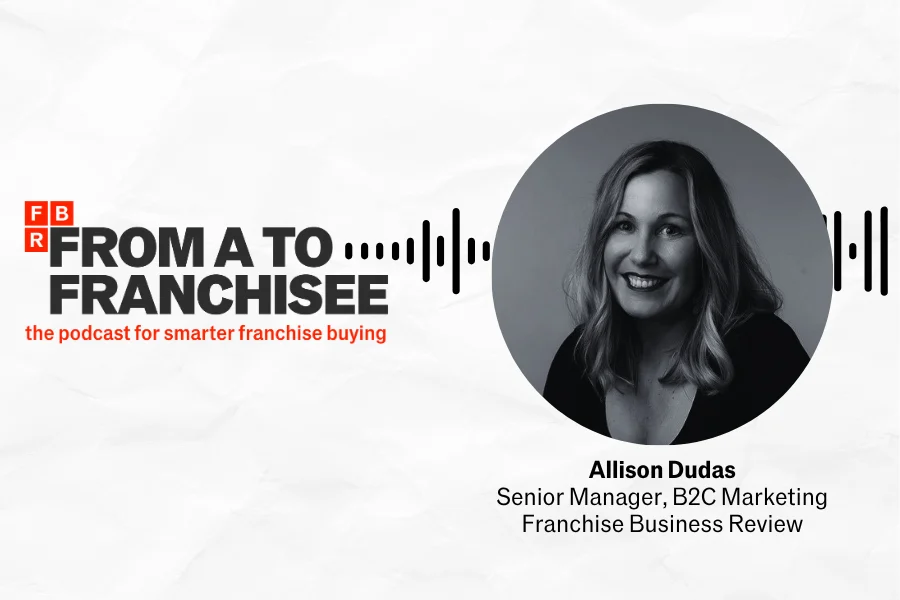

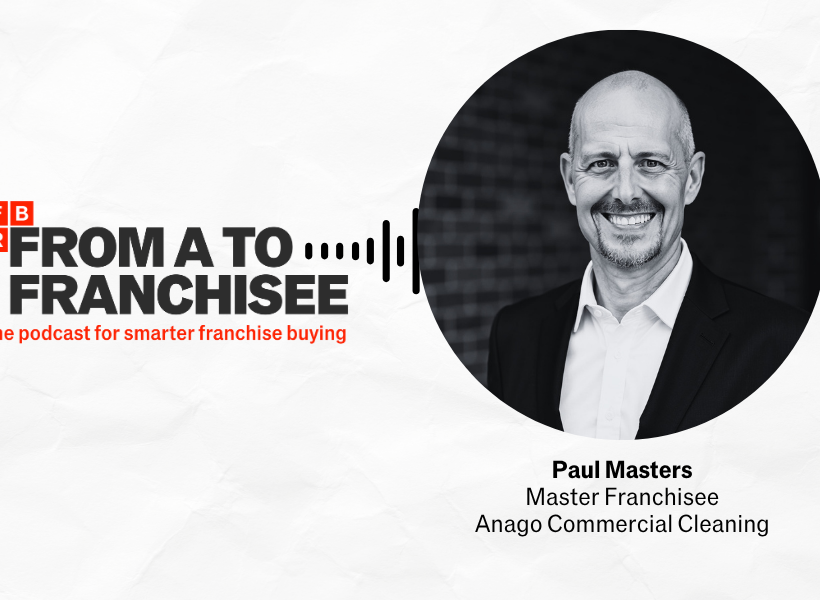
In this episode, we get into the Cleaning and Maintenance Sector Report of 2026. Paul Masters, a master franchisee from Anago Commercial Cleaning, joins us to delve into the data.
Listen on Apple Podcasts | Listen on Spotify | Watch on YouTube
Most franchise opportunities promise stability — but few are as resilient and rewarding as the commercial cleaning sector. In this episode, Allison Dudas dives into the booming world of cleaning and maintenance, revealing how this essential industry is not only recession-resistant but also a hidden goldmine for entrepreneurs willing to manage people, build relationships, and implement proven systems. Learn why the janitorial sector is projected to hit $112 billion by 2026, and how COVID skyrocketed its stature from essential service to critical partner in business continuity. Guest Paul Masters from Anago shares his eye-opening journey from skeptical newcomer to thriving master franchisee, illustrating how recurring revenue and diverse industries—ranging from chocolate manufacturing to jet engine repairs—make cleaning a uniquely scalable and stable business. You’ll uncover:
- The core differences between master franchisees and traditional franchise owners, and how they generate multiple streams of income with minimal overhead.
- Key operational strategies that keep franchisees engaged and successful, from proactive quality inspections to exceptional customer communication.
- The real factors behind income disparities in the sector, and what it takes to scale your franchise to six figures and beyond.
- Why managing relationships and systems—more than just labor—drives job satisfaction, retention, and growth.
- Who this model fits best—and who should probably steer clear.
This episode is perfect for aspiring entrepreneurs, franchise veterans, or anyone seeking a recession-resistant business with high satisfaction and scalability. If you’re ready to uncover a robust, often overlooked industry that offers both stability and significant earning potential, this conversation with Paul Masters will change how you see the cleaning sector—and your future in franchising.
*Paul Masters is a master franchisee from Anago Commercial Cleaning. This is a brand worth checking out that makes many of our “Top” lists!
Resources
- Download the Free Cleaning & Maintenance Sector Report
- Explore other franchise industry reports
- List: Top Recession-Resistant Franchise Brands
- Read: Sub-franchising, Master Franchisees, and Multi-Unit Area Developers: What You Need to Know
Transcript
Allison Dudas (00:04)
Welcome back to the podcast from A to Franchisee. I am Alison Dudas your host today, and I’m so excited to talk to you about the world of cleaning and maintenance. So we at FBR are just releasing our cleaning and maintenance sector report. And this means that this past year we interviewed, we surveyed around 2,800 franchisees across 33 brands in the cleaning and maintenance sector.
And these are our findings from those surveys.
Here to unpack this is Paul Masters from Anigo Cleaning. Thanks so much for being here, Paul.
Paul Masters (00:42)
it’s good to be here, Allison. Thank you for having me today.
Allison Dudas (00:45)
Absolutely. So, Paul, we’re gonna get into your story a little bit, but first I wanna tease a little bit of information that we have in our sector report. So the US janitorial services industry is projected to generate $112 billion in revenue in 2026. It’s kind of a huge stat. And I feel like maybe when people think about franchising, they’re thinking about food, right?
Paul Masters (01:03)
Mm-hmm.
Allison Dudas (01:10)
and if they are just thinking about food, holy moly, are they ignoring a pretty significant industry? and the IFA, that’s the International Franchise Association’s 2026 Outlook puts commercial and residential services as the strongest growing segment at 3.2% year over year. Not to mention that over 2.4 million people work in janitorial services, and this is
Paul Masters (01:17)
Yeah.
Allison Dudas (01:39)
one of the largest service occupations in the country. So this seems to be quite the sector to be in, Paul, huh?
Paul Masters (01:49)
Yeah, I’m surprised myself. after nine years of doing this when I first was looking for business opportunities to purchase, I went through a franchise consultant, which I’m sure we’ll talk about later. But when he handed me this janitorial company to look at, the first thing I said was, I don’t want to be a janitor. And you know, sort of slid it back across the table to him and he laughed and said and slid it back to me.
And said, I I get what you’re saying, but just, you know, spend a spend some time, do your due diligence, check it out, and I think you’ll be pleasantly surprised at what you find. And lo and behold, nine years later here we are. So Yeah.
Allison Dudas (02:31)
Here you are nine years later. Yeah, and I can’t wait to get into
that. so the report that we’re issuing frames cleaning as recession resistant because the work is essential rather than optional. And just in the past nine years, do you feel like that’s played out in your territory or is that more true on paper than it is on the ground? Because obviously we had kind of a crazy, kind of a crazy decade.
Paul Masters (02:38)
Mm-hmm.
Yeah.
Right.
And the one thing I would, you know, sort of highlight in the last nine years is COVID and gosh, I mean, we came to work every day for the entire period, you know, that everyone was sheltered in place during COVID. our revenue grew twenty twenty, twenty twenty one, twenty twenty two. So
you know, overnight we kind of transitioned from the people who emptied the trash and trash cans to disinfecting experts. So it a lot was expected of us. our, you know, stature in the eyes of our clients increased significantly. And so, you know, I I think we figured out that
Allison Dudas (03:28)
Right.
Paul Masters (03:42)
Yeah, at least when it comes to a global pandemic that, cleaning goes from just a something that you have to have and sort of live with to it becomes like super important and maybe one of the more critical, you know, vendors or services that that keeps your business open and running every day. So, you know, if we could survive and even thrive during that, I I like our chances.
Allison Dudas (04:04)
Right.
think that’s a really good point. and I love what you said about like the stature of the people who work with you. The it rose because I think that when when we were in that moment of shelter in place and we were figuring out how to get back to work, back to school, we realized how critical the people who who take care of our buildings are.
obviously doctors, nurses, et cetera, that those were those people were front and center, but also people who were out there cleaning and making sure that our spaces were safe.
Paul Masters (04:45)
Yeah, yeah. I wouldn’t want to compare us with, you know, frontline healthcare workers and some of the trauma that they faced, but I you know, what we did was super important and so I think it changed kind of the impression of of the cleaning crew, in a lot of business owners’ eyes.
Allison Dudas (05:05)
Now, do you think even post pandemic that this this kind of heightened attention to hygiene is still driving your sector? Are you seeing that?
Paul Masters (05:16)
maybe in little spots and places, but we’re having some of this we have most of the same conversations it seems like that we had pre twenty twenty. now we still incorporate a lot of cleaning practices that we
developed during COVID, but it seems to be just sort of either not important or just inferred that it’s a part of what you do now.
Allison Dudas (05:43)
Mm,
I see. So now like some of that stuff is just normal part of the process. Got it.
Paul Masters (05:49)
I no no one
ever heard of tight high touch areas, prior to twenty twenty. We didn’t talk about that and you know, it’s just kind of part of it now.
Allison Dudas (05:58)
Yeah, that’s a good point. So I’d love to hear, Paul, because as we mentioned before, this sector isn’t isn’t flashy, right? But what did what ended up driving you to it? You know, you slid the paper back to your franchise broker and and and then he slid it back to you. Please consider it. What what kind of drew you in? What made you go, huh, this actually is a really good option?
Paul Masters (06:23)
Was a huge blessing and would do it all over again but it the first thing was is that I had just quit my job. so I kind of had nothing else to do but go figure out. long story, my father-in-law and I were in business together for 21 years. we started and grew a company, it sold it successfully. I worked for the company that bought us for three years.
guaranteed and solidified in my mind that I never ever want to work for anybody again if I can possibly avoid it. You know, you go from making all the decisions to nobody cares what you think and like that’s a tough pill to swallow. So so I did met a franchise consultant along the way in that three year period of time where I was working for the company that bought us. And so we he sent me a couple of things. I went through the process, sent me a couple of things. The timing wasn’t right, but just through kind of a
Allison Dudas (07:01)
Yeah.
Paul Masters (07:18)
a long
story that I won’t bore you with all the details, but it just became apparent to both my wife and I that my time was up at the company where I was working and I needed to go out and find what was next for me, which, you know, was hopefully going to be me owning and operate operating something myself. And so, but joking aside, the thing about the the commercial cleaning was a couple of things actually. So you
know, you get the F D D, you get to call all the franchise owners or any of the franchise owners listed in the F D D and this is how arrogant I was and how stupid I was. I just assumed everyone in that owned a cleaning company, you know, was on parole, had been convicted of something, you know, they were all gonna be like lifetime members of Hell’s Angels and that I just wasn’t gonna fit in, that I had nothing in common with these, you know, with these other
people and you know like the first guy I called had graduated from MIT. The second guy I called had been a stock broker. You know, the third guy I called had been a part of high tech startups. And I’m like looking around after three calls thinking, wait a minute, these people are actually kind of smart. Maybe they’re on to something. And that like totally changed my perspective just based on
the conversations I had with the other master franchise owners in the system. And so, that was one thing. The other thing is the business that my father in law and I owned was a recurring revenue model.
and the the business that we he had that I worked with him before that was a manufacturing company. And so, you know, kinda at its simplest form, it didn’t matter how good of a job you did today, you had to find somebody else to sell to tomorrow. but in a recurring revenue, as long as you don’t screw it up, they mail you a check every month, you know. And so that was probably the biggest thing that I was looking for in a new business opportunity coming out of
that environment in recurring revenue and seeing how it worked here, in the commercial cleaning space. That was that was a big
check mark. there are multiple revenue streams. Also it’s not just one. The thing that I think I kind of figured out early on that I really like about this business is, you know, I’m kind of ADHD. I don’t want to sit in a desk and at a desk and stare at spreadsheets all day. That’s just not me. And so I don’t know of too many other jobs or careers where
You get to meet such interesting people and see such a diverse cross section of businesses. You know, I tell everybody the most interesting day that I’ve had so far in in this business was I was in a chocolate manufacturing facility in one one morning and after lunch I went to visit a plant that repaired jet engines for commercial aircraft. So I’m like
Allison Dudas (10:18)
Mm-hmm.
Paul Masters (10:29)
I could have gone my whole life and not seen either of those and I got to see both of those in the same day. So you just you get to meet interesting people, see lots of different businesses and you know what we do is general un general enough that it just cuts across so many different types of industries. Everyone has restrooms, everyone has break rooms, everyone has trash cans. So by and large, you know there aren’t that many businesses that we can’t serve.
Allison Dudas (10:35)
That’s
Right. And just to be clear, Anago is a B2B. So you’re not cleaning, you’re not doing residential cleaning. You’re strictly doing business. Okay. That’s good to know. And then Paul, I also want to get at you mentioned being a master franchisee and speaking with master franchisees as you were doing your due diligence. And you know, you are our first master franchisee on the podcast.
Paul Masters (11:03)
Yes.
We are, yes.
Mm-hmm.
Yay, let’s go.
Uh-huh.
Allison Dudas (11:23)
I know. Very exciting.
So we we really do need to break down what that means.
I’m gonna just explain in general what master franchisees are, and then Paul, you you correct me about how it works specifically for your business. So master franchise okay, awesome. So master franchisees develop a defined territory. They often operate their own units while recruiting and supporting new franchisees within them.
Paul Masters (11:37)
Sure, I’ll fill in the blanks.
Allison Dudas (11:48)
and the this model can really create multiple revenue streams. So you have your unit operations, you get a share of franchise fees, and you get ongoing royalties from the franchisees that they support. so h tell me tell me how it works for for you all.
Paul Masters (12:04)
Right. So we own and operate a a market. For us, it’s the nineteen county metropolitan Atlanta area. Pretty big market. I don’t know, seven million people in that MSA, something like that, eight million people. It’s a lot of folks. but we have we have really two main responsibilities. We are sales, and then we are we’re
sort of back office, if you will. So we’re responsible for generating all the client sales. But the interesting
Part of what we do is we don’t have employees. So we don’t have any W-2 employees running around. We help individuals, generally families, start their own business through what we call a unit franchise. And so we’ll help them get their business going. We’ll we’ll do the sales for them. So we’ll go identify the clients, secure the contracts, and then match our service contracts up with our franchise owners. So they don’t have to do any of the
door knocking, we take care of all of that. And then we do all of the billing for them. So we send out the invoices, we chase the clients around for money if we need to, and they are the service delivery partners. So they take make sure they provide a great service, great customer service to the client, and then we take care of all the back office for them.
So they can focus on the service delivery. Yeah. So it’s a really good model. We have fifty-five, I think, franchise owners in Atlanta. And it’s been cool to see. I mean, when it works well, you can see one of their the very first franchise owners
that we partnered with when we started. husband and wife, they were both working full-time hourly jobs and they were trying to do some cleaning at night on the side. We helped them start their franchise.
And today this is their full time business. They’re probably our either first or second largest franchise owner. They have employees. I mean, they are full time business owners now. And I don’t know that they could have pulled that off without someone like us coming alongside them to help them get going.
Allison Dudas (14:23)
So for someone who’s only ever pictured franchising as buying a single unit, how would you explain what a master franchisee actually does like day to day, right? Because when we have had franchisees on this podcast, they have been mostly single unit, maybe multi unit operators. They have not been master franchisees. So can you break it down? Like how how does it differ day to day? You’ve mentioned a little bit, but
Paul Masters (14:27)
Mm-hmm.
Yeah.
Mm-hmm.
revenue generation, business development is is is our primary role and responsibility. And like I said, it really has kind of two two prongs. It’s client sales, so we spend a ton of time and and energy both with our own in-source sales efforts, outsource sales efforts, digital, telemarketing, you name it.
generating opportunities for our sales reps to go have conversations with clients about their cleaning needs. While we’re doing that, we are also actively
pursuing individuals who are looking to want to start their own business or grow their own business. So that we’re always we we can’t really grow one without the other. we are always looking to add new client contracts. We’re always looking to add new franchise owners. We need both of those things to be healthy. And then you know we have the operational components of sending out the invoices, making sure they pay on time, you know,
We need we have some brand standards that we help supporter franchise owners with just another set of eyes and ears for everyone so that we’re doing independent inspections of of our clients so that we help pet off problems before they become problems. so I
Everything we do every day falls into one of those buckets. but that’s kinda in broad terms. we are a sales and marketing machine. and so that’s really what we come to work every day trying to figure out.
Allison Dudas (16:29)
But you don’t have any employees. So I guess I’m can you explain that? Okay, I was gonna say, but okay. So you kind of have almost like your own office. It’s like the the headquarters there that oversees the franchisees that are kind of under you. Would that be correct? And then you’re handling like sales, I’m assuming like quotes.
Paul Masters (16:32)
Yeah. We have a few employees. Yeah, we’ve got inside outside sales reps. yep.
Mm. Mm-hmm.
Allison Dudas (16:56)
I’m s and then invoices even for the franchisees that work within your territory. Okay. All right. Okay.
Paul Masters (17:00)
Yes. Yes. We sign
we sign a new franchise owner, so then we have to go get him the clients. So then our sales team goes out and secures the contracts. And then once we start performing the work, we have to bill that business and collect that money for our franchise owner. Those are our responsibilities.
Allison Dudas (17:07)
Got it.
So it sounds like the franchise owner that’s beneath you that owns the specific unit has a lot less on his or her shoulders than many franchise owners.
Paul Masters (17:29)
Mm-hmm.
Yes, I mean they the idea is what we do is designed to free them up so they can focus solely on the the cleaning experience and the customer service.
Allison Dudas (17:50)
Yeah.
And I’m imagining too managing their employees because you have to have quite the team.
Paul Masters (17:56)
That becomes a thing, for sure. a lot of our franchise owners, they is sort of family centric, I’ll say. And so they aren’t necessarily
recruiting outside employees, it seems to stay kind of in the family network from a labor standpoint. But we actually like that too because one of the things that I recently was talking with our chief marketing marketing officer about is we don’t have missed cleans. We’re not worried about employee
3278, whether they’re showing up tonight or not. We know that Maria and Jose, for instance, that if one of those can’t make it, the other one is going because this is so important to the their livelihood that they’re not going to miss taking care of their clients. And so, gosh, I mean, we probably average five thousand cleans month just in Atlanta, maybe more. I mean, that’s big to some, small to others.
But that’s a lot to us. it’s probably five thousand cleans at least. And I can count on one hand the number of credits that we give in any month for a missed clean. So I can’t even do that math, but if it’s five and five thousand call it, that’s a pretty small number.
Allison Dudas (19:19)
Yeah. Yeah. Wow. so recruiting and supporting your own franchisees is obviously a huge part of the model. And I guess what what surprised you most about the responsibility once you were in it?
Paul Masters (19:38)
it I don’t want to over dramatize it, but
Allison Dudas (19:41)
Hmm.
Paul Masters (19:44)
Like I said earlier, when it works like it’s supposed to, like with the husband and wife I mentioned earlier, it’s really it’s a significant thing that we were a part of helping a family a a family get somewhere I don’t know that they could have gotten on their own. And I’m not sure I exactly appreciated the gravity of that.
Allison Dudas (20:10)
Mm, mm.
Paul Masters (20:12)
I wish I could say it works that way every single time and it doesn’t. and maybe through no fault of anyone’s, I mean there’s sort of a s philosophical conversation about
we want to recruit business owners or at least people who want to think like business owners, but then we also, you know, want to make sure that everyone has the opportunity to try, even if they fail. And so it doesn’t always work out like we hope that it would, but when it does, it it can be life-changing for families. And so that’s neat to say that we have a small part in that.
Allison Dudas (20:52)
That’s awesome. So with this unique role that a master franchisee plays, who who is this model a fit for? And maybe who should stay clear?
Paul Masters (21:02)
Yeah. ha interesting question. I so I think it helps when you come from an entrepreneurial background. just because it seems like when I’ve seen masters not do well in the nine years that I’ve been here, it it
if if you sort of tried to, you know, do a post mortem, I would say that they come from a corporate background and they’re used to having not that anything is wrong from corporate background. As an entrepreneur, you have to wear a lot of hats and some of those hats you don’t like wearing, you know, and you don’t want to wear those hats. But you look around and there’s no one else to put the hat on, you know, so you get to do it yourself.
Allison Dudas (21:47)
Yeah.
Paul Masters (21:49)
And so individuals who come from backgrounds where they’re used to, well, the marketing team does that or the finance team does that. Well, you are both of those now, you know. Good luck. And so I think not being able to adapt to that is hard. I think the other interesting thing that I didn’t expect about this
Allison Dudas (22:08)
Hmm.
Paul Masters (22:16)
was that and I think it’s just an occupational hazard, is that it’s easy to feel like you’re on a desert island most days. And you know, it’s because there’s no one else around, because you’re having to figure all these things out for yourself. it’s not like there are ten other Anago franchise owners in Atlanta that I can get together with monthly. It’s so it’s easy just to feel a little bit isolated. And so
you have to kinda create your own community, or else it’ll it’ll drive you a little mad.
Allison Dudas (22:53)
Hm. Hmm. That’s a really good point. Yeah, you really have to have your own your own board of directors almost, right? People that you can call and ask for advice.
Paul Masters (23:00)
Right.
Or even just to commiserate with, just to complain
to you know, just I don’t I don’t need you to fix anything. I just need to tell you how crappy my day was today, you know, and you can call me tomorrow with the same thing.
Allison Dudas (23:14)
That’s fair. So I want to shift towards the operational realities. I want to talk about staffing and retention. So that’s the most commonly cited challenge across this sector, which we have talked a little bit about because the model, if you’re a master franchisee, is slightly different. and owners often manage many service locations at once, frequently outside standard business hours.
So Anago scored highly for operational support in our data. And from the inside, where does that support generally earn its keep? And where do you still have to figure some things out on your own?
Paul Masters (23:52)
Yeah, so I think it’s it’s a couple of things. It’s hopefully when done well the the unit franchise owner understands that this is not a job, it’s a business, and that they are become personally invested in the the
happiness and satisfaction of their clients. And so that’s one. So when that’s done properly, we don’t have to do much because the unit franchise owner is going to make sure that all their clients’ needs are being met. but second to that is we have our own brand standards teams that help support them just in terms of doing independent inspections,
giving another set of eyes and ears to a building that maybe we see something that they don’t see something and it’s not trying to get anybody in trouble. It’s not a gotcha sort of thing. It’s just I like to say we try to catch pebbles before they become boulders. And so, you know, we try to we try to head off problems at their earliest inception, even before the client even knows that it’s a problem. And so I think it’s those those two things.
it’s hard to differentiate yourself in in commercial cleaning you know because there’s only so many ways to mop a floor there’s only so many ways to vacuum you know a r a rug but I think it really does come down to how we value the client and how that how we show up for them in terms of
customer service and the lines of communication. We’re not perfect. I mean, gosh, I I you wouldn’t believe me if I told you that we were. But the thing that we do I think we are good at is being pro ac trying to be proactive in heading off problems and being proactive in communicating when we encounter a problem. And I think at the end of the day the clients probably appreciate more appreciate that more than they appreciate, you know
any sort of attempt at perfection.
Allison Dudas (26:04)
Hmm. Yeah, no, I think that’s a really, really good point. Because when you’re working with people, people need to be communicated with, right? We have to be clear in that. So I want to talk a little bit about income because obviously people are thinking about that. If they’re thinking about a career change, they want to know that at the minimum, right, they can replace their their current income. And then hopefully there’s even a benefit to to grow their income. So for
Paul Masters (26:16)
Mm-hmm.
Allison Dudas (26:32)
The cleaning sector. There’s a lot of diversity here. the average reported income across surveyed cleaning operators is roughly $117,000 for businesses open at least two years. So that figure is lifted significantly by multi-unit and master owners. and 37% of the owners that we surveyed are earning.
Paul Masters (26:34)
Mm-hmm.
Okay.
Okay.
Allison Dudas (26:55)
under fifty thousand dollars a year while twenty-three percent are clearing two hundred thousand. so I I think that’s really interesting data and really really interesting to point out that that Anago is is really right at the top of that income list. And I think that’s a lot one of the biggest reasons is that the master franchisee earning potential is is pretty significant. but in addition
Paul Masters (27:19)
Yeah.
Allison Dudas (27:21)
to just looking at income. I think it’s also critical to look at satisfaction. That’s something that we talk about a franchise business review a lot. four out of five franchisees say in the whole entire cleaning sector say that they enjoy operating their business and 83% would recommend their brand. And those are those are some pretty pretty good stats actually. so Paul, the income spread Paul
Paul Masters (27:37)
Mm-hmm.
Okay.
Yes.
Allison Dudas (27:50)
The income spread is really wide. And what actually separates the owners clean clearing t two hundred thousand from the owners stuck under fifty? What do you think?
Paul Masters (27:51)
Yes, ma’am.
Mm-hmm.
So I’m a pretty simple person. You know, when we first bought this business, we were billing about, we think in terms of monthly recurring revenue, we were billing about fifty-five thousand dollars in monthly recurring revenue. if you’re doing well in this business,
Allison Dudas (28:19)
Of course.
Paul Masters (28:32)
at least from everything that we can tell, you’re gonna be somewhere between say ten and thirteen percent net income.
So it really boils down to just revenue growth. I mean, if you can turn on the sales and marketing engine and you can sustain it for several years, it it really can produce you know
Mid high six figure income. That’s entirely possible. I mean, we joke that you know nobody’s gonna be driving in a new Mercedes in the first 90 days.
But it’s very steady. We’ve already talked about that. We don’t really experience the highs and lows of volatility to the economy. So it’s pretty steady from that standpoint. But if you can just build it, you look up one day and you’re like, we’re actually making money doing this, you know. So I I hope that answers the question,
Allison Dudas (29:36)
I mean, you know, it it is so tricky to talk about things like income, especially when you’re trying to protect your own privacy, but also you don’t want to give any guarantees to anybody. But I think that this sector is so interesting because I do think, as you mentioned before, you have the chance at recurring revenue. you have the chance of taking on a master franchisee role.
There’s some tremendous scalability here, but I think what’s so clear is that it’s a lot of hard work. and yet even with the hard work, there’s there’s pretty high franchisee satisfaction, at least according to our data. and there does seem to be we in in all of our reports, in all of our findings, there’s always a correlation between high franchisee satisfaction and higher income, which is so interesting.
Paul Masters (30:13)
Mm.
Mm-hmm.
Yeah. It’s an interesting business. I mean, I’d I would not have chosen this, I don’t think. you know, given all the range of options available to me in the world. But
Allison Dudas (30:34)
yeah.
Paul Masters (30:48)
It’s I’ve met so many interesting people. the people on our team. I have a business partner who’s been here eight years. I have a brand standards manager who’s been here nine years. we have an inside sales rep that’s been with us for I’m not even sure how long, seven years maybe now. So, you know, it’s they’re like family now. And so it’s
We have highs and we have lows. You know, some days you wanna leave the keys on the desk. It’s, you know, frustrating and y you can’t wait to go find something to else to do, anything to do, not this, you know. but it’s been I I can’t believe I’ve been doing it nine years. I can’t believe we have four hundred, nearly four hundred buildings that we’re responsible for, you know. That’s again big to some, small to others, but but we’re super proud of it. And
It really is meaningful to our unit franchise owners that want to embrace the model that you know that want to partner with us and yeah it’s it’s been awesome. I I’d do it again.
Allison Dudas (32:06)
Mm, which is everything. We love asking franchisees that. Would you do it again? Would you recommend it to others? well, thank you so much, Paul. And I just want to wrap up here with just the bottom line of this report. So cleaning and maintenance offers accessible startup costs, recurring revenue, but it sounds like it really rewards operators who can manage people, build relationships, run consistent systems.
Paul Masters (32:20)
Yeah.
Mm-hmm.
Allison Dudas (32:34)
and if you want to learn more about our findings in this report, please visit franchisebusinessreview.com and go to our industry report section in our top menu. And you’ll be able to download that for free. That entire report that tells you all about the sector. There’s also other reports on there from senior care to food and beverage that you may want to check out. And we also have a report that
deals specifically with women in franchising and the trends that we’re seeing there. well, Paul, I wanna thank you so much for offering your expertise and your experience and sharing about how you came into this sector. thank you, thank you.
Paul Masters (33:15)
Yeah, this was fun. Thanks for having me today.
Allison Dudas (33:17)
Yeah, absolutely. Make sure you download Anago’s full franchisee satisfaction report and you can hear a lot more about what their franchisees are saying about them. And it’s really, really good stuff. So check that out. And and we’re very grateful to them for letting us have you on the podcast today. All right.
Make sure you check out all of our episodes. We are taking a break for the summer and we’ll be back in the middle of August. And we can’t wait. Thanks so much.