
In this episode, we discuss owning a franchise with your family, converting an existing business to a franchise, and buying an existing franchise.
Listen on Apple Podcasts | Listen on Spotify | Watch on YouTube
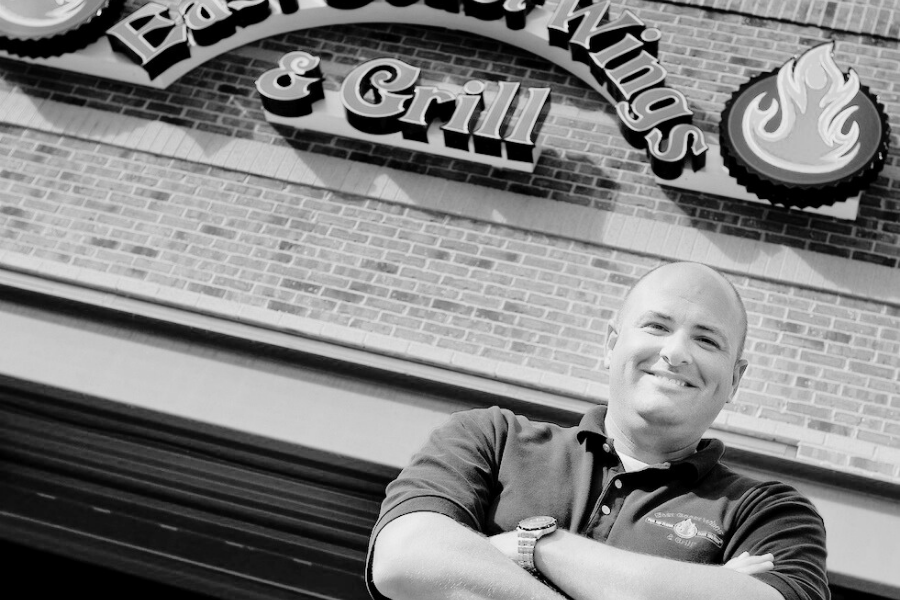
Taylor Abbott’s family bought an existing San Antonio print shop in 2009 without knowing a thing about printing, and four years later revenue had slid from $1 million to $600,000. Franchising was their last-ditch move, and it turned the business around. In this episode of From A to Franchisee, Taylor talks about converting a respected independent shop, what he inherited when he later bought an existing franchise location, and why he replaced the entire staff within a year. He also explains how documented systems, leaders promoted from within, and a parent-and-son split between sales and operations took the business from one location to three, with a fourth planned for 2027. If you’re weighing a resale, a ground-up location, or going into business with family, he’s candid about what worked and what he’d choose again.
Show notes
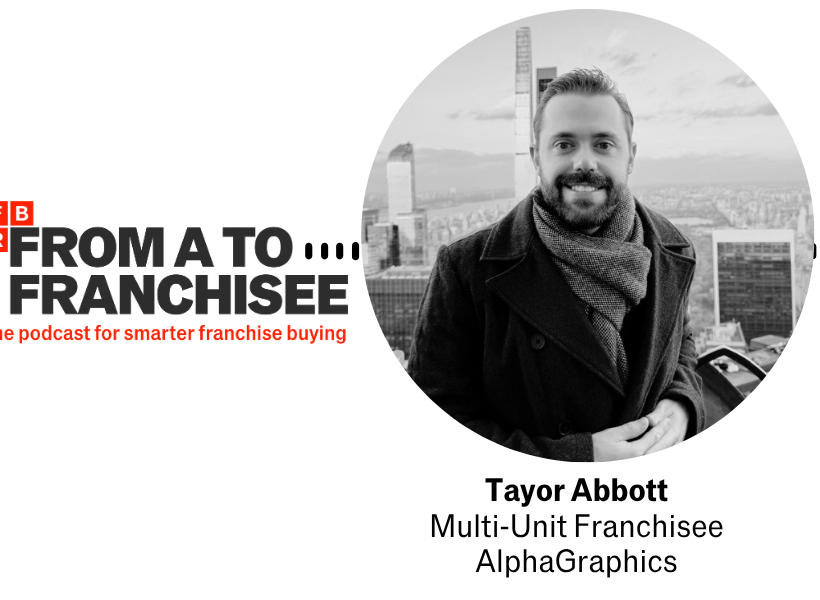
Guest: Taylor Abbott, multi-unit AlphaGraphics franchisee in San Antonio, Texas, who owns and operates three locations with his parents.
What you’ll learn
- Why Taylor’s family chose printing (no weekend work) and how they found the business through a broker
- What went wrong in the years after the purchase, and why they turned to a franchise
- The trade-offs of joining a system: royalties, monthly reporting, and brand standards, against new products and equipment buying power
- What you get on day one from an existing business, and what you inherit with it, including the team and culture
- How Taylor grew by acquiring a location, opening one from scratch, and planning a fourth
- His advice for first-time owners and for families going into business together
Key takeaways
- An existing business brings customers and cash flow, but also the previous owner’s habits and processes.
- Taylor replaced all eight employees at the acquired location within a year because the culture didn’t match.
- Scaling came from process: a documented plan from opening the doors to closing, with KPIs.
- The fourth location’s manager is an employee trained in the company’s system for about three years, not an outside hire.
- Taylor’s advice: if you can buy something already running, it’s far easier than opening from zero.
*While this episode features AlphaGraphics, this is not a sponsored episode. We encourage you to check out this brand and see how their Franchisee Satisfaction Data stacks up!
Resources
- Read: Should You Buy An Existing Franchise?
- Listen: Pros and Cons of Buying An Existing Franchise
- Listen: Employee to Entrepreneur: Taxes, Cash Flow, and the Mindset Shift
Transcript
Allison Dudas (00:03)
Welcome back to the podcast from A to Franchisee, the podcast for smarter franchise buying. I’m your host today, Alison Dudas from Franchise Business Reviews Marketing Department. And I got a great guest with me today, Taylor Abbott, who is a multi-unit franchisee from Alpha Graphics. Welcome, Taylor.
Taylor Abbott (00:22)
Thank you for having me today, looking forward to it.
Allison Dudas (00:25)
So I just want to give a little introduction. So, Taylor, you are located in San Antonio, but you are actually Canadian, which is awesome. And you own and operate three Alphagraphics locations in the San Antonio area alongside your parents. and we’ll get into the nuts and bolts of it a little bit, but you guys started out in two thousand nine.
and you bought an existing printing business and then later on decided to turn that into an alpha graphics franchise. And years down the road now you have three locations. You have a fourth one on the horizon and you know, sky’s the limit, it sounds like.
Taylor Abbott (01:05)
Correct, absolutely right.
Allison Dudas (01:07)
Fantastic. So let’s get started. Before you were in the family business, you had a hockey career. Am I right?
Taylor Abbott (01:14)
I did. That’s correct. Yeah. So I I did play hockey for a job. It was a pretty cool thing to do. wasn’t the top of the you know, the highest level, so it was just enough that they paid you to survive essentially. And there was a point where I had to either decide to keep doing that, you know, for the next several years and really have nowhere to go after that or decide to join the family business and figure out how to make a career and and make a living for myself. So that was kind of the the tipping point where I decided to come down to San Antonio with the family and get away from
the cold Canadian winters and land somewhere that we could you know, make a new start in a in a beautiful area place to be.
Allison Dudas (01:50)
That’s yeah, that’s such an interesting story. Now just before we get into more of what it’s like owning your specific business, your specific location, how did like what do you take from your athletic career into this new world?
Taylor Abbott (02:05)
well absolutely. A hundred percent was a great primer. obviously you need to learn how to work with a team, you have to have goals and be coachable and then you have to, work together to get that end you know, that end destination. So whether it’s sports or in business I find they’re very cohesive and and it was a great way to prep myself for a business career coming out of the athletic industry.
Allison Dudas (02:28)
That’s cool. That’s really, really cool. So your family took over an existing printing business in 2009 and it was not an alpha graphics. and what what was the reasoning behind buying an existing business? What kind of led to that?
Taylor Abbott (02:43)
Yeah.
Absolutely. So so when we were looking for businesses here, we did get a business broker and kind of did some searching. And one of the big things that drew us to the printing industry was that they were closed on Saturdays and Sundays. So that was one kind of thing we had been looking at
Allison Dudas (02:59)
Yeah.
Taylor Abbott (03:00)
and you know, we looked at restaurants and things like that, but we didn’t like the idea of having to work seven days a week and and never getting to close the door. So
Looking for that and then finding a good business model that was already producing some cash flow and and had income in the door was something that we really wanted to do because not knowing anybody and being from a different country, it was nice to have some pieces in place before we started trying to do things ourselves.
Allison Dudas (03:25)
Yeah. I can see that. And you know, I hadn’t really thought about that, that there’s n there’s not you don’t have to work on Saturday and Sunday, because yeah, it really is such a different lifestyle than working in the food business. And obviously when people think about franchising, for example, they think of the McDonald’s, the subways, they most of the time think about the food franchises. But as you’re as you’re living proof, the printing industry is also another place in which you will find franchising. All right, so you guys bought the existing printing.
business in 2009 after kind of hunting for a business opportunity. And then how did that become part of a franchise in the end?
Taylor Abbott (04:04)
Yeah, so I think probably the the big thing that made that happen was we actually really struggled once we took over the business. So in two thousand nine it had a one million dollar revenue and we came into the printing business knowing nothing. We didn’t know, you know, what the papers were, the materials were, the machines. essentially the owner that we bought it from handed it off to us and stuck around for, you know, three or four months and then she ended up retiring and moving out of town. So we were kind of on our own and
figuring it out as we went. And the problem with that was we took it from a million dollar revenue to about four years later, we were down to six hundred thousand and we were kind of almost ready to, you know, pack it in. We were pretty discouraged, but we thought, you know, maybe the last thing that we could try our kind of our Hail Mary play would be to join a franchise and see if we could get some guidance. So that’s really how we found our franchise and and decided to take that leap and and see if we could figure out how to
you know, have someone that’s already paved the way show us how to do it instead of trying to figure it out ourselves that that we were failing at.
Allison Dudas (05:04)
Yeah. And there’s this I mean, there’s this saying in franchising, like you go into business for yourself but not by yourself. So it’s interesting that you have that experience of being in business by yourself. I mean, of course with your parents, but all three of you not having that experience in this industry and then deciding we we want to
tap into a network. What was that experience like? Like so you you did you shop around looking at a couple different kinds of printing franchises or did you know Alpha Graphics?
Taylor Abbott (05:34)
No, yeah, we I think we actually had been getting, you know, those mailers where it said, Hey, we have a franchise if you’re interested in joining and it was something that we always just, you know, kind of didn’t think twice about. but then when it came down to the time where we had to take some action, I think if I recall, we maybe checked with two different franchises, but at the time, when we were talking with everybody, Alpha Graphics kind of gave us the most confidence and and pursued us to help us make it happen. So we did have some options at the time, but we kinda went with the one that felt right in the moment.
Allison Dudas (06:05)
Yeah, and it sound it sounds like you’re happy about that. I mean you’re still seventeen years later,
All right. So you ended up buying into a franchise and what was that process like? Was it kind of like an immediate shift or did it take a little bit of time?
Taylor Abbott (06:19)
Well, I think the thing that we were most cautious about was our existing business had been around since nineteen eighty three, so it did have a really good reputation in town. so we didn’t want to just the next day, take our sign down and start start calling us alpha graphics. We had we were called presto printing and it had a really great reputation and great respect over the years. But the issue was that we just were not producing with the times. We were we would always tell people we just do business cards, letterheads and envelopes.
And in two thousand nine that was a great business, but by the time, twenty thirteen, twenty fourteen, people had stopped ordering business cards, letterheads, and envelopes, and we didn’t know how to adjust. So it was definitely a process where we said, you know, we were this independent business soon to be alpha graphics. And I I want to say that was probably about a six month runway that we did where we slowly told our clients that we were changing to join the franchise. But the benefit was
Now not only do we do business cards, letterheads and envelopes, but we can do signage, vehicle wraps, apparel, promo items, all of these things that before they had to go to other places to get, and we just always said no ’cause we didn’t know any different. So that was probably a really big benefit for sure.
Allison Dudas (07:30)
That’s really interesting. So once you joined the franchise, did you receive new equipment, new training? Like what helped you be able to say yes to those other products?
Taylor Abbott (07:41)
Yeah, so I think one of the benefits with our franchise is that we do get great access to buying power. So a lot of those machines that weren’t even accessible or that we didn’t know anything about, we had people saying like, Hey, this is the machine that you should look at. This is the special pricing that we’ve secured and it just made it really easy. especially like I said, we didn’t really have any prior knowledge, so
it’s like looking at something you don’t know, should I buy A or should I buy B? And now we had someone kind of guiding the way for us and saying, Well, we need to go with A and this is Y And by the way, we’ve got a great deal for you to get it.
Allison Dudas (08:13)
Right, right. that’s really interesting. Yeah. So because they’re working with that franchise buying power, they can get that deal. I wouldn’t have even thought about that. okay, so obviously we’re already hearing about some positives of teaming up with a franchise. What what has been some of like the and I know this was a little bit ago, what were some of the adjustment periods of joining up with a franchise from being completely independent on your own to joining up with a franchise?
Taylor Abbott (08:39)
Sure.
Well the first thing is obviously having to pay the royalty check every month. So when you go from having every dollar belongs to you to having to share it with the franchise, that’s an adjustment. But of course we weren’t making enough dollars to begin with, so that was a kind of a trade off that we were okay with making. and
Allison Dudas (08:57)
Right.
Taylor Abbott (08:58)
then, you know, just having
people to report to and people keeping an eye on you as opposed to you just doing it all yourself. So we have to do our monthly reports and our uploads to the franchise and let them know how things are going. And then of course there’s some brand standards that you have to uphold as well. So we didn’t necessarily have any trouble with that, but it’s just different going from you know, doing whatever you want to saying, you know, we do have a bit of a blueprint now, so we to do our best to follow up.
Allison Dudas (09:24)
Yes, that’s so true. I mean, you are you are now needing to fit into a certain structure, a certain set. And for the wrong person, I feel like that could be really, really hard. But it sounds like you all were looking for maybe lifeline is a little bit too dramatic, but you were looking for a way to secure this existing business. And you probably
Taylor Abbott (09:45)
Yes.
Allison Dudas (09:46)
were it were you eager to take their advice? Were you eager to kind of do all of this?
Taylor Abbott (09:50)
yeah,
a hundred percent. Yeah, it’s like when you it was like when you’re what you’re doing’s not working, you gotta change what you’re doing. So that was kind of we really had no resolve to say we don’t wanna do that ’cause we what we were doing wasn’t working so we need to define solutions.
Allison Dudas (10:04)
Now because you own this alongside of both of your parents, did you feel like along the way when you were making all of these choices that there were disagreements of among the ranks, or were you all pretty like minded?
Taylor Abbott (10:17)
Yeah, thankfully we have really good synergy. So, I kind of discovered the sales side of things and embraced that. And then both of my parents are really strong at operations and, you know, even you could say HR. So I kind of feel like I’m the guy that goes out there with our sales guys and we get the business in the door and then between them they kinda help get the production done and out the door. So it’s kind of a cool synergy where I can do the sales and then they get the stuff that I sell done. So it’s it’s a it’s a cool team effort that we do every day.
Allison Dudas (10:46)
That is nice. That’s really nice. Okay, so you you joined Alpha Graphics in twenty fift twenty fifteen or twenty thirteen? Twenty fifteen. Okay.
Taylor Abbott (10:53)
Twenty fifteen was when we made the conversion, that’s correct. Yeah.
Allison Dudas (10:56)
And then when did you start to open other locations? When were you like, okay, we have the hang of this. Let’s start scaling.
Taylor Abbott (11:04)
Yeah, so that was in tw two thousand twenty two.
Allison Dudas (11:07)
Okay.
Taylor Abbott (11:08)
we were we were starting to finally kinda catch our catch our drift and back that was when we had made the full reversal. So we finally got back to the million dollar revenue that we had lost and that was around the twenty twenty one, twenty two period. thankfully through COVID signage was something that everybody needed, so we survived that just fine. We didn’t have to close our doors, we didn’t have to send anybody home. We kind of had normal process throughout, so
Coming out of that, that’s when everything kind of ramped back up again and our sales were strong and we said, we’ve kind of positioned ourselves that we know what we’re doing after all these years. And we actually just kind of looked within the franchise and s wanted to see if there was any opportunities in our area. And at the time we asked, one of the current owners said, you know, I’m ready to sell, so let’s talk. And that was in 2022, and next thing you know, we had acquired his business and and added it to our to our team. So that was kind of how that went.
Allison Dudas (12:02)
That’s amazing. What about the third one?
Taylor Abbott (12:04)
So the third one, we really we really wanted to capture San Antonio’s a huge tourist city. So we have a lot of conventions coming in every week. And in our specifically downtown San Antonio, there was really no print presence. So we were capturing that, being, you know, maybe fifteen minutes north of downtown. But we really saw a need where those conventions and all of those downtown businesses could be served by having a location down there. And so what we did at
With that one was we did a what we call a green field in our industry and we started from scratch from the ground up. so we basically just put the machines in place and open the doors from zero. So that was kind of the third way to do it. So so we we did the acquire and convert and then we did the open from ground up.
Allison Dudas (12:49)
That’s fantastic. And then your fourth one, is that also gonna be ground up?
Taylor Abbott (12:53)
It is, yeah. So now again with San Antonio or one of the fastest growing cities in the country and there’s another really huge spurt of growth on the west side of our city. So there’s again there’s really limited choices out there for people to utilize right now. And we’re gonna go out there and see if we can’t capture that market where it’s booming out there.
Allison Dudas (13:12)
That’s really interesting. So you bring such a good perspective because you you’ve sort of had like all the experiences, right? You bought an existing business, you turned it into a franchise, you bought an existing franchise, you started a new franchise location from scratch, and now you’re in the process of scouting and and opening up this fourth one. So you I feel like you’ve you’ve lived it all. You’ve lived it all.
Taylor Abbott (13:35)
Yes, we’ve we’ve got a good
round rounded experience for sure. and I think one of the really big
Allison Dudas (13:38)
It sounds sounds like it.
Taylor Abbott (13:41)
yeah, one of the big benefits too that makes it a little easier for us is having the other facilities. we have a lot of backup that you don’t have starting from scratch without that, you know, the experience and the team. So for example, that new location downtown, if we had an emergency, we had our two other facilities that could help us in a pinch or help us in a bind. So makes it a lot easier for us for sure.
Allison Dudas (14:01)
That’s a good point. And also like because you’re close in geography as well, you’re not it’s not like a huge, huge, huge lift for you to cover for the other locations should something happen with the equipment or the fa the staff.
Taylor Abbott (14:14)
Yeah, they’re all mm mm about fifteen
about fifteen minutes apart is what each location is right now. So about a fifteen minute drive between each one.
Allison Dudas (14:23)
Yeah. Well, and it’s unique too because it’s a city, so it’s obviously a lot of people in a small area or smaller area versus maybe some of somebody who might be listening who’s looking to open a franchise location, but their territory is gonna be like much more expansive than say in a city. so
Taylor Abbott (14:38)
Right. Yep.
Allison Dudas (14:40)
let’s get back to buying even just buying an existing business and buying an existing franchise. So what
What did you the the two experiences that you had? So one you bought an existing business and then two you bought an existing franchise and talk about the difference between the two of those.
Taylor Abbott (14:59)
Yeah, so I think really what the first one, they had their processes and, you know, their products that they sold in place, which is what we inherited and that was where again we had to join the franchise to to kind of adapt with the times. But the really cool what we could call bolting on to our first location with the acquisition of the existing Alpha Graphics was that they were one of the top vehicle wrapping facilities in town. And so it was another avenue of business that we were not experts in. We barely touched. and then
if suddenly once you have the ownership of that business and all of the machines and the team in place, we were all we’re opened up to an entire new market that before we were Barry had limited experience and not ability to really get into. so it was really a nice way to add to what we were already doing well and then put another whole facet of what we could offer with our team.
Allison Dudas (15:48)
Hm. And how many about how many employees are at each location? Because obviously you’re inheriting as you said already, employees and people.
Taylor Abbott (15:55)
Yes, yeah. So so we have
we have sixteen employees between the three locations now. So our original facility is the bigger one. I think we have eight eight team members on staff there. And then the second one that we acquired, we have revolving between five and six depending on the workload. And then our new location downtown, we actually just have a lean staff of two and we really do a lot of more of just a sales focus there and then we rely on the other two facilities with all the team members to do the production.
Allison Dudas (16:24)
that’s really interesting. So there the other locations are kind of your workhorses where the things get printed and the bigger jobs. Have you also had to invest in vehicles to transport the stuff?
Taylor Abbott (16:35)
Yep,
absolutely. Yeah, we have s we have some delivery vehicles. So obviously printing there’s some big items, so we have a couple of vans and some SUVs that we put in the deliveries to, and then anything that we can’t do from there will FedEx to anyone’s doors. So yeah, we do do local delivery and international or national shipping as well.
Allison Dudas (16:54)
And when did you when did you realize that you needed vehicles?
Taylor Abbott (16:58)
I would say when you’re trying to fit stuff into a sedan and it doesn’t fit or you put it in there and you have to accidentally break something ’cause you’re squeezing it in, you know, and people are expecting deliveries ’cause that’s the service that we want
Allison Dudas (17:12)
Sure.
Taylor Abbott (17:12)
to provide and and the convenience that we want to offer, then you have to find solutions and for s for us just this the sheer size of the products that we produce required like a delivery van, something that could handle the the things that need to go out the door.
Allison Dudas (17:25)
But that wasn’t l with your very first location, that wasn’t something that you inherited. When you bought the existing presto printing, they didn’t have a vehicle.
Taylor Abbott (17:31)
Correct. No. Yes, we we had to use yes.
No, we had to use personal vehicles and and you know, make things work and eventually when you have so many deliveries ’cause you’re finally starting to make sales, then that’s when you
Allison Dudas (17:42)
Yeah.
Taylor Abbott (17:42)
kinda hit that wall and you need to you need to be more efficient. So it was definitely
Allison Dudas (17:46)
Sure.
Taylor Abbott (17:47)
efficiency and convenience and being able to do, you know, ten deliveries in a run instead of four deliveries in a run. So just things like that that you don’t think about until you have to deal with it.
Allison Dudas (17:57)
Yep. Yep. And so two thousand nine was when you bought that first one. When did you have to when were you like, my gosh, we need a we need a ban?
Taylor Abbott (18:06)
I would say it was actually when we started producing the signage, which would have been when we made the franchise conversion. So that was when we went from, you know, boxes of business cards and letterheads that were easy to transport to having to move, you know, f eight foot by four foot sheets of materials and signs and it just became unpractable to try and, you know, put seats down in a car and and shove it through the trunk and try and drive around without issues.
Allison Dudas (18:29)
Yeah, what a tangible marker of growth, huh? yeah, yeah.
Taylor Abbott (18:32)
Yes, absolutely. Yep. So basically
I would say really just the products that we started to be able to offer and provide w required different equipment to get the job done as opposed to what we had been working with.
Allison Dudas (18:43)
Hmm. So with about sixteen employees, I mean it’s still fairly lean considering you have three three locations. But I suppose given that you’re Monday through Friday, what, nine to five? Nine to six? What are your hours? Eight to five.
Taylor Abbott (18:55)
We’re we do we do eight to five. Yeah, eight to five is our hours.
Allison Dudas (18:59)
Okay. So you’re really able to keep that kind of lean because people hopefully are working full time or at least like a bulky part
Taylor Abbott (19:05)
yes.
Allison Dudas (19:05)
time. Mm-hmm.
Taylor Abbott (19:06)
Yep, all of our all of our team members are full time aside from we have a one or two people that are an as needed basis, but everybody that is on the regular payroll is a full time employee.
Allison Dudas (19:17)
That’s good. How do you keep how do you kind of keep employee turnover from becoming an issue? What what do you feel like has been
Taylor Abbott (19:27)
Yeah.
Allison Dudas (19:27)
successful for you? And have you retained employees from when you bought your franchise resale and also your initial resale?
Taylor Abbott (19:35)
Well, so I would say that historically w when we have a new staff member, they do stay for I’d say three to five years on average. And I think part of the reason for that is is because what we do can become sort of a specialized requirement or or skill. So when we have somebody that can come in and be a great graphic designer, or somebody that’s really great at installing vinyl on a vehicle, you know, that’s something that once we prove to them that we can keep them busy and we can pay them and, you know, help them have a good lifestyle and
that consistent job and things to work on, then they s tend to stick around. And it’s not something that we have a lot of positions where we can’t just grab someone off the street and plug them in and have them start doing it. So so we do have some specialized skills that we need and that’s why we try and, you know, get people in there that are committed and in it for the long term. So we have had some great success there. But I would say one of the very interesting things about acquiring the existing business was when we purchased it, there was eight employees
And within one year we had changed out all eight with with different people. And we just
Allison Dudas (20:38)
Hmm. Hmm.
Taylor Abbott (20:39)
felt that the prior owner had a very different culture from us and all of the people that were existing employees we were able to work with, but it they just didn’t have the same mindset and the same drive as we wanted to have. So, you know, over the year we one or two at a time had to make changes and kind of bring in people that matched and meshed with our culture as opposed to what we had
inherited when we took that business over.
Allison Dudas (21:03)
Hmm. Yeah. I think that’s a really interesting point that many people might not factor in. When you when you take over an existing business, sometimes the culture doesn’t match up. And knowing when to let people go and kind of start fresh, I think is a critical is a critical point for sure. let’s see.
So once you went from that first location, once it became an alpha graphics, and then you opened the second one, what had to change in order for you to go from one location to multiple?
Taylor Abbott (21:38)
Well, I think for sure the process and making sure that you have that consistency throughout the team and having everybody on the same page is really what helped us be able to scale. you can’t have one person doing it one way and another person doing it the other way and everybody kinda doing their own thing. I think you really need to have a a plan from A to Z in place and that’s from how you unlock the doors to how you turn off the lights at night. And that’s just something that we’ve always been really in
intent on when we have a new hire, we say, This is how we do it here. This is the system. we’ll sit with you and help you learn it until you have a handle on it and then we’ll let you go on your own. But for us, when people were on the same page and following the process and and the and the system that we put in place, that’s where we’ve had our best success. So I think it’s really important to make sure you have a plan for not just what you’re gonna do every day, but what everybody in the sh in the business is going to be doing and have everybody kind of have it documented and some KPIs along the way to make sure that people are
matching your expectations.
Allison Dudas (22:38)
Yeah. This is so interesting because you are are talking about this l and when you do, it’s the mark I think of a good franchisee is that you value systems and you want to follow systems and then you want to enact your own systems and then have your employees follow them.
I get to talk to a lot of franchisees both on this podcast and elsewhere. And I think really what makes a good franchisee is their willingness to buy into a system, to follow a system. And when I say buy into a system, obviously there’s that financial buy-in, but you have to like, you have to be into it. You have to believe in it. And if you don’t, and if you’re in the back of the mind your mind thinking, I could do it better.
Than what what the franchiser is telling me, then franchising might not be right for you. so I guess speak to that a little bit because when you talk about that, I’m kind of like chuckling in the back of my mind, like the spoken like a perfect franchisee. Like these are the ideal candidates for franchising is people who are like, I value the system. I wanna follow the system, the system works.
Taylor Abbott (23:38)
Absolutely. I would say, well, even you can trace that back to my hockey career, but the reason that we have a coach and we have plays and we have certain set places to be when we’re on the ice is how you win as a team. And so if we have one person that’s out there trying to do everything by themselves, it usually hurts everybody. So I think that was part of it that kinda helped. But understanding that when you’re doing
Even though everything’s a little different every day, at at the end of the day it’s the same kind of repetitive process and the more efficient you can get and the more you can get everybody doing the same thing and cutting a project to maybe take, you know, five minutes to three minutes, you add that up thirty times a day and you’re saving thirty minutes times, you know, or three minutes times thirty projects, suddenly that gives you the ability to expand and sell more items and get more more stuff out the door. So I think having those processes is what
adds to the efficiency and efficiency is what allows you to keep expanding and scaling as you build capacity through process and doing the same thing over over with a repeatable system.
Allison Dudas (24:40)
Would you say your parents, your co owners, are as passionate about keeping the systems efficient as you are? Are you pretty in line with one another?
Taylor Abbott (24:47)
Yeah, absolutely. ‘Cause
yeah, ’cause you know, when you’re at the when you’re in ownership and things go wrong, you’re you generally the person that has to deal with the fallout. So having them, you know, be responsible for for the production and getting things through the facility. if somebody shows up on a Friday afternoon for a crucial print item that’s for their big weekend event and we don’t have it done, then obviously they’re the ones that have to deal with it. So it’s important that
They take responsibility to have the team take responsibility so that at the end of the day our clients are happy and they want to come back and order from us again.
Allison Dudas (25:19)
Mm. Yep. And it sounds too that it’s nice that you mentioned this before that you’re you’re more doing sales and your parents are in operation. So it it sounds like you’re on the same page about a lot of things, but you also get to have your own domains, and maybe
Taylor Abbott (25:34)
Absolutely.
Allison Dudas (25:35)
suit your personalities, suit your gifts the best.
Taylor Abbott (25:39)
Absolutely yeah. I mean even sometimes I’m I I love to do sales and be the positive guy and then sometimes we need somebody to come in and, make sure people are following the process in the system and that can be some hard conversations and I’m not always that’s not always my favorite thing to do, but my dad’s pretty good at that, so he can do the hard conversation and and then leave that off of my responsibility list. So things like that are very nice, if you don’t have to do everything, but you can focus on your strengths.
Allison Dudas (26:04)
Yes, yes. I do think that’s obviously a huge challenge of being a business owner is you have to wear you have to wear all the hats. And that I think would be a benefit of having a partner or multiple partners is that ideally you’re good at different things and you can kind of tag your it for certain things.
Taylor Abbott (26:21)
Absolutely, one hundred percent.
Allison Dudas (26:23)
Yeah. All right, so you have you have a fourth location planned in 2027 and what do you feel like made you ready for this fourth location?
Taylor Abbott (26:32)
Yeah, so I think part of our process is we’ve had a lot of employees like we talked about that we’ve trained up through our system and we had one individual in mind that really had caught on well and bought into what we were we were teaching and and showing and he kind of indicated to us that he wanted some more responsibility and was looking for a bigger role in the company. And we
obviously our have a good system, but we need we need somebody that can really focus in on this new location and not be having to manage the other three at the same time. So we felt with his training and his knowledge and his expertise we could set him up to be in kind of the operations manager role at this new location and we can kind of get him the help he needs but he has our system built and understood so that he can start implementing what we do every day now at the three shops into this new one and kind of take on a lot more of a responsibility role.
As opposed to us having to, manage four locations, we can give him some advice and swing by and help him out in a pinch, but he really knows what we do really well and he can kind of be that continuation to help us do it at this new location. So it was kind of knowing that we train somebody the way we want them to be and how we want them to act and how we want them to run the business and now having the trust and to give them that responsibility to help us out and help us expand.
Allison Dudas (27:49)
That’s fantastic. And how long has this person been with your franchise?
Taylor Abbott (27:54)
Over two years. So he’s probably about two and a half years at this point. And then by the time the doors open it’ll be three and I feel like with our industry it takes a full year just to learn what we’re doing and then it takes another year to get efficient with it and that’s we’re about right where he’ll be when we’re ready to start giving him some more responsibility.
Allison Dudas (28:12)
That’s great. And I think you bring up such a great point. If you want to scale as a franchise owner, you have to hire leaders. and hopefully leaders that can help you manage future locations. What what advice would you give somebody if they are looking to be a franchise owner in the future that is able to scale? What advice would you give them with finding people like that? How to spot people like that?
Taylor Abbott (28:39)
I mean
yeah, I my advice honestly is is from within. I just really feel like when we get somebody we like to kinda get people that are a little more green in the industry and don’t come with a lot of, hey, I already know how to do this or I have always done it this way and this is the way I wanna do it, but we can bring people into our system that are adaptable and coachable and teachable and then we really have found that those certain individuals that wanna have more responsibility and
have the abilities kind of step up and they make themselves known. And we’ve had a few different people over the years that have kind of risen to the top of the talent pool. And at that time we can say, hey, if you’re ready, you know, to take the next level, then we trust you. so let’s go ahead and do it together. So for us, it’s always been kind of cultivating our own leaders from within.
and that’s where we’ve had our success is building our team the way we want them to work and the way that we know they’ll gel with us, and that’s how we’ve been able to promote and find people for new adventures.
Allison Dudas (29:38)
And it’s really such a game changer when you find those leaders because it really allows you to to instead of just be working in your business, work on your business and probably think about things like inventive ways to sell and new locations and you know, getting in another van or whatever whatever it is.
Taylor Abbott (29:56)
Yes. Yes. There’s
a lot more than just the day to day that you have to worry about. But if you if you have a good team in place and people that are following the process that we’ve laid out, then that does give you the ability to think bigger and see where you can expand your vision.
Allison Dudas (30:10)
Yeah. And so as an owner, especially as an owner that’s more focused on sales and kind of the outward vision of your your company, what do you f what does your day look like? Like what do you feel like a a franchise owner needs to be really good at that they might not even think about that you have to get into every day?
Taylor Abbott (30:29)
Yeah, I think for me, f I r really make sure that in the mornings that everybody’s on the same page we know what we have to accomplish for the day. We know that it’s all set up and we have our step one, two, three of what we’re gonna do as a team. Everybody’s on the same page and then we break off and start you know, executing on the goal for the day. And then after that, it’s a bit of a mix for me of management and making sure that we’re selling and, you know, getting quotes out the door, etcetera.
And then I really embrace networking and being out of the community. So, three
nights a week I’m gonna be out at an event or, shaking hands with somebody or just finding ways to kind of make it known what we do and who we are. And if you can go visit enough places and be there enough times people start to remember who you are and understand what you do and it gives you the opportunity to grow your business just through people that you know and people that you meet and
Earning their trust and their friendship and then getting to do business together.
Allison Dudas (31:27)
Agreed. And I think that’s something that any prospective franchisee should know is that if you’re gonna be a franchise owner, you are going to have to be a marketer and a salesperson at least.
For a little bit. And if that’s something that’s really, really uncomfortable for you, you probably need to find ways to practice those skills. We had a guest on the podcast a couple of weeks ago, who’s an enrolled IRS agent, Paul Leskowski, and he talked about that. and I think it’s such it’s such great advice. Like just sort of know that you’re gonna have to pick up the phone and call people and you’re gonna have to put yourself out there and be the face of your business at different points in your community because if they associate
Associate you, I mean I especially think with a printing business, right? You see new businesses that are opening in your town. You see people who are throwing events, like if they associate a a person, a warm person with Alpha Graphics San Antonio, it’s gonna do better for your business in the end.
Taylor Abbott (32:27)
Absolutely. And it just gives you that, you know, that personal touch where you make someone happy, they remember you, they thank you for it, and then who is the person that they think about when they need something else again? It’s hopefully gonna be you at the top of the mind because you put in the work to, you know, build a relationship with them and take time to ensure that what they’re doing is successful through what you provide and offer. So always want to be top of mind and be remembered as the people that come through when they need So that’s what we work on every day and
Part of that is being out in the community and making sure that people know who we are because it’s great to have a process, it’s great to have machines, but if there’s nothing to run through the process or put onto the machines, then it’s not very useful. So it’s very important
Allison Dudas (33:05)
Right.
Taylor Abbott (33:06)
that you not only have that process and system, but you’re selling too, so we can keep the pipeline.
Allison Dudas (33:12)
All right, so I wanna I wanna close out here because I wanna tap you for some advice. As I joked about before, you’ve sort of done it all. You’ve done resale, you’ve done opening new location, you’ve turned an existing business into a franchise. I guess I would say w which which avenue do you feel like is the best? Like if you could weigh all the pros and cons of all the different ways that you have created a location, which was the most accessible way?
What would you advise people to do?
Taylor Abbott (33:42)
Yeah, if I’m if
I’m really being honest, I really think that if you have the ability to purchase something that’s already running and there’s a system, a process in place and there’s in income and revenue coming in the door, it’s a w world of difference easier to keep it running and kind of turn it into your own thing. when you open the doors from zero and you haven’t had a phone call and nobody’s walking in the door ’cause they don’t know who you are, it can be a little bit daunting and and tedious.
so I I found in our experience that yes we are doing these new locations, but we have the experience and and the team to back it up. Whereas if I was to just roll into a new town and start a franchise, I would prefer to have somebody that’s already got a little bit of momentum that I can take over and see how big we can take it. So that would be my personal advice if you were looking at something right now.
Allison Dudas (34:33)
Very interesting advice. And then another piece of advice has to do with working with your family. So not everybody d works with their family when they buy a franchise, but actually a lot of people do. And I guess it sounds like it’s been a positive experience for you, but what would what advice do you have for people thinking about going into the franchise business with their family?
Taylor Abbott (34:54)
Yeah, so I also have a brother and sister and one became a dentist and the other became a cybersecurity expert, so they wanted nothing to do with the business, but it just so happened that I guess with my sports career it really led well into business like we touched on earlier. And we’ve always been a close family. part of being from Canada is we really had to figure out how to make it work. There was no plan B. So
We came down as a family, we stuck together as a family and we’re still doing it together as a family today. So I think the key is that it’s we always trust each other. we don’t have to worry about somebody having, alternative motives or anything like that because we’re all working together every day to meet the same goal and to see what we can do, as a family. So yes, there’s other people involved obviously that are not part of the family, but I feel like they all know that we’re on the same page and we’re here to help them.
And they’re here to help us and that’s why we do it so good as a team, no matter which location we’re at.
Allison Dudas (35:51)
That’s great. That’s great. What a success story for you and your family. Thank you so much, Taylor, for sharing your experience. I think you touch on so many interesting parts of being a part of a franchise, buying an existing business, joining a franchise, opening a new location, working with your family, just a wealth of experience. So I thank you so much for being so honest and open about it all.
Taylor Abbott (36:14)
Thanks for having me today. Great talking with you.
Allison Dudas (36:16)
Absolutely. All right, tune into next week’s episode of From A to Franchisee. Have a good one, everybody.