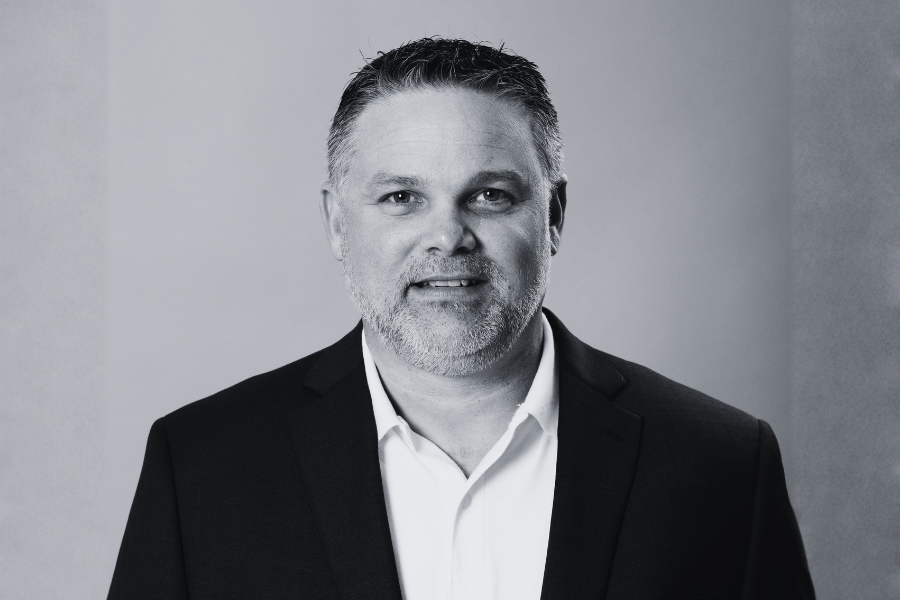

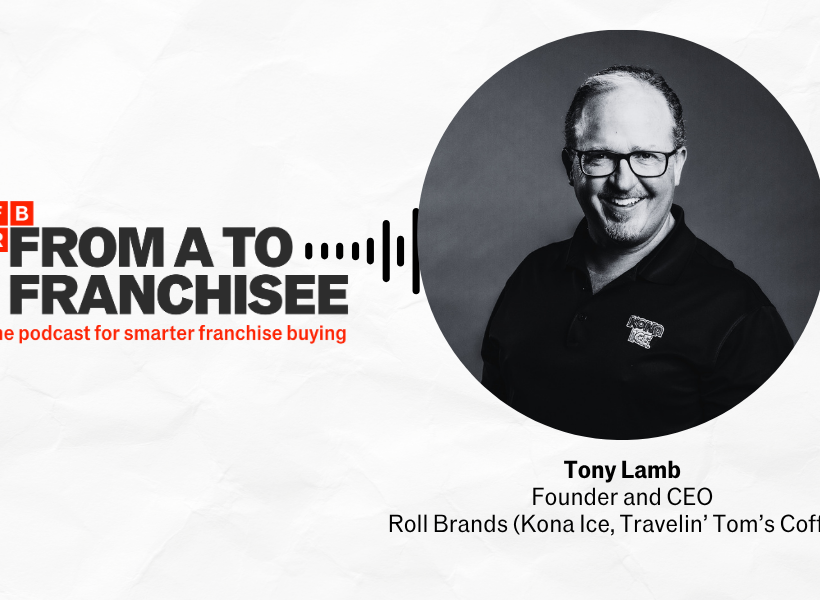
This week, we talk to Kona Ice founder Tony Lamb.
Listen on Apple Podcasts | Listen on Spotify | Watch on YouTube
From a scrappy startup to the top of Franchise Business Review’s satisfaction rankings for over a decade, Kona Ice founder Tony Lamb has cracked the code on franchising. He joins Franchise Business Review’s founder Eric Stites to break down the real numbers behind mobile franchising and why he still obsesses over franchisee happiness. You won’t want to miss this founder-to-founder conversation.
Resources
- The Top 200 Franchises of 2026
- Kona Ice’s Franchisee Satisfaction Report
- Travelin’ Tom’s Franchisee Satisfaction Report
- Own A Kona Ice
- Own A Travelin’ Tom’s Coffee Truck
- Who Is Franchise Business Review
Transcript
Michelle (00:00)
Welcome back to From A to Franchisee, and we have a very special episode for you all today. I’m here with Eric Stites who is the founder of Franchise Business Review. Hi, Eric.
Eric Stites, FBR (00:11)
Hi Michelle, how are you?
Michelle (00:13)
Now, Eric, today’s episode is actually a conversation between you and Tony Lamb, the founder and CEO of Roll Brands, which is the force behind Kona Ice Trucks and Travel and Tom’s coffee trucks.
So you got to sit down founder to founder and talk with Tony.
Eric Stites, FBR (00:29)
I did. I did. I love talking to Tony.
He talked a lot about his brands, but also gives a lot of advice on how candidates can look at unit economics across other franchise systems as well and just smart, smart questions to ask.
Michelle (00:44)
Yeah, I love it. And I mean their their brands consistently show up on our awards lists.
When franchising is done right, it’s such a great vehicle for both the franchisor the franchisee to find success. And I just love the the people in their organization and just what they’re doing there. So excited to get to share this conversation with everyone.
Eric Stites, FBR (01:02)
It’s it’s a long one,
but I I highly recommend listening to the whole thing.
Michelle (01:07)
Yeah.
And I think it’ll set a high bar for people that are considering joining a franchise system to to help uncover kind of what they’re looking for from their leadership and from the vision that’s set by that founder. Cause I think it it’s pretty clear when when Tony isn’t at the head of that organization, I think he’s really built something that’s gonna sustain those brands well beyond him being the CEO of them both.
Awesome. All right. Well, we hope you enjoy this episode. Thanks for tuning in.
Eric Stites, FBR (02:28)
Hey everybody, I am so excited for today’s guest. If you’ve been to a school event, a fair, carnival, many cities across America, you probably are familiar with a concept called Kona Ice. this concept started about 20 years ago.
sort of to replace the bad ice cream truck experience. And we have our guest today, founder and CEO Tony Lamb. And Kona has been lighting the franchise world on fire for the last 20 years. Most importantly, and I wanna underline this point, is Kona has managed to have the highest franchisee satisfaction in the industry, in the food industry in particular.
and has topped our awards list both in food and overall for the last decade or more. And you know, that doesn’t happen by accident. So I
Tony Lamb (03:22)
All right. No.
Eric Stites, FBR (03:23)
want to welcome our guest, Tony Lamb, to talk a little bit about Kona, but also about a number of other brand concepts built on the mobile truck.
franchise model that they’re launching. And we really want to focus the the conversation on unit level economics, which is all about how franchisees make money. so Tony, welcome.
Tony Lamb (03:49)
Eric, thank you very much. I I really appreciate these opportunities to talk. You know, I I I will say this. The reason we’ve been number one in franchisee satisfaction is because I focus almost exclusively on franchisee satisfaction. so I’ve always found and and I I didn’t and we when we very first started in 08, that wasn’t
you know, I I wasn’t aware of F I I wasn’t aware of franchising, to be honest with you. I I
Eric Stites, FBR (04:19)
Yeah.
Tony Lamb (04:19)
was I was very naive in the industry. And as I went to conferences and things like that and I became aware of franchisee satisfaction in the in the the the recording of that and the the publishing of that and then FBR being the preeminent you know recorder of that, I guess the purveyor of it. I’ve been a fan.
ever since. And and because we’re aligned in the fact of of you want to produce this and I want to produce great results. And so I’ve been I I think I’m I would have to be your number one franchisee satisfaction. I’m also your number one fan because I think the most important thing the most important metric you can do in franchising is make sure your franchisees are happy. And as I have now about a thousand franchisees, I realize
Completely impossible.
Eric Stites, FBR (05:14)
Ha ha.
Tony Lamb (05:17)
But the the bigger you get, obviously, the harder it is. So
but but I
Eric Stites, FBR (05:20)
Right, right, right. Well
Tony Lamb (05:22)
we still work on it a lot.
Eric Stites, FBR (05:24)
I mean you know, I love that the part about like when you started, you know, you didn’t know about FBR and you were just making your franchisees happy because it’s the right thing to do and you know, and putting the franchisees first. we’re excited that you’ve won our award over the you know, the last decade plus, but you were doing it right from the get go.
So, give us a little backstory. if you can. I know Kona has gone from zero to twenty five hundred plus trucks on the road now. I mean, give tell us a little bit about, for folks that aren’t familiar with Kona,
Tony Lamb (06:01)
Yeah the quick story is I just got really discouraged with my local ice cream truck. We moved into a neighborhood, terrible truck came around the corner, my kids instinctively ran to it. I I was petrified as a parent that my kids were running to a white van with stickers on it And I thought there has to be a better way. it started a conversation with me and my wife. and you know
And I just thought what a great, nostalgic, beautiful concept. and so I went I went at it. And I went at it from a a with some ferocity to to change it in just northern Kentucky, where I live, and it got bigger than that. And and then as we’re developing it through and we had some intellectual property that we were able to, you know,
ascertain, I thought, you know, this is this has got legs. This has got national legs. It was working out extremely well locally. but then I I have to ask myself, is that just me? Is everyone can can can somebody else do it? Is somebody else gonna do it with that I say ferocity, that that intensity of of building that business. and and so I it did. We started franchising. We franchised I think I don’t know fifteen the first year and they were all successful.
And so as we as we grew th and I I I look back on those days with a lot of pain and anguish, but but with nostalgic too because it was fun going through that whole process. The following year we did fifty franchises and then eighty and then a hundred and then it just took off from there. We’ve done a hundred almost every year since then. We are at twenty two hundred trucks and another thousand ancillary pieces of product out there on the road. So it’s
It’s
it’s really good. But that’s the stor the story was I wanted an institution that I loved and cherished from my childhood to continue on, and I wanted it done in a way that was that was complementary to the community, that was engaging for the kids and and per and and safe for the parents at the end of the day. So that was the the impetus of this whole thing.
Eric Stites, FBR (08:14)
Who who would have thought that, shaved ice could explode into, thousands of trucks all over the road across America?
Tony Lamb (08:24)
Yeah, it’s it’s really a it was a simple product. You know, we started talking about ice cream and then the the dairy and the the the the different regulations and all the different things that would go about that, it just became too much and I had a little side event happen that someone said, my gosh, shaved ice is so much better than ice cream and I’m like, Really? I’ve never never had shaved ice before and and and so
one thing led to another and and shave ice it was and then be able to create your own. That’s really, Eric, what I wanted more than anything was the interactiveness of the of the trucks So someone can go in and make their own and and have that that feel of value that they could put as much on. If you’ve ever been to a shaved ice stand, they’ve never put enough flavoring on for you. and then if you get to the end and there’s just not enough, but if you do it yourself, then that’s only on you.
You h you get
Eric Stites, FBR (09:18)
Yeah.
Tony Lamb (09:18)
to the end and you don’t have enough, that’s on you. You will not make that mistake twice. So yeah.
Eric Stites, FBR (09:23)
I wanna talk a little bit about how Kona, obviously developed, but then also like now you’ve got Tom’s traveling coffee and new concepts coming up. So like let let’s start with from a franchise perspective,
what’s the initial investment look like? I mean, ’cause you got a very different business model from, you know, kind of traditional brick and mortar food concepts. So walk us through what that looks like with Kona and then let’s let’s also talk about traveling tom’s now too, because that’s your new concept.
Tony Lamb (09:57)
Yeah. we when I first looked at franchising and I was investigative and and looked in and talked to a lot. I talked to consultants, I talked to aggregators, talked to a lot of different people. And the one one of the things that that really was the hidden costs, the costs that never end, the financial
Obligation
and expectation of franchisees are are just in diametrically opposed a of times. And someone will get in because the the this is the amount it takes to get in, but then they find out there’s so many growing costs. So when we developed Kona, I wanted it to be absolutely turnkey. So it was $20,000 down, which covers your franchise fee and a slight deposit on your truck. Your truck is built for you to the specs of your your town and community.
And it comes in, it starts off with inventory. You start off by running your truck and and it’ll self-propagate. It’ll the the money that you will make will repurchase your inventory. and if you can do it, especially in the beginning, if you can do it out of your driveway, which we don’t necessarily encourage long term, but for the first three months or the first heck, your best customers are gonna be your neighbors anyway. So so
Eric Stites, FBR (11:12)
Ha ha.
Tony Lamb (11:14)
but if you can if you can do it on the cheap to get started,
You know, y you have it’s a fifteen it’s a twenty thousand dollar deposit. Fifteen of that is the franchise fee. the truck right now is about a hundred and fifty thousand dollars. that’s with everything. That includes the inventory package, but everything. The truck, I think we started in two thousand seven, a truck was about a hundred thousand dollars. But the truck, you know, chassis have gotten more complex, but the truck itself is now Ugh it’s so good. It’s so it’s
Eric Stites, FBR (11:45)
Fish.
Tony Lamb (11:45)
Instead
of a generator, you know, that’s one of the big things that we w learned through COVID. We pulled the generator systems off and we replaced it with a lithium ion phosphate battery system. so there’s no noise. The truck pulls up and it can do all the things that a a a food truck can do without of the noise and the exhaust and the fumes and all those things.
Eric Stites, FBR (12:05)
We’ll we’ll definitely have a picture of your truck in in the show notes or description below, so to speak.
Tony Lamb (12:12)
Yeah. Yeah, that’s it it it
Eric Stites, FBR (12:15)
Somebody says a hundred and fifty thousand dollars for a truck like I mean,
Tony Lamb (12:18)
Yeah.
Eric Stites, FBR (12:19)
if you haven’t seen a Kona Ice truck, it’s it’s amazing.
Tony Lamb (12:21)
It is
it is amazing. And and I’m so I’m so proud of what it is now at this point because there’s a there’s a 46 inch monitor. And and I remember having a convention, a Kona Ice convention in 2017, and I built a fake truck and I put monitors in it for the menus. And I said one day, and people were taking
Eric Stites, FBR (12:41)
Yeah.
Tony Lamb (12:42)
pictures and they were and it took me
almost six seven years to be able to get that. But once we got the battery systems, we are able to have the pure power to do the monitors. The monitors have become their own revenue streams and and some side advertising, but we can change menus and do LTOs and the interactiveness on the monitor, incredible. All this menus are backlit. The inside of the trucks now with the shavers that we’ve produced and now we have smoothies. So we have an entire smoothie station.
inside
the trucks and it’s capable of producing, you know, all the shaved ice that you’ve ever wanted and and smoothies with with protein or energy or the the additives of that and that’s expanding our customer base dramatically on that. So and you’ve got music up top. You’ve got lights galore. You’ve got all the LED and all the different things and I always it’s funny, it’s funny that you say that. Yeah,
Eric Stites, FBR (13:36)
It’s a party on wheels.
So you’ve got like I said, over two thousand kona trucks on the road. a couple of years ago you rolled out traveling tom’s coffee, which is a similar mobile concept but obviously different product. Tell us a little bit about that model.
Tony Lamb (13:54)
Well, I’ve been I’ve been actually booed on my own stage at convention because I have said that I think traveling toms, Tom’s coffee, will be bigger than Kona. and they booed me. There’s there’s
Eric Stites, FBR (14:07)
Well
Tony Lamb (14:08)
fifteen hundred Kona people in the audience. They didn’t want to hear that. And I’m like, I just want you to understand that Tom’s is such a great concept because the audience is much bigger. there ninety two percent of the
population will drink something off that toms truck and shaved ice and smoothies is a smaller market segment. Especially when it was just shaved ice, it was a much smaller market segment. So Tom’s has a bigger market segment, but it also has this it it lacks seasonality. It is all year round. if you can drive, if your weather is good enough that you can drive, you can run a Tom’s truck. And and we have, you know, a Kona truck.
in the in the north will start shutting down in September, October as the you’re in Maine right now. So yeah, so it’ll start shutting down at the at the end of the summer. And I say shutting down, it’ll be limited. It’ll still be at the football games and the track meets and the the different gatherings of kids, but not as prolific as it is in the you know, starting in April or March even. but a Tom’s truck, that’s when it’s kinda hitting its stride with all the fall festivals and the pumpkin patches and the
craft fairs and the all the the tree lightings and things like that. It’s the fourth quarter is enormous for Tom’s. It is so so I I said that Tom’s is a it’s a cafe, it’s a coffee truck on it’s a coffee cafe on wheels. It makes all the custom beverages, the hot, the cold, all coffee adjacent with the froppies and the cold brews and all the different things and the shakes and all that stuff. And it it’s
The
team that I have here is phenomenal and I I I think I almost have to do Tom’s because I want to stretch the team. we have product developers and and engineers and everything else to produce this truck. This truck is a little bit more expensive, about I think about twenty thousand dollars more expensive roughly in the ballpark. but this truck has commercial freezers and and and generators and not generators, but
tap systems, coffee systems, all the different things, the mixers, everything that you would see in a Starbucks or a big coffee store is all inside of a Tom’s truck. and it is all again produced and done by batteries. So it works out extremely well
Eric Stites, FBR (16:38)
Nice.
Tony Lamb (16:39)
in that respect. So but now now we’ve even added refreshers and we’ve added night or energy drinks, we’ve added all kinds of different things
to the menu. We have a waffle now that is spectacular with the little sugar crystals on it. It’s fan so you can get a coffee and a a waffle in a beautiful sleeve. We call it a Tombow instead of a Combo
Eric Stites, FBR (17:03)
No.
Tony Lamb (17:03)
and you can get that and that’s been a very popular thing. so so these things have just grown and grown and grown. And it’s wonderful for me, Eric, the way one brand feeds the other. The the the the impetus of the battery system was come from Tom’s.
And Tom’s was able to show us that because we needed something that produced a lot of power, and then when we were doing this in COVID, all the generator companies were having tremendous supply chain problems. So we went over to these battery systems, it hit and worked perfectly. No brainer. and it’s just and I say no brainer, it just runs. And you’re not changing oil, you’re not changing filters, you’re not servicing and doing all the different things. It just runs.
And so that went over to Kona. and all the things we knew about Kona went into Tom’s. So it’s it’s been back and forth and the product iteration and deviation that we’ve had in that has been spectacular. I think I think Smoothies was the impetus was coming from Tom’s and it we landed it on into the Kona business exclusively and that’s been a huge win. So I’m wonderfully excited how brands we actually have another brand.
Eric that we’re not ready to talk about. It’s I’ve only got about fifteen in prototype. It’s a warm cookie and ice cream truck, but that’s going to be and it’s much less expensive than the others. but it’s gonna be a really cool brand, I think, as we roll that out. So
Eric Stites, FBR (18:31)
Nice.
Tony Lamb (18:32)
as we I don’t know if you heard me say that, roll this out because
Eric Stites, FBR (18:35)
Ha ha
Tony Lamb (18:35)
our our our umbrella company now is called Roll Brands.
Eric Stites, FBR (18:40)
so for the average
person that wants to get into franchising, how much how much capital does somebody actually need? Because I know the truck is a huge cost factor, but that can be financed over many years. So
Tony Lamb (18:55)
Right.
Eric Stites, FBR (18:55)
What’s
what’s that investment look like for someone?
Tony Lamb (18:58)
So you you you know, you come in like I said with the twenty thousand dollar down payment. you know, a lot of franchise systems that are level and are size, they have a net worth requirement. We don’t necessarily have a net worth requirement, twenty thousand dollars down, but you you’re probably gonna need another ten or maybe you know, just f initial operating capital. Depends on if you can park it in your driveway or if you’ve got to go get a a shop or or a a R V garage or something like that.
this is for Tom’s or for or or Kona. But immediately you start out of the gate and you you can you can go out and start making money immediately. we have all kinds we we do all the training and everything here. We have about a month’s worth of preliminary training, then we have four days of on site training. then they the truck is then delivered or or driven to your area, your market, and then you take control of it and you’ve got
We start with the marketing. We have all marketing’s in-house. All of our support is in-house. Everything that we do, we we do it here to keep costs low and and things up. But so the the unit economics, let me go back just a minute, because our unit economics, when I s when we started Kona, I used to, you know, just the handful of franchisees were, you know, we we would do about a hundred thousand dollars worth of annual revenue in the time that we had it.
And a lot of us were in the northern or midwest or whatever. And and the truck was a hundred thousand and the the annual revenue was a hundred thousand, but you’ve got a six percent, seven percent product cost. That’s out the window. And and then you’ve got a debt servicem, you’ve got a little bit of ancillary expenses, some insurance, some gasoline, things like that, but you’re the labor. You know, when you start a business like that, you’re you’re the initial labor, so you you you kind of take that out. You’re able to get home in Kona.
In the beginning, you’re able to get home with 60, maybe even 65%, depends on your storage of gross revenues. So, and that’s in the beginning. So now the AUVs, the average unit volumes of Kona trucks are much, much higher. They’re they’re higher than the expense of the truck. So if the the truck is, you know, a hundred or fifty hundred and fifty thousand dollars, the AUVs of the Kona trucks are higher than that. and and so we’re still in the same situation.
And you’re still being able to get home with, even with the financing and all this stuff, you’re being able to get home with, you know, sixty if you if you’re good and you’re doing a lot of the labor, s sixty, sixty-five percent of your revenue. So you do a hundred and fifty thousand and you get home with sixty percent, you can almost make a hundred thousand dollars. probably your second year. Your first year you’re kind of let’s face it, Eric, you’re stupid in your first year.
Eric Stites, FBR (21:47)
Yeah, it was well that’s what I was gonna say. I mean, obviously,
you know, new business owners are always trying to figure things out year one, but I’m assuming it takes some time to kind of build up that it events business. is it
Tony Lamb (22:02)
Yeah. It’s w yeah.
Eric Stites, FBR (22:05)
with the with the traveling toms side of things, is it still event based or are you going to like office parks and other, you know?
Places like that too.
Tony Lamb (22:16)
Yeah, it’s it’s it’s it’s the same. It’s all event based. It’s packages. when we do Kona you can go to a Little League football or or peewee football or or track meeting or something like that and you can you don’t have to have a package. You just show up. Kids see a Kona truck they know exactly what to do. and and the crowds just you know, sometimes with Tom’s we don’t show up a lot just to sell. Now we we still will
you know, go to a high school football game because again, when they see a Tom’s truck, they know what to do. But there’s there’s a lot higher percentage of it as packages to corporations, hospitals, schools, things like that. The the PTA it’s it’s ironic ’cause we have a lot of ha I would say probably eighty percent or maybe seventy five percent of the Tom’s people are Kona people too, ’cause we only opened it up to the Kona people,
when we started Tom’s we only open it up to Kona people for the first three years. So that’s why the large now in the last year and a half we we open it up to the public and that’s exploded and we’ve seen actually higher AUVs sometimes from people that have no experience because they’re not they’re not bifurcated in their thinking. They don’t have they’ve got Kona and they’re running it and then they sometimes they try to just tack on a Tom’s and that
Eric Stites, FBR (23:37)
Right.
Tony Lamb (23:38)
that doesn’t work. It’s like
I own a bunch of Taco Bells and I’m just gonna tack on a Kentucky fried chicken. Well it doesn’t just tack on. You gotta understand
Eric Stites, FBR (23:45)
Yeah.
Tony Lamb (23:46)
the the business and and go at it. So that’s
Eric Stites, FBR (23:49)
It’s a focus.
Tony Lamb (23:50)
that’s that’s important for that. So you’ve got you’ve got this, you know, the packages, they’re unbelievably residual. Tom’s more than even than Kona. Kona’s probably 70, 80 percent residual. Tom’s is
somewhere probably eighty plus eighty eighty five percent residual which means your your ex your customers experiences they rebook and our software that we have is very helpful in helping you rebook and and reaching out to the customer and everything and that’s that’s proliferating the the the the recurring event over and over and over. So yeah your first year you’re kind of working your way through it figuring things out establishing yourself getting your your network of people building your database as we call it
because everything that goes into the software is then automatically remarketed and retargeted by the software. So this this it used to be in the day, Eric, the three year curve to get Dekona to optimization in Tom’s is probably happening in two, maybe maybe two and a half, where it’s just really starting to rocket ship up. And and that’s where they’re seeing it. And we have just tons and tons of anecdotal and and data evidence of this.
Kona is is different now because now when someone buys a Kona truck, the Kona’s such a big brand and people know it. And and that’s weird for me to say ’cause I’m the ultimate denier that I would never think that Kona’s a big brand, but turns out it’s a big brand. We’re in we’re in, you know, forty. Yeah.
Eric Stites, FBR (25:22)
Turns out
Tony Lamb (25:24)
Yeah, it turns out it worked.
Eric Stites, FBR (25:28)
Yeah.
Tony Lamb (25:29)
but but now, you know, someone comes into Kona and they’re you know there’s there’s
There’s already five or six Kona trucks in the area. And so when they turn on their mini site, their website, immediately they get bookings. And probably people are doing business in the territory that’s available right now. I I know that’s happening a lot. People will call in and and and pick up some zip codes. Well, as soon as we identify those zip codes that they’re buying, we realize there’s a ton of business already being done. So people are starting on second base. They’re starting on for or they’re running.
first and going to second. It’s just because they’re starting with thousands and thousands of dollars worth of worth of income. And then because the brand is so well established, it’s not as much marketing and and door knocking and you know grit out there as as as much as Tom still is. But so so I think Eric, I don’t want say this flippantly, but I think Kona is actually building a little less
resilient franchisee because they’re walking into a pretty oiled machine. It’s the brand is there, the systems and processes and the a lot of times the business is there. I know I’ll never forget Eric, I’m walking through the office I’m or the complex and I see a guy that’s picking up his Kona truck. He came to college about a month before that and I ask him, I said, Hey, hey, how’s your calendar look? And he goes, it’s completely full. And I’m like, man, you must have been out there just
beating
the streets, you are impressive. He goes, No, actually I just turned my website on and here came the calls and I’m like, and
Eric Stites, FBR (27:04)
Ha ha
Tony Lamb (27:06)
I’m like, he’s just not gonna be as resilient and as as maybe savvy and hungry as a as a person, you know, ten years ago who got their truck and had to start knocking doors and passing out samples. So so n but I go back to Tom’s and we’re getting a lot of that grit and a lot of that, hey, I’m out there trying to figure things out and
and building that and those are gonna be really good strong franchisees so
Eric Stites, FBR (27:34)
That’s a great segue into you know talking about the franchisee candidate for a minute because obviously because of you know the the the success of your brand you you attract lots of different people people that are you know looking for a part-time gig or you know just s supplementing retirement with a little bit of income
Tony Lamb (27:58)
Side hustle. Side hustles.
Eric Stites, FBR (27:59)
you know all the way up to
empire builders that you know want to have 15 trucks on the road and and all of that. So w tell me a little bit about like how you approach that I mean it’s kind of twofold because one attracting those people is two totally different marketing paths,
Tony Lamb (28:21)
Right. Right.
Eric Stites, FBR (28:23)
recruitment paths.
but then supporting those people is also very different too because they have they have very different expectations. And you mentioned, now that you have a thousand owners, it’s it, it gets harder and harder to, maintain those expectations with everybody. So starting on the development side, I guess, and you know, how you
Talk to or recruit new franchisees, start start there, but then let’s also talk about how you support those people long term.
Tony Lamb (28:52)
We’re we’re very lucky we do have a lot of people that inquire. And and I think that’s based on our success. I think it’s based on our our our cost to get in, twenty thousand dollars to get in, you know, it does to get in business for yourself that you can that you can immediately recoup that investment that initial investment, I mean, quickly. that’s very unusual in the franchise world.
But but it also because of that it draws in a person that has no business experience whatsoever. And and those are hard. And and not that we shy away from them. And probably the majority of my franchise system has been built on people that had very little, none or very little business experience. and and that’s been it’s been challenging because of of that learning curve.
And
the believability of the system and following the the rules and following the recipe. it really is a great recipe book. Both businesses, all three businesses really is a great recipe, is written, follow the recipe. And sometimes if you don’t have experience, sometimes you’re like, you what I’m gonna do? I’m like, No, no, no, no, no, no, no. What you’re gonna do is follow the recipe for the first couple years.
If you want to vary on the recipe after after you’re wildly successful, get on the phone, let’s talk about it, and we’ll maybe give a addendum or whatever, and you can kind of try some other things. I want to try nachos off the Kona truck. No, you’re not, you’re not right. And those are just very naive, very and the reality is this why would you want to vary from that? Why would you want to vary from a successful recipe?
You you follow the recipe if you want a good proven cookie. and and and great business owners that come in, they know that. And and great business owners come in. It was explained to me this, and let me let me break it down this way. People come into a franchise in two different
Buckets.
One people one group of one bucket’s looking for a job. And they buy themselves a job. And that’s fine. The other people look at it as an investment. And they’re they’re investing in a business. And those people are much quicker to hire, much quicker to scale, much quicker to develop and grow. And people that are looking for a job struggle more so because
They struggle with scale. Now they’ll they’ll do a great job. One truck, it’s them, it’s all them. I have a franchisee and I love her so dearly, and she’s in down in the south, and she’s like, I I can’t trust anybody to drive a truck. And so she’s a one truck operator, she makes a great living, she has a phenomenal life, and she would get on stage and and be a champion of of doing this business at her scale. but
The majority of people come in wanting scale, wanting opportunity, wanting retirement, wanting, you know, enterprise value. They want to build something that’s bigger than themselves that one day they can sell off and make a lot of money. We’ve had franchisees, big franchisees sell for seven figures and and and go on with their life and build a beautiful big system and then be able to sell it off for seven figures and and move on. And that’s that’s exciting too. But
It is, man, you said a mouthful, Eric, when you said to to to try to fill both of those needs is really challenging.
Eric Stites, FBR (32:32)
Yeah.
Tony Lamb (32:32)
the the but in all fairness, the great ones that come in that have this crazy good business experience, they need a lot less instruction than the people that come in and they’re like, you know, I’ve never done this before. How would I h even hire somebody? And so, well, this is our technique, this is our systems and processes. You know, we use a company called Hire Me, da da da da.
We
have all these contracts with people, we can show you how to do every step of the business. We have master’s classes, online tutorials, probably 200 online tutorial videos. We are fanatics on education and trying to train, but you can only you can only bring the horse to the water. You cannot smash his snout into the water, hold his head
Eric Stites, FBR (33:14)
Yeah.
Tony Lamb (33:15)
under the water, and assume he’s going to drink.
Eric Stites, FBR (33:18)
Ha ha.
Tony Lamb (33:20)
the graphic expression, wasn’t it?
Eric Stites, FBR (33:23)
Yeah, exactly.
Tony Lamb (33:24)
But you understand that’s where a majority of our time is having to be spent is to educate. You know, people will like they’ll get debt free. They’ll pay off their equipment and they will and then they change their lifestyle and they’re changed everything but because they have much more revenues coming in. And so they they go and their their wi I was just talking this example, his wife quit his job and he bought a new house and then
an opportunity came up he could have bought his neighbor, which would have been hundreds of thousands of dollars worth of revenue, and he’s like, I can’t because I’ve I have no more liquidity. I have no because I’ve and I’m like, Whoo, that would have been the last thing I would have done. You know, that’s that’s you just got to the starting gate, brother. You got we if you get debt free, you’re at a starting gate. But we you need there’s constant reinvestment, you know that. With every
Eric Stites, FBR (34:13)
Yeah, yeah, yeah.
Tony Lamb (34:13)
business you I mean if you buy a Taco Bell
Every
twelve years you’ve gotta completely remodel the it’s twelve years or seven years or whatever. You gotta completely remodel that thing and bring it up to and you’ve got hundreds of thousands of dollars worth of new investment. And if that comes at you as a complete surprise, you might not be the business person that you need to be. So you gotta you gotta, you know, you gotta plan for these things. You gotta understand things are coming. You gotta be ready for the next you know, we have a a piece of equipment that’ll probably last twenty years.
You know, after 10 years, we bring it in and we completely go through it top to bottom, new wraps, every you know, make it new again. But if you’re driving the average Kona truck, Tom’s truck doesn’t put a billion miles on it. but but if you’re if you’re doing that, you’re gonna have inherent expenses on that. But the same as a Taco Bell, the same as a McDonald’s or Subway or whatever, you’ve got the same inherent reinvestment.
Eric Stites, FBR (35:10)
Right. obviously the mobile model is is different from brick and mortar, but from what I’ve seen in your system, you’ve managed to keep your fees, for franchisees extremely low relative to the rest of the franchise world. and again,
People people listening to this, I mean they they’ve obviously are researching franchise opportunities and they’ve done some reading and and I think that’s something that not everybody thinks about is you’ve got royalties and you’ve got marketing fees, and many systems now have technology fees and you know, and some systems, royalties are, north of ten, fifteen percent. year feelos
feed l feed load, excuse me, is much lower. tell me a little bit about like how you’ve approached that over the years and, cause a lot of franchisors have gotten that r you know really wrong.
Tony Lamb (36:11)
Yeah.
Eric Stites, FBR (36:12)
and they’re making their money on selling franchises and not, you know, the success of of
Tony Lamb (36:18)
Franchise
D. Mm.
Eric Stites, FBR (36:18)
They’re franchise
owners. And so tell me tell me a little bit about that that piece for for you.
Tony Lamb (36:24)
Probably, Eric, to my chagrin sometimes, I have the lowest fees ever. And I
Eric Stites, FBR (36:31)
Right, right.
Tony Lamb (36:32)
say that in in tongue in cheek because my franchisees still will have the expectation of a full suite franchise offering where you where they have all the things that a franchise system has. And and we tried to start this with very low fees and and try to be kind of not a a invasive
overseeing, overreaching franchise or you know, da da da and that was the that was the beginning thoughts. And so I still have these incredibly low fees, but now I have all these services that we provide. So I’m trying to vary
Eric Stites, FBR (37:06)
Right, right, right.
Tony Lamb (37:07)
those, which is which is sometimes very troubling. We just we have a steering committee about a hundred and thirteen franchisees. And we have AI, you know, pick old franchisees, new franchisees,
north, south, east, west, you know, all the different varieties of of location, experience in the business, all the different backgrounds, and we put this big metrics or matrix together and we picked 113 franchisees. We survey them every and we get on the phone and we talk to them and in webinars about every four months. So it’s it’s really three times a year we we go through this process. We just finished one. One of the questions was what is your
What is your royalty fee and percentage to your gross revenues? Because I had to I had a franchisee, very large franchise, very large, eight franchises, I think, and and I asked him, What’s what’s your percentage royalty? And he said, I don’t know, three or four percent. I was like, is it three or four percent? Have you done the math? He goes, not really. And I said, Well, do the math
Eric Stites, FBR (38:08)
Ha ha.
Tony Lamb (38:09)
for me. And I so I asked 113 people to do the math. Take your 2025 top line revenue, take your fee load.
You just your royalty and tell me what that percentage is. And that average was three point four percent. and which is extremely low. And by the way, the the medium was lower than that, which means you had a couple larger outliers, but the one gentleman I was talking about when he did his math, one point eight percent. And and so and I’m excited about that, kinda.
Eric Stites, FBR (38:40)
Ha ha ha.
Tony Lamb (38:42)
I’ll be honest, I’m I’m just being honest. I’m kind of excited because.
I want to be able to provide more services, more opportunities, more things like that. And and it’s not like I’m trying to, you know, make more money so I can get hair transplants and and and gold teeth or whatever, you know, I i I would have much more hair. I’d have well no, I would I would have much more
Eric Stites, FBR (39:06)
Don’t go there.
Tony Lamb (39:07)
No don’t go there. No, I mean I i it’s at this point in the game, you’re just trying to make the company
A
better offering for the franchisee. And yes, we we have the responsibility to to make profit. But with those fees, and they’re very, very low. And then by the way, the second part of that question was what’s your entire fee load? When you’re talking about tech fees and software,
Eric Stites, FBR (39:35)
Right, right.
Tony Lamb (39:36)
software fees and and all this stuff, it was 3.9. Now, if you Google
If you go to Chat GPT or or Google Gemini and you say what is the typical fee load for a franch for a food franchise in the United States, and I’ve done it in multiple different variations, it’s eight to twelve percent.
Eric Stites, FBR (39:57)
Yeah, I was gonna
say total fee load, yeah, in in most cases is gonna be well above
Tony Lamb (40:03)
well I think the the average that I saw one time in a in a conference was twelve or was thirteen right around right around thirteen, twelve point eight, thirteen point two, something like that. Thirteen per two percent of the top line is going back to the franchise or in some capacity. And and that and I understand that and and it is. We’re at four on on average. I’m sure I’ve got franchisees that are probably at thirteen, but they’re not doing a great job with their economics or whatever, but I’ve also got franchisees that are below two.
I’ve got a lot. The better franchisees or the bigger, I shouldn’t say better, a lot of franchisees are below two. actually it’s it’s easier to get below two if you’re one truck operator because you get your your AUVs up to you know two hundred and that’s very capable. Two hundred thousand dollars and your royalty is four thousand, that’s two percent. So you know, that’s that’s kind of where where we’re at. So I I did this and let me let me
you asked the question what was the reasoning. It was a cash business, a majority cash business, and I didn’t want to track people down and and say, How much cash are you I I I don’t want to get in that game. I don’t want people lying to me and and or or keeping from so they don’t have pay me. So I just set a flat royalty. I did my averages, what I was running here and I thought this will be a fair I can I can promote. But I want you to think about this Eric. And I didn’t so I want you to think about it. When I
Eric Stites, FBR (41:31)
Yeah.
Tony Lamb (41:31)
started
The magic number of fr in franchising is you got to get to a hundred franchisees. And a hundred franchise, I’ve heard this my whole life in franchising. You get to a hundred franchisees and your system becomes sustainable. But up until you get to that, it’s usually not sustainable. So you really got to do something. So I ran a very robust local operations in northern Kentucky and Cincinnati that sustained me. And when I got to a hundred franchisees,
I was collecting $300,000 in royalty, which
Eric Stites, FBR (42:03)
Ha ha ha.
Tony Lamb (42:04)
which didn’t even pay a fraction of the staff that I’d already hired. So it’s a challenge in that. Now at this time with 2,200 trucks out there and and the different things, we we are sustained in this. But but to go forward and to do the different things, you know, Tom’s is is helped out because now so there’s twenty two hundred konas, there’s four hundred Toms.
So the availability of toms for the United States is massive. And it’s and it’s getting better because of the the the territories are opening up even more as Kona people relinquish their holds that they’ve had on on stuff. So now the toms business is growing wildly and those economics and those unit economics are so high, people are able to reinvest in the second and third and fourth toms. We have a a young couple up in Ohio that is
picking up their fifth toms in three years, I think. and they are going they are going ninety miles an hour, literally and figuratively. So so it’s very exciting as Tom’s does that. And it’s it’s kind of and I wanna say this, and it’s not just a marketing thing. If you’re sitting there and you’re listening to this and you’re thinking, well I’m in Dallas, Texas. There is no Kona available in Dallas, Texas. There’s no
Kona available in Atlanta, Georgia. There’s no Kona in a big market. There’s no Kona available because it’s completely sold. I can almost guarantee you Tom’s is available. And I think, in my opinion, Tom’s is a better opportunity because longer term, bigger audience, longer season, bigger audience, this, and then the AUVs of Tom’s, much higher than than Kona’s in year three. Much, much higher than Kona’s. So now you’ve got
Eric Stites, FBR (43:44)
Nice.
Tony Lamb (43:44)
a little higher food cost, but you’ve got but you’ve got the economics, is just it’s just good. So so we’ll see.
Eric Stites, FBR (43:50)
Is the
is is Tom’s make it yourself like Kona is?
Tony Lamb (43:56)
It’s
it is not we we have a a component there where you can put on this the drizzles or something like that, but the franchisees are are able to do it so good that inside it’s out the window in thirty to forty five seconds with a custom made coffee product. And and if you’ve ever pulled up to Starbucks or or Seven Brew or anything like that, it’s not thirty seconds. It’s not forty five seconds. That truck is so compact and so ergonomically designed and so efficient.
That you can one person can make that order, turn around, they’re doing a couple things and come back, get the next order, and then deliver, and you’re out. Because in mobile, Eric, it’s all about speed. And that’s
Eric Stites, FBR (44:33)
Right. Yeah.
Tony Lamb (44:34)
where I think Kona Ice, Tom’s, Roll brands in general, we understand mobile better than anybody on the planet. I have talked to every big brand out there that’s tried anything in mobile. Eventually my phone rings. So I and I can
Eric Stites, FBR (44:49)
Right.
Tony Lamb (44:50)
start listing some huge brands.
that have been on campus that are saying, How in the name of Sam Hill are you doing this? And and we I share, I share with big brands and try to help them because I think that h will help legitimize the mobile market anyway. So if we have a bunch of Chick fil A trucks on the road, that would be a good thing for mobile because it substantiates the mobile and and that’s what it is.
Eric Stites, FBR (45:18)
Talk a little bit about like, as as a large franchisor that you are now, talk about how you’re able to not manage all those in inflationary costs, but how you can, certainly manage some of those costs for franchisees with, buying power and and some of the other components that you, work on. I I know you do everything in your power to keep those costs.
Low across the board for folks.
Tony Lamb (45:45)
But there’s but there is I mean, I used to pay the the the chassis alone has gone up a hundred percent. And I want you to think about that. That the chassis, the the the Chevy Express chassis. I remember what I used to pay for it and then I put a box on the back of it, then I send it to my my upfitter and we go through the whole Kona thing. Well that’s the expensive part. But the chassis in the box has doubled since Cov probably since
seventeen or eighteen has doubled. And so and everything has gone up. Paper, anything associated with petroleum, the plastics, everything has gone up. It is gasoline. You know, when when in gas prices go up and people think, goodness gracious, you know, is Kona a good business and gasoline goes up. Well let me tell you something. If the difference between three dollars and four dollars in gasoline is is your d deciding factor, I don’t want you as a franchisee.
basically all you need to do is sell two more king konas that day to solve all your fuel increases. You gotta bring this down to reality. Yes, I get the the the the pressures of of of inflation and everything going up and it’s it pushes everything up. But it also pushes your your your AUVs, your your revenues that come in. My responsibility is to keep costs down but to provide
Avenues for revenues to go up. So we came out with a thing called TOPS. It is a hydrophobic powder, sour powder that goes on the top of the cone that you can put underneath a flavor wave, pull the thing, and it doesn’t dissolve the powder, it still stays there. It’s beautiful, it’s like a little tight, like a nerve. We developed it ourselves though with another company, a co-manufacturer. Beautiful product. I think the franchisees pay, let’s say 15 cents. Do you have any deal with it?
I don’t know, it’s let’s say fifteen cents for the product. They sell it for a dollar. They make an extra 85 cents on that. I have people literally making tens of thousands of dollars more with the exact same business with a product that now comes out my window. And that is the idea
Eric Stites, FBR (47:53)
Right.
Tony Lamb (47:55)
of of franchise of my responsibility to increase top line because I can’t keep oil down. I can’t keep insurance down. I can’t keep fuel down.
so all we can do is is mitigate as much as we can. Let me let me you an example. We looked at our inventory of flavors and we had about twenty-eight flavors that we were that we were producing that were not selling and it was driving up our cost. So we eliminated a large percentage of those and it
it it it it mitigated our cost so we didn’t have to pass on cost increases that were coming at me on all the flavoring as much. So so those are the things that you do. You you you emphasize, you you you make more efficient, you you streamline, you distill down some of the things. but our buying power, you know, our our cups are still and I always compare these to other franchise systems out there. We have a full four collar beautiful cup that is a fraction of the price of
A lot of the big big boys of the world’s two-collar cup, one collar cup, and we’re cheaper than they are. And so you’re like, and here’s what we’re doing, and but but again, prices go up, volume is going up, and we try to mitigate that. But you come out with a tops is what we call it. We have a candy spoon we came out with. Candy spoon that cost a franchisee twenty, thirty cents. They’re selling it for a dollar. So a lot of people selling it for two dollars. And it’s adding, I had a franchisee come in and said it’s paying for all my labor.
Just introducing candy spoons is paying for all my labor. Now you don’t you gotta understand a cone truck’s a one labor person or a one-person operation. So it’s not like you have 15 people in this truck. But but introducing candy spoons then took out her labor cost going forward. Now that’s impactful. Tom’s is so unique in the fact of we’re just getting started and we’re up to 400 trucks, our buying power is now starting to be able to be realized.
We can start pushing back on suppliers and getting, you know, our coffee beans a little cheaper and a coffee. I I I reached out to a local coffee person here and I couldn’t get a call back. I said, Hey, I’m going to develop a a coffee truck. I’d like to maybe source it locally. And I couldn’t get a call back from this individual. their article came out and Con Thomas was doing four hundred trucks well, the phone rang, as you can imagine. Hey, are you st where are you getting your beans from? Well, I tried to get from you. So
Eric Stites, FBR (50:20)
Ha ha ha.
Tony Lamb (50:20)
But now
I’m getting up here. And if you wanna so so that that that enormity of brand gives you the opportunity for for strong buying power. But it’s more about it’s more about us developing revenue streams to help offset that. Those things that we can’t offset. I mean commercial auto insurance is just going up. The the the reality today is th a lot of drivers are driving without insurance. When accidents happen, someone was telling me I was down in a
Southern City this past weekend talking to the one of my biggest franchisees, talking to somebody said their son was in an eight-car accident. He was the only one in the eight-car accident that had insurance. This is typical in a environment that we’re in right now. And I can don’t want to get political, but that the environment has been caused because of this of of policy. No one’s carrying insurance. So it so the people that do carry it, they pay more at the end of the day. So it’s a tax.
At the end of the day is what it comes down to. So, but how do you offset that? Smoothies. Smoothies is adding tens of millions of dollars to my franchisees bottom line. And I tens of millions of dollars are being added to the system-wide sales because we came out with smoothies. And and and I I’m on a roll here because I’m very passionate about this. Because it’s it’s right in your face. inflation is right in your face. So if we can’t make our franchisees better and give them more revenue streams.
It’s
it’s crushing. It it’ll take us it’ll take you out. You you’ll you’ll see systems fail because of this right here, these these economic inflationary pressures. The other thing is we have developed a a software system. I’ve got I think over four million dollars in our proprietary event coordination software that’s doing everything from it’s a CRM which is you know you know it markets, it re-markets, it targets.
It it gives you everything that you have. It has changed our franchisees’ lives. And and I get more again this past weekend, franchisee, 22 Kona trucks, five Toms trucks, millions and millions of dollars. And and and she said, I can’t even imagine this this business without our your OS software. Your OS software has changed. We don’t have to have as many people, we don’t have to have
as as much man hours out there. This is this is revolution so that’s the other side of it. Create higher revenue streams and create efficiencies. And and we can spend our money to create efficiencies and the software is getting better and better and better. And we’re just pouring into it every single every single month because I get the dang bills. Yeah.
Eric Stites, FBR (53:04)
Nice, nice.
Tony Lamb (53:05)
So
Eric Stites, FBR (53:05)
Yeah, for somebody that’s thinking, I’m gonna just gonna go buy my own truck and do this myself. Those
Tony Lamb (53:11)
Good luck.
Eric Stites, FBR (53:12)
those are the pieces you miss out on. over the last twenty years, you guys have given millions of dollars back.
’cause obviously community is is a huge part of franchising and supporting your local community. And can you just share a little bit about, how how you’ve given money back to local schools and organizations?
Tony Lamb (53:33)
I
think it it anything it’s a testament to my franchisees and and how so two thousand seven’s when I started. Two thousand and eight, I don’t know if you remember two thousand and eight, but there was an economic crisis. you might have read about it in the newspapers. A little blue.
Eric Stites, FBR (53:43)
Yeah. Yeah, I a little blip.
Tony Lamb (53:48)
So the PTAs that were calling me in two thousand and seven saying come out and serve the schools stopped calling because they have no more money. So I called the PTA and said, Let me come to the school where I’ll sell Kona to all the kids and I’ll give you guys back a huge percentage of the proceeds.
I’ll be a fundraiser for you. And they said that’s a great idea. So I I started doing that.
When I talk to franchisees and we bring them in and train them, I said you’ve got these crazy economics. Take these crazy economics and make your community a better place. go into these organizations, pick three or four everybody will want it free, but pick three or four organizations that you want to be a part of and and to try to figure out how to get it do it free. If you want to do go do a
a a a women’s shelter or a a boys and girls club or something like this that you can you can take this simple brand and bring a little bit of joy
this will be more impactful in your life than all the money that you’re gonna make in Kona. You’ll be it’ll be more impactful for your for your soul that that you can take this this brand and this idea and this smile creator
And be able to pass out this goodwill. Now listen, we also have, you know, the the the give back component and the total but we also have the money raise component, which is we go to a school and we’ve raised millions upon millions upon millions of dollars for schools when you come in and say, We’re gonna give you back.
ten percent, twenty percent or whatever the revenues that we generate and you bring a Kona truck to school and a school loses its mind and it’s the greatest day in the whole school calendar.
we’re eclipsing two hundred and fifty million dollars raised and given back. And it’s just such a testament to
the franchisees, but it’s who we draw.
It’s who we attract.
Eric Stites, FBR (55:37)
Yeah.
Tony Lamb (55:37)
when I’m talking to franchisees, I wanna hear I wanna hear them talk about their family or community. I want I wanna know that they’re a social being. I wanna know that they care about the environment that they’re in, whether it be their family or whether they want to work with their family, they wanna be involved with their family, or they love their community and they wanna work with their community and they wanna give back. If if I make that a lot of the litmus test for people to get into this business, then I then I have a I have a
Better
place to work at the end of the That’s that’s
Eric Stites, FBR (56:06)
Right. Right.
Tony Lamb (56:07)
where I’m so
Eric Stites, FBR (56:11)
Do you have a good question that you ask candidates about, what what their kind of connection to their local community is?
Tony Lamb (56:18)
I yeah, I think when I always say, I always ask, let me ask you a question. You you you’re in love with Kona, you’re in love with Tom’s. What are you gonna do? We’ve worked hard, especially the Kona prospect. We’ve worked hard to develop this brand. What are you gonna do with this brand in your community? And if they say make a ton of money, it turns me off so fast.
Now I want them to make a ton of money. Don’t get me wrong. And I know my responsibility as a business purveyor. I they have to make a bunch of money. That’s a given. But I want to hear the the con the next thing. I want to hear them say, no, no, no. I want to I want to go in and I want to make the community in some form or fashion the community a better place.
Eric Stites, FBR (57:06)
I do want to have you kind of take off your Kona hat for a minute. and and think about, franchising more broadly. I think for anybody that’s listened especially to this whole thing so far, they know that Kona’s unique. They they know that, you’re unique. If if I’m evaluating
franchises today and again this is from Tony Lamb, franchise candidate, not founder of franchise brand. what w but obviously with your franchise experience, what are some of those things that, you think are the the key things to look for in a franchise system that, others typically aren’t necessarily paying attention to?
Tony Lamb (57:54)
I I you know, such a great questionnaire. Daggone you. this has
Eric Stites, FBR (57:59)
Ha ha ha.
Tony Lamb (58:00)
been easy to talk about because it’s it’s company but
Eric Stites, FBR (58:02)
I mean you’ve you I know
you’ve touched on a lot of things already.
Tony Lamb (58:06)
Yeah,
but but this is such a great question and it’s and I think about I mean I I hope a thousand people watch this and or ten thousand people watch this as they’re going through this process because if I were in knowing what I know now, I would put a lot of emphasis on franchisee satisfaction. I would put the the number one thing I would look at in in totality. I don’t think I would call one franchisee, hear a bad story and say, Nope, that company’s not for me. There’s always those people out
But if you look at it in totality, so what you guys do, aggregating all the data of all the franchisees, that’s that’s so, so valuable. And I’m not trying to sell your business, but I’m saying, I I think egotistically sometimes, you know, people will pick up the phone and say, and people say, you know, I’m not making as much as I wanted to. Well, that’s you. That’s not me. I’m amazing. Click. You need
Eric Stites, FBR (58:59)
Right.
Tony Lamb (59:00)
to listen to that person.
at the end of the day. So if if if a large percentage of franchisees are saying they would not do it again or or or that’s, you know, down at the lower level. And y and you you guys do these bar graphs or whatever, so I think is extremely helpful. so you can see where the the weakness is. Even in our system, like like our top stuff is like do you do you trust the leadership is like ninety eight, ninety nine percent, which is
Eric Stites, FBR (59:28)
Off the charts.
Tony Lamb (59:29)
off the charts, which means I have everybody fooled.
No, no, but that’s because of the way I run the company, I’m very transparent. I think that that that creates trust. So but if if we have something that’s 94 and it drops down, that’s our franchisees who are in love with leadership, love with the brand, but they come down and they say this is not quite. And so when we look at our results, we push hard in those in those numbers that dip.
So you should look at that. Now, the other thing I would say is who owns it? Who owns the franchise system? And I would do some deep, deep diving on who owns the franchise system. Who is running day-to-day? Is it a is it a Harvard MBA or is it a is it a die in the wool franchisor? Is it a guy that started? Is it a founder? It’s a lot to ask for founders. I know Todd Graves.
His big war cry is, you know, he’s the CEO and founder of Raising Canes. What is he worth? Like twenty billion dollars? He didn’t do a fixed royalty.
Eric Stites, FBR (1:00:35)
Ha ha ha.
Tony Lamb (1:00:39)
Sorry, choked myself up there. I am not worth twenty billion dollars. But but Todd gr is a phenomenal guy, and I listen to everything that I can get my hands on that he talks about or read. And he says the world, the the country needs founder.
led and run companies because of that passion, that responsibility, that that interaction, all those things that a founder brings to the table is paramount in a great company. And so I’m not I’m not saying they’re they’re terrible, but if you look in you look deep into a franchise and they’re owned by blank and blank partners or blank and blank you know private equity is very big in the franchise space.
And there are some great pri I have a private equity partners and I love these guys to death. But you know who’s running day to day? You know who’s running every single aspect of the business? Do you know who’s me, the guy that got in the first truck, drove it around Boone County, my friends made fun of me. My wife was wondering what the heck I’m doing. I’m having a midlife crisis. I understand every single aspect of what franchisees have gone through and I am passionate about that. I I love my private equity partners because I get to get
very smart people in my room and have great discussions about about the the future of my company, the future of the business. So I’m not I’m not poo pooing on private equity. I’m poo-pooing on private equity that run the day-to-day. That’s a problem in my opinion. So I would I would first I would want to know who’s running the company. Who’s the day to day, who’s making the decisions, and then what do his his people think of him with the with the franchisee satisfaction. What do they think about the company?
That’s what I would that’s that’s the two things I would
Eric Stites, FBR (1:02:25)
Yeah, yeah. you talk about franchisee satisfaction and what we do and how important that is to you, but our franchisee satisfaction reports and awards are
very important to look at for all all brands and and you know, it’s basically a mirror of of the company.
Tony Lamb (1:02:42)
Mere. Right. I agree.
Eric Stites, FBR (1:02:44)
so yeah.
Tony Lamb (1:02:46)
And if you’re not looking in the mirror,
you’re you’re you’re you got your head in the sand. You gotta look in the mirror.
Eric Stites, FBR (1:02:50)
Yeah. if if you had to get into something outside of shave ice or coffee what do you see out there what as far as the various industries that are in franchising? you know what what do you think excites you and what would you run away from without without throwing any brands under the bus.
Tony Lamb (1:03:11)
Well, I
don’t want to throw brands but but you know, crowded concepts. I I I’m very lucky. I’m on the board of five other concepts. So so and I see a myriad and and one food concept, one service, strictly service concept, one hybrid, a couple roll ups. And and for whatever reason I’ve been placed on these boards or I got the opportunity to be on these boards,
When I go to these boards, I’m I read the board decks and go in and and try to be passionate about it, but I also
be selfish, I’m pulling a lot of information back to Kona. so so I can understand this. But when I see out there in the in the space it’s tough because the the the food space gets crowded fast. and then so the idea is to is to jump on something early on. Well then it’s unproven. You it’s just a it’s a crapshoot. It’s it’s y you might as well play the lottery sometimes. You know when when swig those drinks
I thought was fascinating. I thought it was going to be much more temporary,
The drink, the the customized drink things is so unique that I think there’s there’s I mean, we are playing in the space, but I’m watching that franchise and it it sells out like Buff City soap, I thought was an interesting concept. It was sold out in ten minutes. you know, th those things move so fast. You know, I I’m a massive fan of of Jersey Mikes
You couldn’t get a jersey mic’s if your life depended upon it. I mean you’d have to you talk about hitting the lottery. So some of the great, great, great that I would that I look at and think this is a great system and this is really well done and this is it’s it’s already over. And and and you have you have the lack of or the foresight of looking back and saying, I should have done that and I should have done this and so so I think I would be more inclined to go after
a system that’s being built by like noodles and company have completely flipped and coming back, making a nice comeback. nothing bundt cakes would be something I’d be interested in, but you can’t get a nothing but cakes to save your life. It’s already it’s it’s it’s done. That ship
Eric Stites, FBR (1:05:30)
Right, right.
Tony Lamb (1:05:31)
is sailed. So I I mean I don’t have a great answer.
Eric Stites, FBR (1:05:34)
Can you can you
sell those mini bunt cakes on your Kona trucks or your Tom’s trucks?
Tony Lamb (1:05:37)
My truck
trucks? Yes, I I you know, we we look at so much and we we investigate so many things, trying to find something that’s got a little bit of a where we can get a head start. I love mobile, Eric, because nobody’s trying to get in my space. You know, really, truly. ‘Cause the validation of a business model is a brick and mortar is an address. That’s that’s how people think. Even food trucks, there’s
I don’t know, a hundred thousand food trucks in the country. And if you ask all of them, ninety-nine thousand of them will say one day I’m gonna have me a restaurant. And I’m like, why don’t you just
Eric Stites, FBR (1:06:14)
Right.
Tony Lamb (1:06:15)
why don’t you just bloom where you’re planted You you’re you’re
Eric Stites, FBR (1:06:18)
Right, right.
Tony Lamb (1:06:19)
running a successful food truck if you are. Let’s just stay in that. That’s what I’ve decided with Kona. Everyone always asks me in the early days, are you trying to take this on the r are you gonna try to become a Bahama Bucks? I’m like, the last thing I want is a big, huge million dollar mortgage.
You know how much shave ice you gotta sell just to pay the bank? And I
Eric Stites, FBR (1:06:37)
Yeah.
Tony Lamb (1:06:37)
I I don’t want that. I I I wanna I wanna bloom where I’m playing on. I wanna be the absolute best mobile brand concept in the history of the world. And and if and what was it? Yeah.
Eric Stites, FBR (1:06:50)
Guess what? Guess what? You already are.
Tony Lamb (1:06:54)
I’m not we’re not satisfied. We’re gonna roll out things and continue in this space and own what we own and be the best at it. So
all the way through so but but I know there’s a lot of great concepts out there but boy it’s a it seems like it’s a needle in a haystack trying to find a one that you can actually get and two that that if you can get it that early then is it a great is it a great concept and I don’t know.
Eric Stites, FBR (1:07:20)
Well it’s you know, and it’s interesting too that you you mentioned the early part ’cause, you know, Jersey Mike’s wasn’t, the first or second mover in the sandwich space and franchising and and they’ve done things just differently than than some of their competitors and ended up I mean I I know Jersey Mikes as a brand has been around for a very long time, but their franchising success is more recent. and, you know
their franchisees are amazingly happy as well, not s not surprisingly, yes, the product is important, but, you know, doing things right within the franchise organization. So
Tony Lamb (1:08:00)
let can I add something to it? ‘Cause you just said something that made me think about it.
Eric Stites, FBR (1:08:04)
Yeah.
Tony Lamb (1:08:04)
I I think if you look at you know, what’s the telltale sign of a good franchise, if you can make money in a living and survive with one, there’s so many franchises today that you try to buy one, you’ll starve to death. And and I I think the unit economics have to be of the situation where if you are doing the work now, listen, you buy a Kona truck.
hire manager, an event coordinator, and a driver. You
Eric Stites, FBR (1:08:33)
Ha ha.
Tony Lamb (1:08:34)
gotta put on those hats in the beginning, but but it you can do it. But if you can do if you can do the business and cer and and not necessarily thrive, but certainly make it and do comfortably, then I think that’s that is a a litmus test for should you get into it. So I sit on a board right now of one in particular that
You’re gonna you’re gonna need three or four if you wanna make a living. And that
Eric Stites, FBR (1:09:01)
Right, right.
Tony Lamb (1:09:02)
and that that always concerns me for the unit economics. And
Eric Stites, FBR (1:09:06)
Yeah, and that’s
a you know, as you’ve said, like running three or four is a whole different game than running one, and not every operator is up to that, so
Tony Lamb (1:09:16)
Yeah,
I I just went through the exercise w I had a franchisee that was was in my face about Taco Bell and I Taco Bell and they’re probably one of the strongest players in the whole game right now. they are number one, if I’m not mistaken. Just just they’re they’re strong. in a
Eric Stites, FBR (1:09:31)
Yeah.
Tony Lamb (1:09:31)
tr traditional franchise and I said they were like it does this and it does that and it is this I’m like, wait a minute. You’re talking about a two million dollar investment, you know, ground up and you’re talking about two million dollars of AUV, but let’s let’s
Let’s put those same two million dollars in Tom’s trucks and Kona’s trucks and I mean that’s multiple, multiple trucks. And then two million dollars and you’re getting home with twelve percent and I’m like, I’m getting home with fifty percent. I mean it’s just it’s it’s you know, let’s let’s compare apples to apples apples to
Eric Stites, FBR (1:09:57)
Yeah. Apples apples and oranges.
Tony Lamb (1:10:01)
oranges. It it really is. So I I I still that’s you know, that’s how I regulate and and think that I’ve we’ve got a great system and a great offering, but you know, if you if you buy in the last territory in Atlanta, Georgia and you can’t
I I say that. Where can I move to in the United States because I want to grow? And I said
Eric Stites, FBR (1:10:18)
Ha ha.
Tony Lamb (1:10:19)
I said, Well, there’s a there’s a franchisee up in this area that’s that’s getting older and might retire one day and there’s couple areas, couple territories available right next to him, and he did. He moved from Atlanta, Georgia to that town, and it wasn’t six months till he bought that older franchisee out.
And he is now one of the larger franchisees that we have in our system because he’s bought out everybody. It just keeps buying out. But so
Eric Stites, FBR (1:10:42)
Right. Nice.
Tony Lamb (1:10:45)
so that’s that’s the the evolution of it.
Eric Stites, FBR (1:10:50)
any any parting advice, for people that, you know, are looking to get into franchising and I mean we’ve we’ve covered a lot. obviously unit economics are critical to dive into and understand and I think you’ve done a good job of
explaining the unit economics of your system and the and all the moving pieces that hopefully a good franchisor works on to keep costs low for for candidates and operators. what final wisdom can you give to us before we let you go?
Tony Lamb (1:11:24)
You
know, my dad’s ninety years old. He is still works here four days a week. Thank God for Tesla.
Eric Stites, FBR (1:11:30)
That’s that’s amazing.
Tony Lamb (1:11:31)
Yeah, thank God for Tesla because that auto drives his butt to work every day because
Eric Stites, FBR (1:11:35)
Ha ha.
Tony Lamb (1:11:36)
I don’t know if I trust I don’t know if I trust him behind a company vehicle. But he has so many and he’s been a such an inspiration in my life and such a mentor and and everything. And I take those things that he says. And he said one time in in in sales, Tony, a confused mind says no.
And our job and our goal is to make things as as transparent and as clear as possible. So because I I live and I die by that mantra, which is when someone is confused, they shut down and they don’t move. When you when someone starts down this path into franchising, they start looking at every franchise system in America. And it’s so overwhelming and so confusing, and they’re never going to pull the trigger. They’re never going to pull the trigger.
Eric Stites, FBR (1:12:23)
Yeah.
Right.
Tony Lamb (1:12:25)
You you need to bring that funnel in. You you have to be able to say, I want to do this, I want to do that, I want to do this, and this is this is where I want to be. And then put everything into that funnel and then make a decision. At the end of the day, pull the trigger.
What’s the worst thing that can happen to you? Financial devastation.
Eric Stites, FBR (1:12:46)
Ha ha ha.
Tony Lamb (1:12:47)
Pick yourself pick yourself up and do it again. I mean at the end of the day, the worst thing or whatever. You you don’t die. You don’t die. We’ve all failed. We’ve all I’ve sold vacuum cleaner. I did all kinds of I’ve been with businesses. I’ve I’ve done we’ve all had the ups and downs of the world. It’s it’s all but the the whole journey is educational. So
Pull the dang trigger. At some point, align yourself with somebody. Figure out what it is. Give it everything you’ve got. And don’t, you know what I hate more than anything? My pet peeve. I’m going to stick my toe in the water.
Dad caught it, jump. If if you’re gonna do it, jump. And and these people that will buy a business and then stick their big toe in no no no, too late. If you buy the business, jump. And I mean jump in, go under, but do it. Make a decision and give it everything you’ve got. And if you’re with the right company and you you’ve got the right opportunity, you’re you’re gonna be you’re gonna have a level of success.
Listen, follow the recipe. There’s there’s these things. But at the end of the day, if you’re saying one thing for people that might possibly be on this, whether it’s Kona or Tom’s or whatever, I don’t I don’t necessarily care. But jump, make a decision.
Eric Stites, FBR (1:14:02)
Yeah.
Tony Lamb (1:14:03)
Let’s let’s go.
Eric Stites, FBR (1:14:04)
That’s I mean I think that’s a great, great point. and I and I would tell candidates that a lot of franchisors understand that. it’s important to do your homework, obviously, and there’s and that requires time to do that. but
For those people that are just kind of on the fence, on the fence, on the fence continuously, the
the franchise the good franchisors have moved on because they know even if that person bought into their system, you know, when it comes time to launch the new marketing program or to, you know, do
Tony Lamb (1:14:37)
Right.
Eric Stites, FBR (1:14:39)
some other investment in the business, they’re gonna hem and haw and that’s gonna just crush them. so
Tony Lamb (1:14:42)
They’re not decision makers. Yeah, you’re right. Not not being a decision maker
is a is a is a disease.
Eric Stites, FBR (1:14:49)
Yeah, and you know, those brands that will still sell to that person, obviously they’re they’re in it just to sell franchises and they don’t care about supporting the f success long term. But yeah, I think that’s that’s great advice and wow. I appreciate all the all the wisdom you’ve imparted on us today.
Tony Lamb (1:15:11)
I don’t
know if it’s I don’t know if it’s I think it was dark when we started and now it’s light out, so I don’t know if it’s been a full twenty four hours.
Eric Stites, FBR (1:15:16)
Yeah, exact exactly,
exactly. Might be might be our longest episode yet, but you know meaty, very meaty, meaty.
Tony Lamb (1:15:24)
Meaty, meaty, Eric. It was meaty.
Eric Stites, FBR (1:15:28)
Tony, I appreciate all your time. obviously for those interested in exploring Kona Ice traveling toms or the next concepts that are coming from Roll brands, they can find you on our website.
they can find you at Kona Ice dot com.
Tony Lamb (1:15:49)
Look at the top. Look at the top of your website. I’m always at the top.
Eric Stites, FBR (1:15:51)
Look at the top. Yes. The
the brands are at the top of the awards lists all the time. So
Tony Lamb (1:15:56)
All the time. Yeah, that’s for sure.
Eric Stites, FBR (1:15:59)
thank you, thank you so much for everything and keep up all that that hard work.
Tony Lamb (1:16:06)
Eric, thank you for the job that you do and for the service you provide. I I I’m not saying this in any for any other reason except that I I think you are the most needed asset in the decision making process in the franchise business. I I said it and I agree with it. And I don’t
Eric Stites, FBR (1:16:25)
I appreciate that.
Tony Lamb (1:16:26)
I don’t do a lot of these things, but when I do, I would do I would do anything that you would ask me to do because I believe in what you.
you do as a business and and it’s been very beneficial because I’ve emphasized what I do to make my franchisees happy. And you’re g you’re the only guy out there telling it. So appreciate it very, very much. Very symbiotic relationship in that respect.
Eric Stites, FBR (1:16:45)
Awesome. Awesome. Well
Yeah, no, I appreciate that. And wish you the best of success and wish your franchisees the best of success.
Tony Lamb (1:16:54)
Perfect. Great. All right. Thank you so much, man. All right,
Eric Stites, FBR (1:16:57)
Thank you.
Tony Lamb (1:16:58)
take care.