
This podcast explores the Top Recession-Resistant Franchises of 2026.
Listen on Apple | Listen on Spotify | Watch on YouTube
Which Franchises Can Weather a Downturn? FBR’s 2026 Recession-Resistant List
With economic uncertainty on everyone’s mind, Michelle Rowan sits down with Allison Dudas to unpack Franchise Business Review’s 2026 list of the Top 50 Recession-Resistant Franchises. Built from survey data on nearly 29,000 franchisees across 330 brands, the list highlights companies positioned to hold steady — or even grow — when consumers start tightening their budgets. Michelle and Allison break down the criteria behind the rankings, share standout examples from senior care to mobile food concepts, and count down this year’s top 10.
- How FBR defines “recession-resistant” (and why it’s different from “recession-proof”)
- The five criteria used to build the list, from essential services to investment-to-revenue ratios
- Standout categories: senior care, child education, and B2B outsourcing
- Franchisee satisfaction data comparing this list to FBR’s overall benchmark
- The countdown: this year’s Top 10 recession-resistant franchises
Resources
- List: Top Recession-Resistant Franchises of 2026
- Listen: Founder of Kona Ice
- Watch: From Teacher to FASTSIGNS Franchisee
- Listen: Conversation with a Mathnasium Franchisee
- Listen: How To Spot a Recession-Resistant Franchise
- Read: What’s the Best Recession-Resistant Franchise to Invest In
- Read: Starting a Business In A Recession? 5 Things You Need To Know
Transcript
Michelle (00:02)
Welcome back from A to Franchisee. Today I have Alison Dudis back. She’s gonna help us
Allison Dudas (00:08)
Yeah.
Michelle (00:08)
ver she’s gonna help us dig into our annual top fifty of recession resistant franchises. I think this is probably a pretty popular category, Alison. Do are people really searching for this kind of resist resistant res
Allison Dudas (00:26)
Resisting resistant. Yes.
Michelle (00:28)
Mm-hmm. Yeah.
Allison Dudas (00:29)
It is it this is definitely a popular category right now. The world’s economy is a little uncertain right now, and certainly the United States economy is a little bit uncertain. So people absolutely are looking for things that are safer, stronger investments. I
Michelle (00:47)
Yeah.
Allison Dudas (00:47)
think you know, the US we
We’re naturally entrepreneurial people, I feel like. That’s a that’s that’s a lovely general statement, but I think
Michelle (00:54)
Yes. Yeah, I agree.
Allison Dudas (00:56)
we’re we’re not entirely risk averse, but in times like these when things are a little bit weird out there in the world, it’s nice to know that a company you might be investing in has some really strong aspects to it that make it a a safer, a safer choice.
Michelle (01:14)
Yeah. Well, and I think we hear it a lot, like, is now a bad time to buy? And I think the answers to that question is always no. I mean, if you want to make a change and franchising is right for you, it’s never a bad time. I think that when we’re in the the the strange world we’re in now of uncertainty and outside forces that could impact us, it’s more important than ever to really look at the model that you’re that you’re investigating. And there’s bad
There’s bad businesses to buy, there’s bad brands to join.
Allison Dudas (01:44)
Yep. Yep.
Michelle (01:46)
but but I think that it’s it’s more about finding the right brand or model that will help you grow regardless of what’s happening, but also too, that’s more important than just the timing of it. Alison, I’ll go to like all the interviews. Think of all the interviews we’ve done with franchisees. I mean, you’ve
Allison Dudas (02:02)
Right.
Michelle (02:02)
been here a a couple of years and I’ve been here for a very long time. And I think the common thing that always comes up is I wish I’d done it sooner. So
Allison Dudas (02:11)
Yeah,
it’s remarkable.
Michelle (02:12)
Yeah, yeah. So that always makes me feel really good in that i do your homework. We’re not telling you to rush into anything, but it’s not a it’s not about timing. It’s it should just be about finding the right fit for you. Yeah.
Allison Dudas (02:24)
Exactly. And and
the right fit will be the right fit kind of no matter what. Because if if you’re willing to Yeah.
Michelle (02:28)
Yeah. Yeah. So let’s start I was gonna say
let’s start by like explaining the methodology of of the data that we’re talking about before we kind of dig in. I know people wanna hear about the brands, that’s the most exciting part, but let’s talk about how we came up with this list.
Allison Dudas (02:43)
Absolutely. So just as a reminder, we are a market research company. Yearly, we survey tens of thousands of franchisees across hundreds of brands. This past year, we surveyed 20,000 29,000 franchisees across 330 leading brands. There are no pay-to-play rankings in any of the things that we publish. So nobody is paying to be on any of our lists, anything like that. The data that we are collecting is coming straight from.
Actual franchisees, actual owners. So brands on the list have let me just say that again. So for recession resistant, we look at some very specific data points that we’ll get into in just a second. And brands on the list, on our general list of all the brands that we put on our list have a general owner satisfaction rating 10 to 40 percent higher than their competitors.
So when you think about satisfaction, that’s like are people are people happy owning their franchise? Do people feel like it’s a good thing?
Michelle (03:47)
Yeah. Well, and it’s not even happiness.
I always like to point this out. I think, you know, the relationship between a franchise or and a franchisee is is hard. There, you know, they it’s
Allison Dudas (03:55)
Mm-hmm.
Michelle (03:55)
really hard to get everyone aligned and rowing in the same direction and and understanding what each person’s role is on building that brand. So I think what I love about our survey and and the data that we share out is that it is from the owners that are in and running the business. So it’s the best source of truth that you can have of what it’s going to be like.
But I love the questions that we ask because it has them not just kind of where they’re in with their business right now, but has them thinking about that relationship with the franchise or the type of support they get, the culture that the brand is is building, the leadership’s ability to set that vision and drive everyone in the same direction. So these are really important things. I think you could be in a in a system and not be happy, but be satisfied that you they are delivering on the promise they made to you and that you are.
Building your business, making your money, whatever that is, that you can really reflect on it and say, I could be frustrated on days. I might not like something or someone, but overall, this is a brand that is fruitful or a place that I want to spend my time. Like I I wouldn’t want to do anything else. So I think that’s kind of what I think about for satisfaction. It’s
Allison Dudas (05:05)
Yeah.
Michelle (05:06)
not about pure happiness. It’s really about somebody being happy with the decision they made to buy into this brand, regardless of how hard it might be to run a business.
Allison Dudas (05:15)
Right, right. Cause I I mean, obviously business ownership for those of us who have done it, it it sometimes feels a lot like marriage. You have to look at the bigger picture. If you have to look at the bigger, like does this feel worth it? Does this feel healthy? Does this feel life giving? Every day is not going to be awesome. You are not going to be existing in rainbows and unicorns all the time. There are going to be low points, but overall does it feel like
А positive experience, and that I think to your point, Мишел, та сатшн.
Michelle (05:47)
Yeah. Yeah. I hate it when people will say, like, I don’t need to make my franchisees happy. I just need to make them money. and I
Allison Dudas (05:54)
Mm-hmm.
Michelle (05:55)
just want to reiterate this that this is not pure happiness, but again, there is there is something to be said for making sure that the people in your organization, that’s employees, that’s franchisees, that’s customers, feel good about spending their time helping you build this brand. And that’s what they’re doing.
Allison Dudas (06:11)
Right, right.
Michelle (06:12)
Right. So you mentioned we’re gonna talk about the criteria that we use specifically for this list. So
We invite any brand that has at least 10 franchisees open and operating to be part of our research. There is no cost to do that. We always have a free option for brands to do that. So we’re looking at their overall satisfaction, their overall participation from the brand. And then for this specific list, what we looked at is are they providing an essential good or service and or are they in a high demand from a consumer standpoint? So that’s criteria one. So number one.
Second is that we look for diverse revenue streams. So do they have different ways the franchisee can make money or bring customers into the business, not just selling one widget. I’ll say it like that. So thinking about that, that there’s multiple ways that I can make money in this brand.
Allison Dudas (07:02)
Michelle, I wanna stop you a really quick second. I wanna just film record the intro part where we tease the top 10 before we get into the criteria. Is that okay?
Michelle (07:11)
Okay. Yeah.
Allison Dudas (07:14)
because I know we we’ve done this before where we haven’t like teased something that we’re gonna get into later and we wanna have people stick with us. Okay. So so I’m just gonna yeah, yeah, I can say
Michelle (07:22)
Do you have that tease? Okay.
Allison Dudas (07:25)
so. So this year’s top 50 brands that are recession resistant, they range from a shaved.
Ice truck to campground resorts to payroll services. And we’ll get into what that variety tells you. We’re also going to give you the top 10 recession resistant franchises of 2026. So be sure to stay tuned for that because we we publish the general list on our site, but we don’t always share the order. So this is kind of a fun top 10. You can find out who’s who’s in the top 10.
Michelle (07:57)
Yeah. And let’s do it Letterman style if people still remember Letterman. I know he hasn’t been on in a while, but we’ll do it from ten to one and we’ll make it a really fun big deal.
Allison Dudas (08:05)
I love that. I love that.
Michelle (08:08)
We’re here to entertain people, not just educate them.
Allison Dudas (08:10)
Exactly. Exactly.
Michelle, can you get into what actually makes a franchise recession resistant?
Michelle (08:18)
Yeah, so we are starting with our general research, which we invite any franchise system that has at least 10 franchisees open and operating to be part of that research. No cost, we have a free option always. We really want this to be about the experience of the franchisees and the brand. So we start with that general data set from all of our research. Then we’re going in to more more specifically to look at are they providing an essential good or service and/or do they have high demand from a consumer standpoint? So
That that’s number one. Number two is that we are looking for diverse revenue streams. So and I I want to give an example of this so people can think about this. So they’re not just selling or doing one thing. the idea would be maybe I’m a hair salon, but I also have products that are available. So we’re kind
Allison Dudas (09:04)
Yeah.
Michelle (09:05)
of looking for those different ways that a franchisee has to make money or expand their business. The third thing that we look at.
Is do they have strong brand recognition within their category of franchising? next is that we’re looking for any lower cost alternatives or discounted products, services, tiered
Allison Dudas (09:25)
I don’t start with
Michelle (09:26)
kind of options for a consumer standpoint so that if it’s not a need to have an essential service, what it is, is it something that people could drop down in usage or in frequency? And but they’re they’re not going to cut that.
spend completely because there’s loyalty to that brand or that service or that product. next is looking at the franchise investment to the revenue ratio. So we’re using information that we collect from the franchisees, what they’re reporting, and we use their
Allison Dudas (09:54)
Yeah.
Michelle (09:54)
FDD to review any revenue associated details that we can get. And we’re looking at that initial and ongoing investment of the franchise owner against that revenue. And then we look at the range of investments across all levels. So we’re not we’re not
saying that we’re just looking at low cost investment. So I think that’s important to call out too. And you’ll see from the diversity of our fifty brands, we’ve we kind of have it all covered. If you want to share
Allison Dudas (10:19)
Yeah.
Michelle (10:19)
some of the examples that we have before we do our our official top ten.
Allison Dudas (10:24)
Yeah, so essential goods and services. So nearly half the list is care or maintenance you can’t skip, like senior care, pest control, plumbing, autoglass, right? Like if you’re if your glass breaks in your car, you have to get that fixed.
Michelle (10:38)
Yeah, you can’t put it off.
Allison Dudas (10:39)
commercial cleaning, things that you have to do, like if your garage door breaks, so precision garage door, or a tom plumber, if if a pipe bursts, like you you have to
call those items. You
Michelle (10:53)
Yes.
Allison Dudas (10:54)
have to call those businesses because they’re they’re not discretionary spending. You can’t move on with your life without those things fixed. and then let’s talk about diverse revenue streams. I think this is this is one of my favorites. so property management brands like real property management and key renter they earn from leasing, maintenance and management fees. So not just property management. They they have a few things going on. Fast science is another really strong recession resistant brand.
They do everything from small business signage to large corporate rebrands.
Michelle (11:26)
Yeah.
Yeah. So great examples. Yes, absolutely.
Allison Dudas (11:31)
And then strong brand recognition within their category. So obviously we have some of the food stuff like Wing Stop, Culvers, but then of course KOA, two men in a truck. So when you’re being careful with money and you need to move or you are going out to dinner, you’re gonna probably go with something that you you already know you can trust because you
Michelle (11:54)
So let’s we’re going to get into what we’re looking at for this specific list. So we’re going to start with our our full whole research data set that we have. So we invite any franchise brand that has 10 franchisees or more to participate in the research. And we always have a free option for brands to participate. So this is really based on the experience of the franchise owners and what we’re reviewing in the FDD. So
Once we have that kind of general pool, what we’re looking for to build this specific list, I’ll go through the criteria, Alison, and then if you wanna point out some examples of it so that our listeners really can understand kind of what we’re talking about that we think is important when we’re considering these. Okay. So first is that we wanna know if it’s an essential good or service. So that’s number one, is it something
Allison Dudas (12:34)
No, it’s actually number one.
Michelle (12:39)
that you need to have or do regardless of what’s happening to your pocketbook? Do
Do people say pocketbook anymore? I think we’ve talked about this in the office. We’re gonna say wallets. Regardless of how much money’s in your wallet, you
Allison Dudas (12:47)
We have talked about this.
Michelle (12:51)
gotta do it. you wanna give some examples of that.
Allison Dudas (12:54)
Yeah, so essential goods and services. So nearly half the list is care or maintenance. So you can’t skip things like senior care, pest control, plumbing, autoglass, commercial cleaning, right? Like if your garage door breaks, you have to call a franchise like Precision Garage Door, which is on here. Or if a pipe bursts, you’re calling one Tom Plumber, right? You’re not like, my pipe bursts. I don’t have the money to fix it. Like you definitely
are spending that money because you ha you have no other choice. same with
Michelle (13:25)
Right. Right.
Allison Dudas (13:26)
senior care. I mean think about some of this stuff. Like these these expenses don’t go away if the economy is struggling or if you a as a household are tightening your purse strings.
Michelle (13:38)
Yeah, absolutely. Okay. Second thing that we’re looking at is does the model have diverse revenue streams? So does the franchisee have multiple ways that they can win a dollar from a customer? So let’s talk about some examples in
Allison Dudas (13:51)
Yeah. So I’m thinking of property management brands like real property management or key renter. They earn income from leasing, maintenance and management fees. So all three of those things. And then I’m thinking about fast signs and they serve everything from small business signage to large corporate rebrands. So they’re doing lots and lots of different things.
Michelle (14:16)
Okay. So the next thing that we’re looking at is do they have a strong brand recognition within their category? So we we talk about food. How I mean there’s thousands of options for people to choose when thinking about food. So we’re looking for like who stands out in that category. So if I’m not eating out as frequently or if I’m not doing something as frequently, where does the consumer’s mind go to first? So let’s talk about some of the the bigger brands that we see.
Allison Dudas (14:42)
Yeah. So certainly there are a couple of food brands on this recession resistant list, Wingstop and Culver’s. but also not just food. When you are going camping, you might be more likely to stay at a KOA, right? If you
Michelle (14:55)
Yeah.
Allison Dudas (14:56)
are moving, you might be calling two men in a truck. Because these are names customers default to when they’re being careful with money, ’cause they know they’re not gonna have these surprise fees. They know maybe they’ve used them before, maybe they’ve seen the commercials, they just
The ubiquity of the brands. Yeah.
Michelle (15:11)
They’re in they’re in their head. Yeah.
They they’re top of mind. Love it.
Allison Dudas (15:15)
Exactly.
Michelle (15:16)
Okay. So then we’re gonna look at who has discounted premium or low cost alternatives so that they could save the customer and not lose them completely if our purse strings are a little tighter. You see how I keep using different things.
Allison Dudas (15:34)
Yeah,
so this is where the list gets interesting. So resale concepts like Uptown Cheapskate and Rayolana’s children’s consignment events, they actually gain customers in an economic downturn. And can campgrounds like KOA or Yogi Bears Jelly Stone Park are the drive to vacation people that people choose when they cut the flight and resort. So when they’re looking just to travel by car.
and also save money on hotels, they’re gonna look at a yogi bear or a KOA.
Michelle (16:05)
Yeah.
Yeah. Okay. So then we look at the investment to revenue ratio. So we are looking at any information that’s in the FDD. And we also ask the franchise owners to self-report on their revenue that they’re bringing into their business. So we’re looking at those things and what they’re asked to invest initially and ongoing to make sure that it makes sense, that it’s not going to take you 20 years to recoup that initial investment. That’s really important.
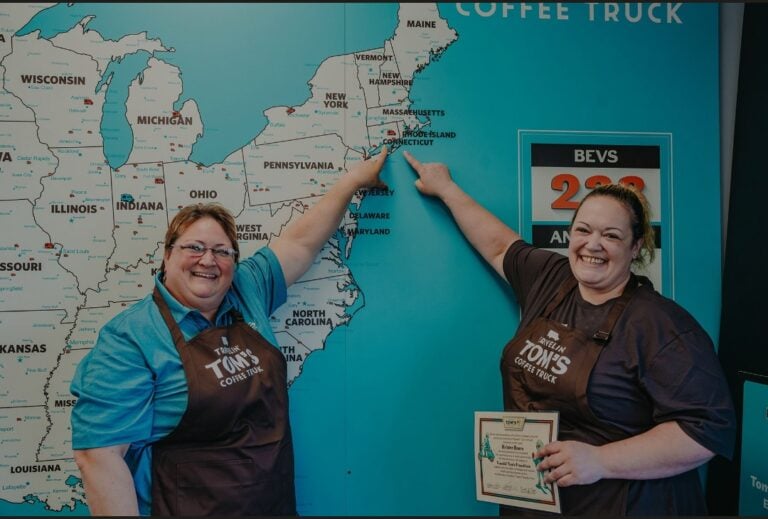
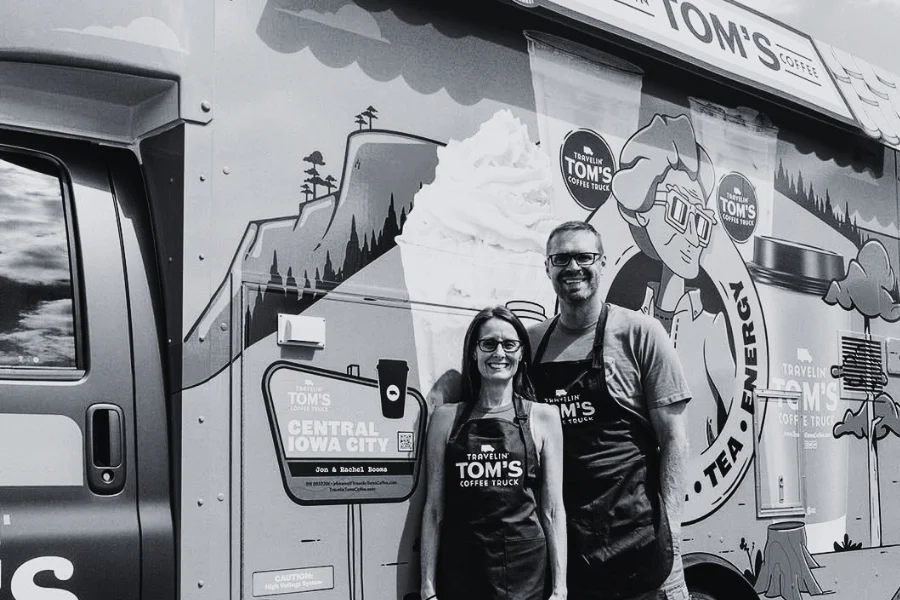
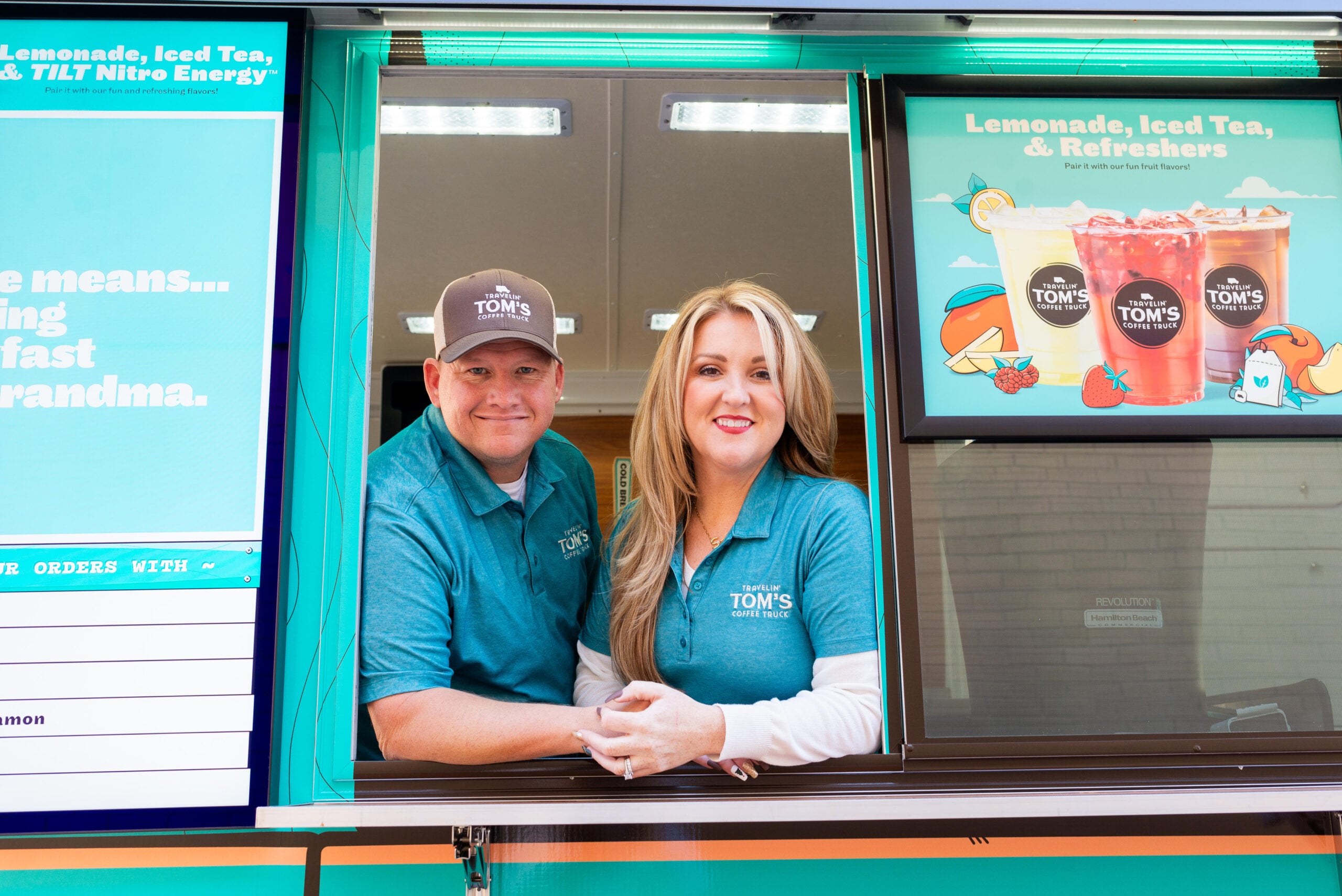
and then I’ll just kind of give you some examples. Things that are mobile, so Kona Ice and Travelin’ Tom’s, which are basic they’re they’re both owned by the same parent company. It’s a mobile concept. It’s cheap
Allison Dudas (16:43)
Yeah.
Michelle (16:45)
to get into, it’s cheaper to run than a full brick and mortar location. So service based businesses that have we call them man in a van, chuck in a truck, that type of model, it’s much easier for a franchisee.
to recoup that initial investment of the vehicle versus a you know ten year lease that they might be signing.
Allison Dudas (17:05)
Yeah, so true.
Michelle (17:06)
Yeah. And then the last one is the range of investment levels. So what we’re looking for is we’re looking at everything that’s in our research, but what we want to look is at models that allow you to kind of start with a single truck and then you can expand your territory or you could maybe start home-based and then go into a more physical space as you grow your business.
so we’re what we’re looking for is is there really a lower entry point for some people to get started and then grow into it? That will give them extra points in our list that we’re looking for.
Allison Dudas (17:37)
Yes, agreed. Agreed. So I think we also need to clarify something, Michelle. So we want to make sure that when we are talking about recession-resistant brands, we are not talking about recession proof brands, right? No business is recession proof. And some of these brands aren’t just resistant, but they’re counter-cyclical. So resale.
budget vacations and IT support for companies cutting internal staff like Team Logic IT can actually see demand rise when the economy tightens. So those
Michelle (18:12)
Yeah.
Allison Dudas (18:12)
are kind of interesting things to know.
Michelle (18:15)
Yeah. I think that because we talk about this a lot internally, is that we we never want to set up any expectation for someone that a business is easy to run or recession proof or what’s the other one? The absentee model. Those
Allison Dudas (18:32)
Yes.
Michelle (18:33)
are all possible things, but we really want people to come in with realistic expectations. We’re not selling a dream here, so we just want to be really careful with the terminology that we use.
Allison Dudas (18:42)
Right. And just to be frank, like we’re not selling anything. We’re
Michelle (18:45)
Yeah, yeah.
Allison Dudas (18:47)
just truly here as market research nerds. We are data nerds. we are trying to just tell you the information that we’ve collected. so we don’t we don’t care if you become franchisees. We just are kind of fans of this way of business ownership and wanna tell you why, but it we have no skin in the game.
Michelle (19:07)
Yeah. All right. Okay. So when we look at our list of 50 people, sorry, 50 brands, I think there’s a there’s two areas that really stood out because they had the most amount of brands in those categories. The first is senior care, which I think 21 years I’ve been at FBR, we’ve been around almost 22 years. Senior care has always been on the forefront of we knew it was going to be a popular space because we have an aging population and
There is not a lot of options for people to stay at home forever the way they used to. But
Allison Dudas (19:43)
Mm-hmm.
Michelle (19:44)
we’ve got brands in this category that allow your senior to stay at home longer. And we also have people that can help your your aging population and your family go someplace. So we see visiting angels, we see right at home, we see Griswold Home Care, Synergy Home Care, Carry Caring Senior Services, a Place at Home.
So there’s a lot going on there. And then we also have which I don’t know if a lot of people know about these services until you have someone older in your family that you go through it. But there’s advisory and placement services. So there’s franchises set up to actually help you figure out what are the right choices for your family. Oasis Senior
Allison Dudas (20:20)
Yeah.
Michelle (20:21)
Advisors and Care Patrol both are on this list. So that’s like one in six brands on the list are focused on caregiving or helping the aging population. So
No recession is going to touch that need for those services. Yeah.
Allison Dudas (20:37)
Right. Right. That’s a really good point.
Michelle (20:40)
Yeah. The other thing too that I see for popularity on our list is in child education and enrichment. And I think we see we’ve seen schools cut a lot of things and and parents still want to provide their children support and opportunities to do things and grow and learn. So we see mathasium, we see the learning experience, goldfish swim school.
Aquitots. Like there’s so many brands on here. Amazing athletes, little kickers. So for the sport side of the of the the need that we have for our our young children, young Rembrandts, Safari Kid, Creative World School. So there’s a lot here too that’s focused on if you’re cutting spending, your children is the last place that you’re gonna cut spending on on. So these are these are great brands to see on this list.
Allison Dudas (21:28)
That’s a really good point. And especially for what are deemed as more essential services like swim lessons or tutoring. yeah, and I also want to bring in just the B2B thread that people might miss. So brands like Team Logic IT, Payroll Vault, Fast Signs, Corporate Cleaning Group, Anago Image One. So businesses outsource more in downturns, not less, which is kind of interesting. But outsourcing converts fixed costs.
to variable ones. You might be able to get your office cleaned for maybe a lower rate because you know you’re doing it once a month instead of once a week or you are outsourcing your payroll. So instead of playing paying somebody full time to do your bookkeeping,
Michelle (22:14)
Right.
Allison Dudas (22:15)
you can just pay them part-time to kind of do the essential things and you as the owner might be able to fill in the gaps. So I think that that’s really, really important to note.
Michelle (22:26)
Yeah. Yeah. We see other models on here too. I think what we’re seeing is services that are health adjacent, I would call them. So any lab tests now, bioped foot care. the need for health care, the demand, that doesn’t follow the stock market. It’s there regardless of what’s happening. So that’s another one that sticks out on the list.
Allison Dudas (22:47)
Yep. Yeah. And I also think it’s really interesting that there are eight brands on our top fifty list that are food. And I I think
Michelle (22:57)
Cool. Yeah.
Allison Dudas (22:58)
some people might be surprised by that because obviously going out to eat is a luxury. So you might think, well, you know, in down times people aren’t going out to eat. But again, back to what we were saying before, you might kind of look at some of these brands that you you really know, you really feel comfortable with.
And you might kind of do that small indulgent thing. So I’m thinking of like tropical smoothie. I’m thinking about coffee from Eliano’s or a Kona ice or you know, getting getting sandwiches at Penn Station or stopping for a pretzel at Wetzel’s pretzel. Like these these kind of little indulgences you might hang on to even when you’re you’re
Michelle (23:35)
Little treats. Just little treats.
Allison Dudas (23:37)
yeah, you’re tightening your belt. I’m like, how many, how many analogies can we use?
in this
Michelle (23:43)
All of them.
Allison Dudas (23:44)
in this pot all of them. We’re gonna just try to use all of them. I I’m trying to think of the the ones that we still need to fit in. Somebody should be doing like a like a bingo. yes yes
Michelle (23:53)
Counting your pennies, perhaps. Although pennies are n are gone
now. So counting your nickels.
Allison Dudas (24:00)
Counting your nickels. Yeah. Yeah, that’s it. That’s it.
Michelle (24:04)
poor Penny. R.I.P. Pennies. okay. Let’s
share some of the data that we’re seeing from these from these fifty brands. So from now we’ve we’ve pulled out our fifty brands that are recession resistant. Let’s talk about what we’re seeing in the data from what what the franchisees are saying. Let’s hit some of those points.
Allison Dudas (24:22)
Okay, great. Yeah. So of these 50 brands and the many franchisees interviewed and surveyed, ninety-five percent would recommend their franchise to others.
Michelle (24:35)
That’s that’s the most important stat that we can share. so again, the relationship
Allison Dudas (24:42)
Wild.
Michelle (24:42)
between the franchise and the franchisee is not always roses and sunshine. It’s it’s
Allison Dudas (24:47)
Mm-hmm.
Michelle (24:48)
hard work on both sides, but 95% of them would recommend their franchise to others is like all the work, all the ups and all the downs. This is something that they would recommend to others. So that’s huge.
Allison Dudas (25:01)
Yes.
Michelle (25:01)
We also
saw 93% of them enjoy operating their business and being part of their franchise organization. We talk about this, I think, in the majority of our episodes is the, I feel like, biggest benefit of being in a franchise organization that you cannot do when you are a solo entrepreneur is you have access to other business owners that are running the same business as you.
The power of that community, the ability to network with people that have been through it, have made mistakes, and they’re gonna share it with you, being able to see what the top performer does in your brand, to know what you could actually be doing in your business, to ask them questions, what they’re doing and how they’re doing it differently, that is the real power of franchising. So
Allison Dudas (25:44)
Mm.
Michelle (25:44)
the this, these numbers I think really help us kind of elevate that in that.
People think about this franchise brand and this fee I pay is really about helping me accelerate my business, but it’s that access to all these franchise owners, these business owners that have been in it, that can be just the the difference in your business being successful or not.
Allison Dudas (26:07)
Mm. Yeah, ninety three percent of the franchisees surveyed rate overall satisfaction above average. So again
Michelle (26:15)
So that’s
excellent, very good or good. So love that. Yep.
Allison Dudas (26:18)
Yep. Love that.
Michelle (26:20)
I think a lot of people buy into franchise systems be or franchise brands because of the systems, because of the playbooks, the ops manuals. And we have 93% of these franchisees rate their operational procedures and systems above average. So that’s again excellent, very good and good.
Allison Dudas (26:36)
Mm-hmm. and then 91% respect their franchise or I love this one. When you think about owning a franchise, right, you are absolutely that business owner. You are in some ways like totally on your own. You get to make a lot of decisions. Obviously, you’re following a playbook, but that playbook is coming from somewhere. And if you respect your franchise, or if you respect corporate and who’s kind of driving that greater picture train, man, that
That makes such a difference. I I don’t know if anybody listening has ever worked for somebody that they don’t trust. I mean it it’s it sucks.
Michelle (27:12)
It’s hard. It’s hard.
It’s hard to to move things forward when you’re kind of skeptical. I get that. Yeah.
Allison Dudas (27:17)
Yeah.
Michelle (27:18)
All right. So now I want to talk about so we just always kinda like talk about the data that we’re talking about. So now we’re gonna talk about the 50 recession resistant brands, how that data set compares to our overall data set. So we wanna just kind of give you the comparison of why these 50 brands are just really
A great place to start your research if you’re considering franchising. First is that when we ask them up to rate their technology, these 50 brands, franchisees are rating their technology scores, are 30% higher than our overall benchmark of data. So what is more important than understanding technology right now? It is fast moving, it is fast changing, it is greatly impacting businesses. So to know that your franchiseor is there to do all that homework, to find the right vendors.
the right things that your customers need to help you run your business better, thirty percent higher than than the overall benchmark. It’s phenomenal.
Allison Dudas (28:12)
Yeah.
That is wild. Really, really wild.
Michelle (28:15)
Yep. next
innovation and creativity, twenty eight percent higher. So I think sometimes yeah.
Allison Dudas (28:21)
I mean, this does not surprise me. I especially
so so in terms of like recent data about recessions, right? We have COVID to look at. And I think about I I am lucky in my job here at FBR and that I get to talk to a lot of franchisees. And I’m thinking about a conversation that I had with a Fast Science franchisee and during COVID, so she literally like opened her doors during COVID, which seems like such a nightmare. But
Michelle (28:50)
Awful.
Allison Dudas (28:51)
Because corporate was working so hard to figure out how they were gonna fit in to this like new world order. she got all of these jobs for like making all of these signs for for COVID. Yes.
Michelle (29:08)
For COVID, stand six feet apart, right?
Allison Dudas (29:12)
Like you were think of all the signs that all of us saw during that time. I mean, we still see them, right?
Not just like the wash your hands and the bathroom sign, but the stand six feet apart, masks required, like everything, everything, everything. and
Michelle (29:25)
Yeah. Also to the
the you couldn’t celebrate with people in person. So what did people do? They made yard signs. Yeah. Yeah.
Allison Dudas (29:31)
Right. Right.
Michelle (29:33)
They they were so great. They propelled brands who owns fast signs. Like they they were so tuned in to helping their franchisees through COVID and understanding what it how to pivot their business, but what it all meant. They that they’re they’re on most of our lists. They just they they know how to take care of franchisees.
Allison Dudas (29:48)
Yeah. They
know. They know. And I also love brands like you know, like Amazing Athletes, where they were using they were using other they don’t have their own locations. So you are literally like as a franchisee bringing your team, your instructor to teach cute little toddlers soccer at maybe a preschool. So you’re outside and you are not having to pay rent. You’re not having to do all of this extra stuff. And so
During COVID, that was perfect because people were like, What the heck are my kids gonna do? They
Michelle (30:22)
Yeah.
Allison Dudas (30:22)
are they’re maybe not going into school. It’s not safe for them to be inside. So, you know, just kind of getting creative about like, okay, like how can we pivot? How can we be lean? How can we make this happen? and then I think of course of like Wild Birds Unlimited and their creativity and the way that again, the the most recent example we can put we can point to in terms of a recession is COVID.
I mean, people went nuts for birds during COVID for sure, but just like the way that you could order things online, the way that you could access all of the stuff that Wildspird Wild Birds Unlimited was offering was really amazing.
Michelle (31:01)
Yeah, I love that. marketing and promotional programs. So 28% higher than the overall benchmark. And this is important, I think, because we see marketing and promotional programs tends to be one of the lowest rated scores that we see year
Allison Dudas (31:15)
Yes.
Michelle (31:16)
over year because marketing is hard. And
Allison Dudas (31:19)
Uh-huh.
Michelle (31:20)
the the fact that these brands are outperforming, that means that the franchisees are feeling supported either in the assets that the franchise was giving them, the plan.
The execution. So marketing is what drives new customers. It’s what drives repeat business. It’s extremely important for every business. So no surprise that we’re seeing these people feel better, higher supported than than other brands. and then for overall, the overall opportunity is being rated 28% higher. And the total investment into the brand is 27% higher. So just really these are kind of sticking out in very important ways that.
show that the business model is well supported by the franchisor. Yeah. I think I think
Allison Dudas (32:00)
Mm. Yeah. Yep. Yep. I think we just
Michelle (32:04)
it’s time to talk about money, Alison. I know pe people love love this question. The most frequent question is how much money can I make if I own a franchise, which is
Allison Dudas (32:12)
Yep.
Michelle (32:13)
a hard number to get at, but we we do we’ll always link it in the shows. We we give you a number just
Allison Dudas (32:17)
Yeah. We do.
Michelle (32:19)
based on our data and and other stuff. But we’re gonna talk about this particular group. So
Allison Dudas (32:24)
All
right, let’s do it.
Michelle (32:24)
We asked the franchisee
to report their average pre-tax income. So this is self-reported. This I always give the caveat that this is relevant to how diligent or creative their accounting advice is. so they can put different things to the business. But we asked the question and what we’re sharing with you is the average pre-tax income for these franchisees that have been in business for two or more years. We take out the under two years because they are.
just kind of getting their business started. So we just want to make sure there’s stability and a little bit of history before we give you these numbers.
Allison Dudas (32:58)
Mm.
Michelle (32:58)
average pre-tax income is $182,924.
Allison Dudas (33:03)
Wow.
Michelle (33:03)
The overall benchmark across all brands, that number is $125,240.
Allison Dudas (33:09)
That’s like all brands we surveyed this year. So not
Michelle (33:11)
Yes.
Allison Dudas (33:12)
not just the recession resistant brands, but like all the brands. So three hundred
Michelle (33:15)
Correct. Yep.
Allison Dudas (33:16)
and thirty brands.
Michelle (33:17)
Yep. Yep. So and then if we take out the two, the two years, so we’re comparing that to that 182,924 that I just shared, it’s $147,878. So you could be like, well, you know, that’s a big jump, or you could say that’s not that much. But if you take that $38 to $40,000 times your 10 year agreement, and obviously you’re you’re hopefully growing that number each year, it’s a lot of money. That adds up.
Allison Dudas (33:43)
Right. No,
I would I would take thirty eight thousand dollars. I would not turn it down.
Michelle (33:47)
I would as well. Yes, please. Please.
please, please send it my way.
Allison Dudas (33:52)
Yes, if you’re if you’re listening.
Michelle (33:56)
Yeah. I th I just think it’s good for people to know those numbers and also to just give you a place to start. It’s a hard number to get at when you are talking to
Allison Dudas (34:03)
Yeah.
Michelle (34:04)
franchise owners to understand how much money you can make. So we like to give you that average. There’s obviously people in a system that are crushing it and have higher than that, and there’s people struggling in systems, but there’s your average that you can kind of start with.
Allison Dudas (34:17)
Love it.
Michelle (34:19)
This is it.
Allison Dudas (34:22)
And welcome tonight the top ten recession
resistant franchises of twenty twenty six.
Michelle (34:31)
Excellent, excellent letterman impression.
Allison Dudas (34:35)
I need my flashcards.
Michelle (34:36)
Ha ha ha
Allison Dudas (34:37)
All right, the tenth. Two men and a truck.
Michelle (34:42)
Number nine, Wild Birds Unlimited.
Allison Dudas (34:46)
Number eight, fish window cleaning services.
Michelle (34:51)
Number seven fast signs. We already just had a nice little love fest on them and that team. They they landed at number seven.
Allison Dudas (34:59)
Number six, travelin’ Tom’s coffee truck.
Michelle (35:03)
Number five, Anago Cleaning Systems.
Allison Dudas (35:08)
Number four culvers
Michelle (35:11)
Number three, Christian Brothers Automotive.
Allison Dudas (35:15)
Number two visiting angels, which is senior care.
Michelle (35:19)
And number one is Kona Ice. I look at the variety in just the top 10 is just awesome. It’s awesome. Yeah, I love it.
Allison Dudas (35:23)
Woo. I know it’s fascinating, isn’t it? Fascinating.
Michelle (35:29)
Yeah. We we see it all there.
Allison Dudas (35:32)
Yeah.
So we do see that mobile and low overhead concepts are strong here in the top 10. So Kona Ice, Travelin’ Toms, Fish Window, low fixed costs, equal flexibility, equal being able to be nimble, especially during hard times. So that’s
Michelle (35:48)
Yeah.
Allison Dudas (35:48)
something to note.
Michelle (35:49)
Yep. And then we saw the essential services that we talked about before, senior care, auto repair, commercial cleaning, moving. Those things happen whether you you have the money to spend on them or not. You have to put it on the credit card.
Allison Dudas (36:03)
Yep. Yeah, that’s so true. And then of course we have to remember the affordable indulgence. So culverse and cone ice at the top prove that people keep spending on small treats.
Michelle (36:13)
Yeah, absolutely. and then the passion the passion niches. Wild Birds Unlimited, this always blows my mind. Bird watching is the number two hobby in the United States. Do you know what number one is, Allison? NASCAR. Watching NASCAR. Yeah.
Allison Dudas (36:26)
What is it? What? Just watching
NASCAR? Does that qualify as a hobby just watching something? Although I guess birds, you’re watching birds. Yeah. Wow.
Michelle (36:32)
Yes. It Yeah. Yeah. And the and
it’s not the number one and number two watching hobby. It’s just the number one hobby is NASCAR and number two is bird watching. Here’s your fun
Allison Dudas (36:44)
That is fascinating. Wow.
Michelle (36:45)
fact for the for the podcast today.
Allison Dudas (36:50)
I love it.
Michelle (36:51)
Yeah.
Allison Dudas (36:51)
so we have had the opportunity to talk with a lot of these franchisees from these top ten recession-resistant franchises. And we’ll make sure to link both episodes and other video content that we’ve done with these franchisees in the show notes. I mean, I’m thinking especially of like conversations I’ve had with Mathasium franchisees and hearing about
how they pivoted so much during COVID. Again, that’s like our recent example of of a recession and how important recurring revenue is. That’s certainly a conversation that we just had about cleaning services franchises with with Anago and Fish Window actually as well. So we will make sure to link those in the show notes ’cause if you end up kind of more interested in either a specific brand or even an industry, you can
Find out a little bit more through those conversations. It’s definitely worth your your while.
Michelle (37:43)
Yeah. And the franchise brands on our site, so you can find out information about all 50, but some of them choose to share their data with with people that are looking to buy a franchise. So look at if they make it available publicly on our site. If you’re talking with their teams, ask for it directly from them. But I think that what we just really want to reinforce as we come away from this conversation that it’s important for you to understand the model of the business.
Not about if it’s the right time to buy or not. Is it the right model for you? And is it gonna fit your needs and your goals and why you’re making a change in your current situation? So thinking about the demand for the product or service, thinking about the div the the diversity that they offer you and how you can make money, and then looking at your investment to the revenue potential ratio, those are things that I think are really important for you to consider as you look at these brands.
the next is to think about the demographics of who you’re supporting. your who’s your customer, and and every brand you talk to should very much know who their customer is. but you know, don’t listen to the doom and gloom that we tune into on our news stations. They are there to create fear. It’s what gets ratings and eyeballs, unfortunately. but
Allison Dudas (38:58)
Hmm.
Michelle (38:59)
you see senior care, you see child services on this list.
Because we have populations of people that we want to take care of regardless of how much money we have in the bank. So just think about who you’re serving as your customer and if they will be there regardless of what’s happening externally from your business. And then as always, our biggest important note for you is to talk to current franchisees. Our data is a place to start. We in no way or means want to discourage you from talking to as many people as you can that are in the business. What
Allison Dudas (39:31)
Mm-hmm.
Michelle (39:32)
You want to do is just ask them questions that they feel comfortable answering. So don’t hit them with how much money are you making?
Allison Dudas (39:39)
Right.
Michelle (39:39)
That’s not gonna help you. What you want to do is ask them things like, did it did you did it take more money to get your doors open than you budgeted for what you thought? Did you break even in the time that you thought you would? Those are the types of questions that you want to ask to try and paint a picture financially.
that they’ll be open to explaining that to you, asking them how many employees they started with, how they grew it, what their biggest challenges are. I think we have a lot of resources as far as helping you with
Allison Dudas (40:07)
We do help.
Michelle (40:08)
those questions that we can share, but do
Allison Dudas (40:10)
We do.
Michelle (40:10)
not skip on that. It is such an important part of of
Allison Dudas (40:13)
No.
Michelle (40:14)
your research.
Allison Dudas (40:15)
I was thinking, Michelle, that maybe we need to make like a jingle about it because we do mention it every time. So I but I
Michelle (40:23)
Let’s put it let’s put it to tune. Maybe a maybe a rap. Let’s stay hip with the what the kids are into these days.
Allison Dudas (40:30)
feel like we just say it all the time and I wanna like, Doc
Michelle (40:32)
It’s true.
Allison Dudas (40:33)
the current franchisees you know, I wanna sing it to them and then get it stuck in their head and then they know it’s so valuable.
Michelle (40:40)
Yes, absolutely.
Allison Dudas (40:42)
Yeah, but make sure you visit franchisebusinessreview dot com, not because you’re gonna hear me sing, but because that’s where you can find our full list of the top fifty recession resistant brands of twenty twenty six. And then you can click on them and in many cases you can download their full franchisee satisfaction reports, as Michelle mentioned. So make sure you do that because why not get as much information as you can as you’re figuring out your next steps in your career? And we wish you well.
You know, hopefully you are ready for a pivot, an exciting change in your career. you are never too old or too young to kind of do something a little bit different than what you thought. And we talked to so many franchisees that are so jazzed up about this incredible way of owning a business. And it’s it’s hard not to get kind of excited, especially when we come out with a new list.
Michelle (41:34)
Yeah, agreed. Yep. Check out the site and let us know how we can help you all make your decision.
Allison Dudas (41:40)
And if you are capable of writing music and want to write a jingle, we’re we’re listening.